Choosing podcasting gear for home studios can feel overwhelming, especially when every kit promises pro-level sound. The right setup depends on your room, recording style, and how much control you want over your audio.
Below, we’ve narrowed the field to practical, reliable options for beginners and more experienced creators alike, with a focus on clarity, ease of use, and overall value.
Best 10 Podcasting Gear for Home Studios Picks for 2026
USB Starter Bundle
FIFINE T669 Studio Condenser USB Microphone
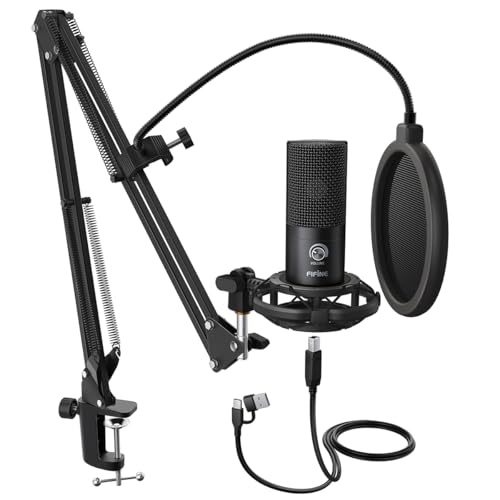
- Plug-and-play USB setup
- Includes boom arm and shock mount
- Cardioid pickup helps reduce room noise
Best For: Beginners who want a complete home podcast mic kit
Portable Dual Mic Kit

- Dual XLR mics with USB interface
- Works with phones, computers, and tablets
- Includes stands, headphones, and travel case
Best For: Two-person podcasts and mobile interview recording
Broadcast USB Classic

- Four pickup patterns for flexible recording
- Blue VO!CE software adds vocal effects
- Onboard controls for gain, mute, and monitoring
Best For: Solo creators and streamers wanting a versatile USB mic
All-in-One Controller
RØDECaster Duo Podcast Production
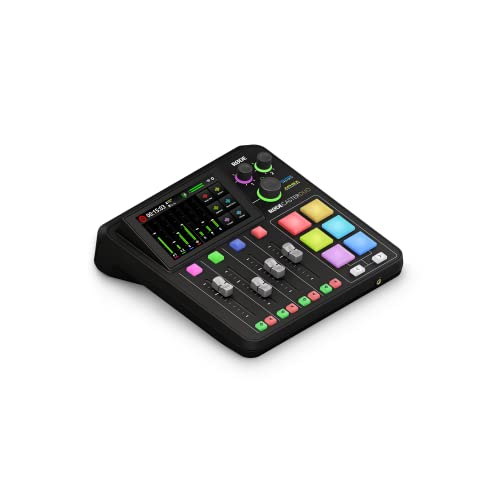
- Two combo jacks with low-noise preamps
- Touchscreen, faders, and SMART pads
- Built-in APHEX processing and effects
Best For: Creators who want an integrated podcast production console
Compact Starter Bundle
PreSonus AudioBox Go Creator Studio Bundle

- Includes interface, mic, headphones, and software
- USB-C, 2-channel design for simple home setups
- Up to 24-bit/96 kHz with broad DAW support
Best For: Beginners building a simple podcasting setup at home
Quiet Studio Vocal Mic
RØDE NT1 Signature Series XLR Microphone
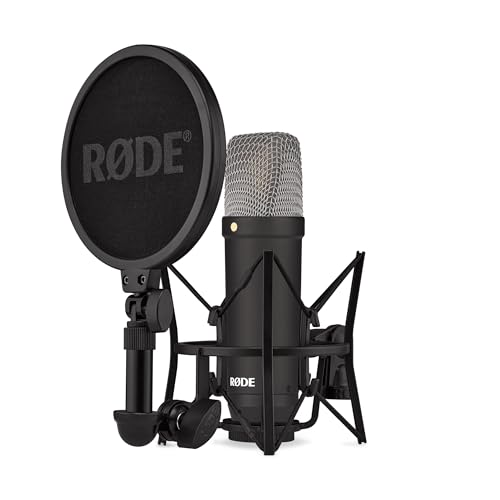
- 4dBA self-noise for clean spoken-word recording
- Includes shock mount, pop filter, and XLR cable
- Cardioid condenser design for podcasting and vocals
Best For: Creators who already use an XLR interface and want quieter voice recordings
Simple Interface Pick
Focusrite Scarlett Solo 3rd Gen USB Interface

- One XLR mic preamp plus one Hi-Z input
- 24-bit/192 kHz recording with Air mode
- Includes recording software and plugins
Best For: Solo creators who need a compact, reliable interface
Complete Home Studio Bundle
PreSonus AudioBox USB 96 Recording Bundle
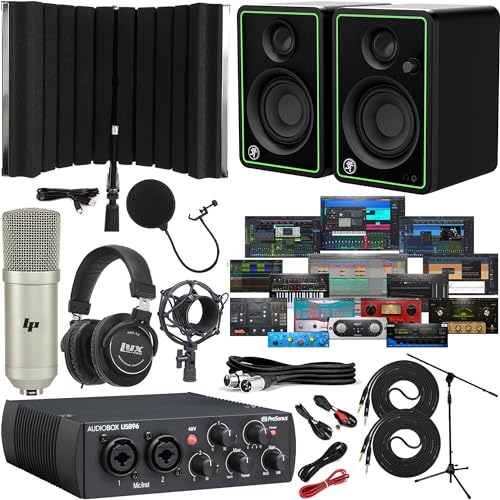
- Includes interface, monitors, mic, headphones, and software
- AudioBox 96 offers 24-bit/96 kHz conversion and direct monitoring
- Built for podcasts, vocals, YouTube, Twitch, and music production
Best For: Creators who want an all-in-one home studio kit
Flexible USB/XLR Mic Kit
FIFINE AmpliTank K688CT Podcast Microphone Kit

- Works over USB or XLR for easy upgrade paths
- Dynamic cardioid mic helps reduce ambient room noise
- Includes boom arm, shock mount, windscreen, and onboard controls
Best For: Podcasters and streamers wanting USB/XLR flexibility
Budget-Friendly Starter Kit
MAONO AU-A04H USB Microphone Kit
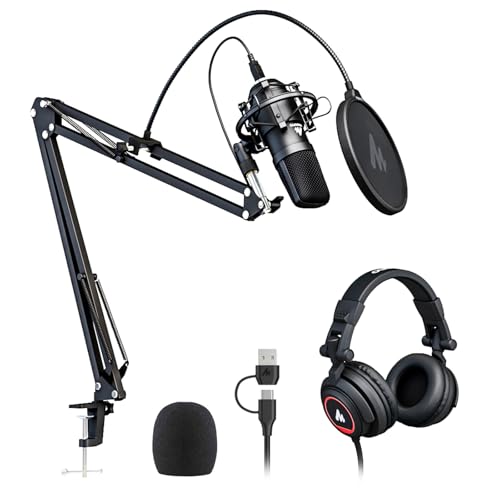
- Plug-and-play USB setup with no external sound card needed
- Includes headphones plus shock mount, pop filter, and stand
- 192kHz/24Bit chipset supports clear vocal recording
Best For: Beginners wanting an easy USB podcast starter kit
USB Starter Bundle – FIFINE T669 Studio Condenser USB Microphone
If you’re building podcasting gear for home studios and want a simple all-in-one setup, the FIFINE T669 is a straightforward USB microphone bundle. It plugs directly into a PC or laptop, and the included boom arm, shock mount, and pop filters make it easier to get usable voice recordings without buying extra accessories right away.
Best For: Beginners and home podcasters who want a plug-and-play mic kit with a boom arm and basic noise control.
Pros:
- USB plug-and-play connection for PC and laptop, with no additional drivers needed
- Cardioid condenser capsule is designed to capture sound from the front and reduce ambient noise
- Includes a sturdy boom arm, shock mount, double pop filter, and USB cable
- Low-profile arm setup helps keep the mic out of the way during recording or streaming
Cons:
- USB-only design is not suitable for XLR-based studio workflows
- Not compatible with Xbox
- Best suited to home and project studios rather than more advanced multi-mic rigs
This is a practical starter option if you want a complete mic package for podcasting, voice-overs, and streaming. The value is in the included accessories and easy setup, not in advanced studio expandability.
Portable Dual Mic Kit – Movo PodPro-TH Podcast Bundle
For podcasting gear for home studios that also needs to travel, the Movo PodPro-TH is built around a dual-channel USB audio interface and two XLR dynamic microphones. It’s a compact bundle for two-person shows, with multiple cable options for phones, computers, and tablets, plus tabletop stands and headphones included.
Best For: Two-host podcasts, mobile creators, and interview setups that need a portable all-in-one kit.
Pros:
- Includes two CastMic XLR dynamic microphones for balanced, studio-style capture
- MDX-2 interface supports PC, Mac, iPhone, iPad, Android, and tablet use with USB-A, USB-C, and Lightning cables
- Battery-powered interface offers up to 8 hours of use, with a travel case included
- Comes with two tabletop mic stands and two pairs of studio headphones
Cons:
- More complex than a simple USB microphone setup
- Best suited to two-person recording rather than solo creators who only need one mic
- XLR-based system adds more components to manage than a single-mic kit
This bundle makes sense when portability and two-mic recording matter more than minimal setup. It gives you the core pieces for interviews and co-hosted shows in one package, especially if you want to record on phones or computers.
Broadcast USB Classic – Logitech Blue Yeti Blackout
The Blue Yeti remains a popular choice for podcasting gear for home studios because it combines a plug-and-play USB connection with flexible pickup patterns and onboard controls. If you want one mic that can handle solo voice work, interviews, or other recording styles, this model gives you a lot of versatility without requiring an audio interface.
Best For: Creators who want a versatile desktop USB microphone for podcasting, streaming, and voice recording.
Pros:
- Four pickup patterns: cardioid, omni, bidirectional, and stereo
- Blue VO!CE software adds vocal effects and broadcast-style processing
- Onboard controls include headphone volume, pattern selection, mute, and mic gain
- Plug-and-play USB operation for Mac or PC, with desktop stand included
Cons:
- Large desktop design may take more space than smaller microphones
- USB format is less expandable than XLR systems for full studio builds
- Best suited to single-mic or simple recording setups rather than multi-input production
As an all-purpose USB mic, the Blue Yeti is strongest when flexibility matters more than a compact footprint. Its pattern options and direct controls make it easy to adapt to different recording tasks in a home studio.
All-in-One Controller – RØDECaster Duo Podcast Production
If you’re shopping for podcasting gear for home studios and want a more complete production center, the RØDECaster Duo is built to handle recording, monitoring, and effects in one box. It includes two high-quality combo jacks, low-noise preamps, faders, smart pads, and APHEX processing, making it a strong fit for creators who want hands-on control.
Best For: Podcasters and streamers who want an integrated production console with advanced control and processing.
Pros:
- All-in-one audio production solution for podcasts, music, streaming, and content creation
- Two combo jacks with ultra-low-noise Revolution Preamps and up to 76dB gain
- Four broadcast-quality faders, touchscreen, and six SMART pads with bank switching
- Includes studio-grade APHEX processing such as Aural Exciter and Big Bottom
Cons:
- More advanced than a basic USB microphone setup
- Designed around a two-input workflow, so it may be more system than some solo users need
- Requires a more committed home-studio setup than a simple plug-and-play mic
This is the most production-focused option in the group, especially if you want to manage multiple sources and audio processing from a single device. It suits creators who are ready to move beyond entry-level recording gear.
Compact Starter Bundle – PreSonus AudioBox Go Creator Studio Bundle
If you want podcasting gear for home studios that keeps setup simple, this PreSonus bundle gives you the core pieces in one box: a tiny USB-C interface, a condenser mic, monitoring headphones, and recording software. It is a practical pick for creators who want to start recording quickly without piecing together a full system.
Best For: Beginners and home podcasters who want an all-in-one recording bundle with software included.
Pros:
- Includes the AudioBox GO interface, M7 condenser mic, HD7 headphones, and Studio One 6 Artist Edition.
- USB-C connectivity and support for Windows and macOS make it easy to use with a computer setup.
- Compact interface with 2 channels and up to 24-bit/96 kHz recording.
- Works with major DAWs like Ableton Live, FL Studio, Cubase, Pro Tools, Logic Pro, and Reaper.
Cons:
- Only a 2-channel interface, so it is best suited to simple recording setups.
- The bundle focuses on essentials rather than upgraded accessories or advanced expandability.
This is a straightforward way to get a podcast-ready home studio started, especially if you value convenience and a matched set over assembling components separately.
Quiet Studio Vocal Mic – RØDE NT1 Signature Series XLR Microphone
For podcasting gear for home studios where low noise matters, the RØDE NT1 Signature Series is built around a large-diaphragm cardioid condenser capsule with extremely low self-noise. It comes with a shock mount, pop filter, and XLR cable, so it is ready for a more traditional XLR recording chain with an audio interface.
Best For: Podcasters and voice recorders who want a quiet, studio-style XLR microphone setup.
Pros:
- Exceptionally low noise at 4dBA, which is useful for clean spoken-word recording.
- Includes a shock mount, pop filter, premium XLR cable, and dust cover.
- Large-diaphragm cardioid condenser design suits vocal recording, streaming, and podcasting.
- Backed by a 10-year warranty with registration.
Cons:
- Requires an XLR audio interface, so it is not a standalone USB mic.
- Its studio-style setup is less plug-and-play than a bundled USB solution.
If your priority is a cleaner vocal capture and you already have or plan to buy an interface, this microphone is the most specialized pick in the group for home studio voice work.
Simple Interface Pick – Focusrite Scarlett Solo 3rd Gen USB Interface
The Focusrite Scarlett Solo 3rd Gen is a compact USB audio interface that fits neatly into podcasting gear for home studios, especially if you need one XLR mic input and one Hi-Z instrument input. It is built for straightforward recording and playback, with 24-bit/192 kHz conversion, low-noise outputs, and software to help you start making content right away.
Best For: Solo podcasters, vocalists, and creators who want a compact interface for one mic and one instrument.
Pros:
- One XLR mic preamp and one Hi-Z instrument input cover basic recording needs.
- Up to 24-bit/192 kHz recording for studio-quality capture.
- Air mode can add extra clarity to recordings.
- Includes Pro Tools Intro+, Ableton Live Lite, Cubase LE, and Hitmaker Expansion software.
Cons:
- Only two channels, so it is not ideal for larger multi-mic setups.
- It is an interface only, so you still need to supply your own microphone and headphones.
This is a solid choice if you want a proven, low-fuss interface for a single-host podcasting setup or a small creator desk with room for one mic and one instrument.
Complete Home Studio Bundle – PreSonus AudioBox USB 96 Recording Bundle
If you’re shopping for podcasting gear for home studios and want one purchase that covers nearly everything, this PreSonus bundle is built for that job. It combines a USB audio interface, monitors, a condenser mic, isolation accessories, headphones, and software so you can start recording vocals, podcast episodes, voice-over, and content with a full desktop setup.
Best For: Podcasters and creators who want an all-in-one home studio kit with monitoring, mic, and software included.
Pros:
- Includes the AudioBox USB 96 interface with 24-bit/96 kHz conversion, zero-latency direct monitoring, phantom power, and MIDI I/O.
- Comes with Mackie CR3-XBT monitors, a LyxPro condenser mic, shockmount, pop filter, isolation shield, headphones, stand, and cables.
- Bundle is aimed at vocals, podcasts, YouTube, Twitch, beats, and music production from one package.
- Includes Studio One Artist and Studio Magic Suite software for getting started right away.
Cons:
- More complex than a simple USB mic if you only need a minimal podcast setup.
- Desktop footprint is larger because it includes monitors and multiple accessories.
- Some components are bundled for general home studio use rather than podcasting alone.
This is the strongest pick here if you want a complete starter system instead of piecing together separate components. It gives you recording, monitoring, and room-control accessories in one kit, which makes setup straightforward for a home studio.
Flexible USB/XLR Mic Kit – FIFINE AmpliTank K688CT Podcast Microphone Kit
For podcasting gear for home studios, this FIFINE kit is a practical choice if you want a dynamic mic that can grow with your setup. It gives you USB convenience for quick recording and XLR support for use with an interface or mixer, plus a boom arm and onboard controls that help keep sessions simple.
Best For: Podcasters and streamers who want a dynamic mic kit with both USB and XLR options.
Pros:
- Dual USB/XLR connectivity makes it easy to start with plug-and-play recording or expand into an interface-based setup.
- Dynamic cardioid design helps reduce ambient noise and focuses on the voice.
- Includes a metal boom arm, shock mount, and windscreen to reduce bumps, vibrations, and plosives.
- USB mode adds a mute button, gain knob, headphone jack, and volume control for easier monitoring.
Cons:
- Function buttons do not work when using XLR, so controls shift to your mixer or interface.
- Needs close placement for stronger input, with the notes recommending 2 to 6 inches from the mic.
- The desk clamp is limited to desks under 2 inches thick.
This kit stands out if you want flexibility without buying a separate mic setup later. It is especially appealing for creators who may begin on USB and move to XLR as their home studio develops.
Budget-Friendly Starter Kit – MAONO AU-A04H USB Microphone Kit
If you need podcasting gear for home studios that is simple to set up, this MAONO kit is an easy entry point. It combines a USB condenser microphone with studio headphones and the basic mounting accessories you need for recording voice, streaming, gaming, and voice-over work on a computer.
Best For: Beginners who want a plug-and-play USB mic kit with headphones and accessories.
Pros:
- USB plug-and-play design works without extra driver software or an external sound card.
- High-resolution 192kHz/24Bit chipset and 16mm condenser capsule are built for clear vocal capture.
- Includes studio headphones with large drivers, active noise reduction, and a comfortable foldable design.
- Comes with a full accessory set including shock mount, pop filter, foam windscreen, stand, clamp, and USB cable.
Cons:
- The mic is a condenser model, so room noise control matters more than with a dynamic mic.
- Feature set is aimed at basic home recording rather than a more advanced multi-component studio setup.
- The microphone frequency range is listed as 30Hz-16kHz, which is narrower than some competing recording gear.
This kit is a solid low-friction option if you want to start recording quickly and keep the budget under control. It delivers the essentials in one package, making it a practical first step for home podcasting.
How We Picked These Podcasting Gear for Home Studios
We focused on equipment that makes it easier to record clean voice audio at home without overcomplicating the setup. Priority went to gear with strong user-friendly features, dependable connectivity, and a clear path from first recording to a more polished studio workflow.
We also looked for options that suit different recording needs: simple USB microphones for fast setup, XLR-ready gear for upgrade flexibility, and complete bundles for creators building a studio from scratch.
Quick Comparison
USB microphones are the fastest way to start recording. Audio interfaces unlock better expansion and usually pair with XLR microphones. All-in-one production units are best for creators who want recording, mixing, and routing tools in one box. Complete bundles can save time and money if you need headphones, stands, monitors, or an isolation shield.
Key Buying Factors for Podcasting Gear for Home Studios
Room Noise and Mic Type
If your room is untreated or has background noise, a dynamic microphone is often the safer choice because it tends to reject more ambient sound. Condenser microphones can sound more detailed, but they usually pick up more room reflections.
USB Vs. XLR
USB gear is simple and convenient for solo podcasters. XLR gear adds flexibility, especially if you plan to grow into multi-mic recording, external mixers, or better preamps. Hybrid USB/XLR mics can offer the best of both worlds.
Interface and Workflow
If you want higher control over gain, monitoring, and future upgrades, an audio interface is worth considering. For creators who also stream, host interviews, or produce music, an integrated production console may be the better long-term choice.
What’s Included in the Bundle
Many buyers overlook accessories. A boom arm, pop filter, shock mount, headphones, and stands can make a major difference in convenience and recording quality. Bundles often provide better value than buying each item separately.
Who Should Buy Which Podcasting Gear for Home Studios?
Beginners: A USB mic kit or complete bundle is the easiest path if you want to record quickly with minimal setup.
Growing podcasters: A hybrid USB/XLR microphone or a compact interface gives you more room to improve without replacing everything.
Serious home studios: A dedicated interface, a quality XLR mic, or an all-in-one production unit is ideal if you care about audio consistency, monitoring, and future expandability.
Budget-focused buyers: Look for starter kits that include the essentials so you can avoid extra accessory costs.