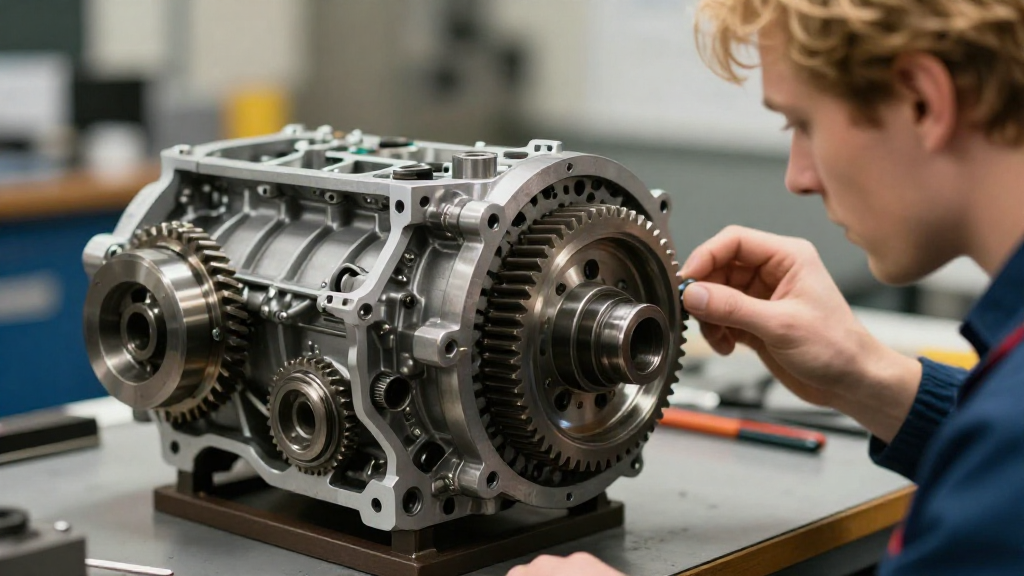
When discussing the intricate mechanics of vehicles, many enthusiasts and novices alike often ponder the question: Gearbox vs Transmission—are they really the same?
To fully understand this topic, we need to delve into the specifics of each term and how they relate to the workings of your vehicle.
What is a Gearbox?
A gearbox is a crucial component found in most vehicles, responsible for transmitting power from the engine to the wheels.
This mechanical device houses a number of gears that allow for varying levels of torque and speed.
Primarily, gearboxes are designed to:
- Change the speed of the vehicle
- Adjust torque, which enables cars to climb hills or accelerate quickly
- Change the direction of the vehicle’s power output
Types of Gearboxes
There are several types of gearboxes used in vehicles:
-
Manual Gearbox
– Requires the driver to change gears using a clutch pedal and gear stick.
– Offers more control and driver engagement. -
Automatic Gearbox
– Shifts gears automatically based on the vehicle’s speed and engine load.
– Provides ease of use, making driving more accessible. -
Continuously Variable Transmission (CVT)
– Uses a belt and pulley system to allow for seamless acceleration without fixed gear shifts.
– Enhances fuel efficiency. -
Dual-Clutch Transmission (DCT)
– Combines the convenience of an automatic and the performance of a manual.
– Quick shifts without interruption in power delivery.
What is a Transmission?
Transmission, often used interchangeably with the term “gearbox,” encompasses a broader range of components responsible for transferring power.
While it includes the gearbox, it also covers other mechanisms like the clutch, differentials, and driveshafts.
Key functions of a transmission include:
- Enabling gear ratio adjustments
- Managing engine RPM to match vehicle speed
- Ensuring power distribution to the wheels effectively
Types of Transmissions
The term transmission extends to various types:
-
Manual Transmission
– Involves driver-controlled gear shifting.
– Efficient and offers a direct connection between the engine and wheels. -
Automatic Transmission
– Shifts gears automatically.
– Includes:- Torque converters
- Planetary gear sets
-
Semi-Automatic Transmission
– Allows drivers to shift gears manually albeit without a clutch.
– Blends features of manual and automatic transmissions. -
Hybrid and Electric Transmissions
– Specifically designed for hybrid and electric vehicles.
– Focuses on optimizing energy efficiency.
Are Gearbox and Transmission Interchangeable Terms?
While you may hear the terms gearbox and transmission being used synonymously, it’s essential to understand their distinctions.
In the context of automotive engineering, the primary differences can be summarized as follows:
Structural Differences
-
Gearbox refers specifically to the component housing the gears, facilitating speed changes.
-
Transmission includes the gearbox and other systems, such as the clutch and driveshaft.
Functionality
-
The gearbox focuses primarily on manipulating gear ratios for speed and torque.
-
The transmission oversees the overall power delivery from the engine to the wheels, integrating multiple components to ensure smooth operation.
How Do Gearbox and Transmission Work Together?
The relationship between gearbox and transmission is crucial for vehicle performance.
Here’s how they work together:
-
Power Generation: The engine produces power, which is transferred to the transmission.
-
Gear Ratio Adjustment: The transmission utilizes the gearbox to change gear ratios, adapting to different driving conditions.
-
Power Distribution: The transmission ensures that power flows to the wheels correctly, guided by the settings made in the gearbox.
This synergy enables smooth acceleration, efficient fuel consumption, and overall vehicle performance.
Why Does Understanding Gearbox vs Transmission Matter?
Familiarity with the gearbox vs transmission distinction is valuable for several reasons:
-
Maintenance and Repairs: Knowing the components can help you communicate better with mechanics regarding issues.
-
Car Choice: Understanding the differences can influence your car buying decisions based on your driving preferences.
-
Performance Enhancement: Enthusiasts might explore custom modifications, understanding how each component contributes to performance.
What Should You Consider in Gearbox and Transmission?
When evaluating your vehicle’s gearbox and transmission, consider the following factors:
-
Driving Style: Manual vs automatic. Which do you prefer?
-
Vehicle Type: Different vehicles have different requirements. For instance, SUVs may need specific gear mechanisms for off-road capability.
-
Maintenance Needs: Automatic transmissions often require more upkeep than manual ones.
-
Fuel Efficiency: The type of transmission directly affects fuel consumption, especially in modern vehicles with advanced technologies.
Summary: Gearbox vs Transmission
In summary, while gearbox and transmission are terms frequently used interchangeably, they signify distinct components of automotive mechanics.
Understanding gearbox vs transmission can enhance your knowledge as a vehicle owner, guide you in making informed decisions, and help you maintain your vehicle efficiently.
In essence:
- The gearbox is part of the transmission.
- The transmission oversees the broader power transfer system.
By grasping the nuances of these components, you can appreciate your vehicle’s functionality more profoundly, leading to a more enjoyable driving experience.
Whether you’re buying a new car, diagnosing an issue, or simply wanting to learn more about how your vehicle operates, knowing the details about gearbox vs transmission will undoubtedly enrich your understanding and appreciation of automotive technology.