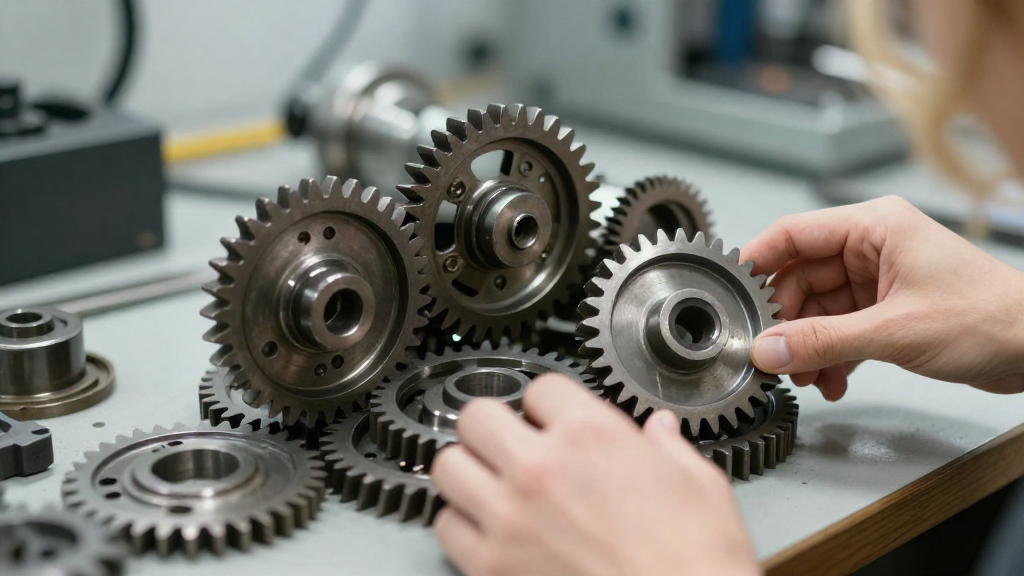
When we talk about gear applications in machines, we are referring to the various ways gears are utilized in different mechanical systems to transmit power, change direction, and alter speed.
What Are Gears and Their Role in Machines?
Gears are toothed mechanical components that allow for the efficient transfer of motion between shafts.
In most applications, they come in various shapes and sizes, with common types including:
- Spur Gears: These have straight teeth and are used for parallel shafts.
- Helical Gears: Featuring angled teeth, they operate more quietly and smoothly than spur gears.
- Bevel Gears: Used to change the axis of rotation, typically at a right angle.
- Worm Gears: Ideal for high torque applications, they provide a significant speed reduction.
Understanding the gear applications in machines helps enhance productivity, efficiency, and reliability across various industries.
Where Are Gear Applications Found in Machines?
Gears are ubiquitous in several machines. Here are some common sectors where gear applications are prominent:
1. Manufacturing Equipment
Manufacturing machines rely heavily on gears for various processes, including:
- CNC Machines: Gears aid in the precise movement of cutting tools.
- Conveyor Systems: They streamline movement and sorting tasks.
- Robotic Arms: Gears are vital for the articulation and accurate positioning of robotic components.
2. Automotive Industry
The automotive sector is a major user of gear applications in machines, particularly in:
- Transmissions: Gears are essential in controlling speed and torque in vehicles.
- Differentials: They manage the distribution of power to the wheels during turns.
- Power Steering Systems: Gears enhance maneuverability and precision.
3. Aerospace
In aerospace applications, the reliability of gears is crucial, serving functions such as:
- Landing Gear Mechanisms: Gears support the deployment and retraction processes of landing gear.
- Actuation Systems: They facilitate control surfaces and thrust vectoring.
4. Robotics and Automation
Modern robotics exhibits a wide range of gear applications designed for sophistication and precision:
- Servo Motors: Gears ensure precise control of the motor’s position.
- End Effectors: They enable robots to perform tasks with controlled force and speed.
5. Renewable Energy
In renewable energy systems, particularly in:
- Wind Turbines: Gears play a pivotal role in converting kinetic energy into electrical energy.
- Hydraulic Systems: They contribute to the movement of water or other fluids for energy conversion.
Why Are Gears Essential for Machine Efficiency?
Gears are fundamental for improving the efficiency of machines. Here are several key benefits of employing gear applications in machines:
Mechanism of Power Transmission
Gears facilitate the transfer of rotational force (torque) from one component to another. This power transmission is essential for various machine operations.
Speed Regulation
Gears allow machines to operate at different speeds, making them more versatile. For instance:
- A lower gear offers higher torque and lower speed, ideal for moving heavy loads.
- A higher gear allows for lower torque and higher speeds, perfect for vehicles on highways.
Direction Change
Gears can change the direction of motion effectively. Bevel gears, for example, can redirect rotational energy by 90 degrees—valuable in numerous applications.
Load Distribution
Gears help distribute loads evenly across different components, preventing wear and tear. This enhances the longevity of machinery.
How Are Gears Engineered for Specific Applications?
Engineering gears for specific applications involves a complex balance of design and functionality. Key factors include:
Material Selection
Durable materials like:
- Steel
- Aluminum
- Plastic Composites
are chosen based on strength, weight, and environmental resistance.
Design Considerations
The design of gears is often influenced by:
- Load Requirements: Understanding the forces at play is critical.
- Operating Environment: Consideration for temperature ranges and exposure to chemicals.
Precision Manufacturing
Advanced manufacturing techniques ensure high precision in gear production, which is vital for performance and reliability.
What Innovations Are Transforming Gear Applications?
Automation and Smart Technologies
With the rise of automation, gears are often involved in:
- Smart Factories: Where predictive maintenance becomes easier with monitored gear performance.
- AI Algorithms: Improving gear design by simulating performance under different conditions.
Lightweight Materials
There’s a trend towards using lightweight yet durable materials, which helps improve the efficiency of machines.
Advanced Coatings
Innovative coatings are being employed to reduce friction, increasing the lifespan and performance of gears.
Conclusion: The Future of Gear Applications in Machines
As industries evolve, the demand for efficient gear applications in machines will only increase.
From manufacturing to renewable energies, gears will continue to be the backbone of mechanical systems.
Continued innovation in material science, design technologies, and smart manufacturing techniques will undoubtedly pave the way for more efficient and reliable machinery.
By understanding the importance of gears and their applications, businesses and engineers can make more informed decisions regarding design, maintenance, and operation.