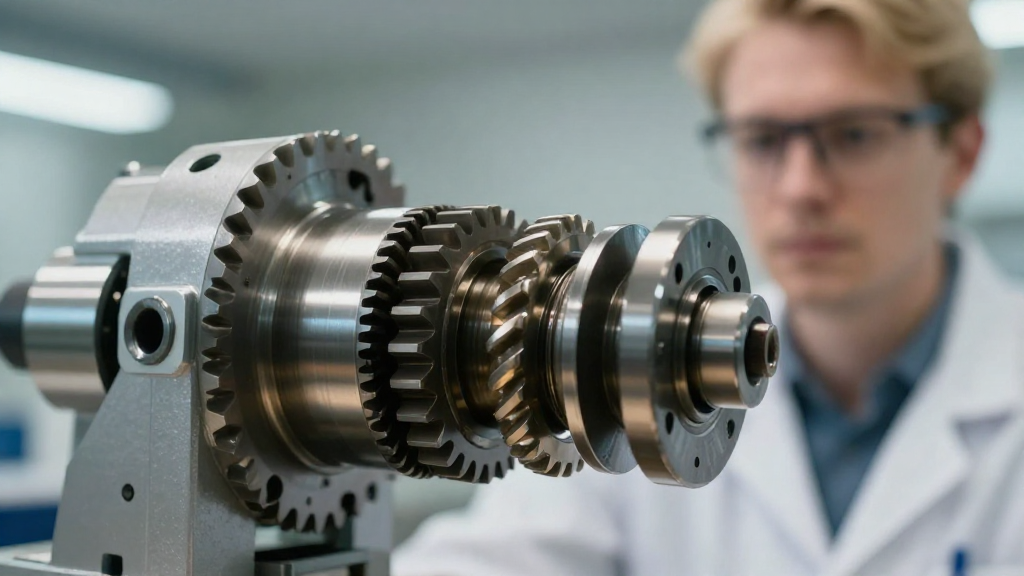
In the world of mechanical engineering, you may often encounter the term “harmonic gear.” But what is a harmonic gear and how does it function? This article explores the intricacies of harmonic gear drives, their applications, advantages, and some essential considerations.
What Is a Harmonic Gear Drive?
A harmonic gear drive is a type of gear mechanism that relies on the concept of harmonic motion to transmit power and motion effectively.
These gear systems are characterized by their unique design that facilitates high reduction ratios, compact size, and high precision in motion control.
The typical assembly of a harmonic gear drive consists of three primary components:
- Wave Generator: This is an eccentric cam attached to an input shaft.
- Flexspline: A thin, flexible gear that deforms under the influence of the wave generator.
- Circular Spline: A rigid gear that remains stationary and has more teeth than the flexspline.
How Does a Harmonic Gear Work?
Understanding how a harmonic gear operates involves delving deeper into its components and motions. Here’s how it works:
-
Input Motion: The wave generator rotates, creating an elliptical motion.
-
Flexspline Deformation: As it rotates, the elliptical motion causes the flexspline to deform and engage with the circular spline.
-
Output Motion: This engagement enables the flexspline to move through a limited angular range, resulting in a reduction of the output speed and an increase in torque.
This innovative method of operation results in significant benefits, making harmonic gears a preferred choice in various applications.
What Are the Advantages of Harmonic Gear Drives?
When asking, “what is a harmonic gear,” it is essential to recognize the advantages that come with using harmonic gear drives:
-
High Torque Density: Harmonic gears offer a remarkable amount of torque in a compact package, making them ideal for applications with limited space.
-
Precision and Accuracy: These gear systems provide high positioning accuracy, essential in fields such as robotics, aerospace, and medical devices.
-
Low Backlash: The unique design minimizes backlash, improving overall system responsiveness.
-
Lightweight Construction: The materials used in harmonic gears are often lightweight yet durable, allowing for ease of integration into various systems.
-
Smooth Motion: The operation of a harmonic gear drive results in smooth and continuous motion, which is particularly beneficial in systems requiring precise movements.
Where Are Harmonic Gear Drives Used?
Given their distinct characteristics and advantages, harmonic gear drives find applications across numerous industries. Here are some common areas where they shine:
-
Robotics: Harmonic drives enable precise and smooth motions in robotic joints, making them vital for robotic arms and advanced manufacturing systems.
-
Aerospace: These gear drives are employed in satellite positioning systems, gimbals, and aerial vehicles due to their lightweight design and accuracy.
-
Medical Devices: In equipment such as surgical robots and imaging systems, harmonic gears provide the precision and reliability required in critical operations.
-
Industrial Automation: Applications in conveyor systems and automated machinery frequently utilize harmonic gear drives for their compactness and efficiency.
-
Optical equipment: They are also used in telescopes and cameras to provide smooth adjustments and focusing mechanisms.
What Are the Disadvantages of Harmonic Gear Drives?
While there are many benefits associated with harmonic gear drives, they do have some limitations to consider:
-
Limited Load Capacity: Harmonic gears are generally designed for lower load applications, which may not suit heavy-duty tasks.
-
Temperature Sensitivity: These gears can be sensitive to temperature changes, which may alter their performance under different conditions.
-
Cost: The precision manufacturing required for these gears can often lead to higher production costs compared to traditional gear types.
How Do You Choose the Right Harmonic Gear Drive?
When considering a harmonic gear drive for your application, it’s crucial to assess several factors:
-
Application Requirements: Consider the load, speed, and precision required for your specific application.
-
Size and Weight: Examine the available space and weight restrictions.
-
Backlash Tolerance: Determine how much backlash your application can tolerate.
-
Cost vs. Performance: Balance your budget against the performance needs of your system.
What Maintenance Do Harmonic Gear Drives Require?
To ensure the longevity and efficiency of a harmonic gear drive, regular maintenance is essential. Some key maintenance tips include:
-
Regular Inspections: Check for signs of wear and tear or any unusual noises during operation.
-
Lubrication: Proper lubrication helps reduce friction and improves performance. Consult the manufacturer’s specifications for the type and frequency of lubrication.
-
Temperature Monitoring: Keep an eye on operating temperatures to ensure they remain within the recommended range.
-
Alignment Checks: Verify that all components within the system are properly aligned to prevent premature wear.
Conclusion
So, what is a harmonic gear? It is a highly sophisticated gear mechanism that utilizes harmonic motion to deliver superior torque and precision in a compact design. Harmonic gear drives have revolutionized mechanical systems across various industries, from robotics to aerospace, by providing smooth motion with minimal backlash.
While they offer significant advantages, potential users should also be aware of their limitations and maintenance needs.
In a world increasingly reliant on automation and precise motion control, understanding the fundamentals of harmonic gear drives is imperative for engineers and designers alike.
Their unique capabilities make them not only a fascinating example of mechanical innovation but also a practical solution for modern engineering challenges.