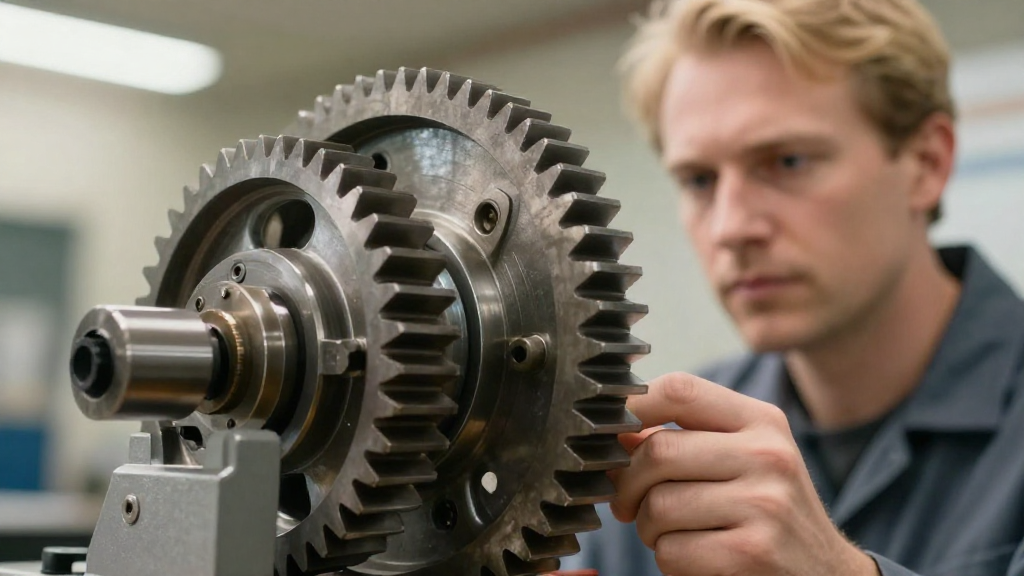
Understanding strain wave gear basics is essential for engineers and designers working with precision motion control systems.
In this article, we will explore:
- What are strain wave gears?
- How do they work?
- What are their key benefits?
- Where are they commonly used?
- What should you consider when selecting strain wave gears?
What are Strain Wave Gears?
Strain wave gears, also known as harmonic drives, are a type of gear system that’s distinguished by their unique method of operation.
Key Components
Strain wave gears consist of three primary components:
1. Input shaft: This is where the driving force is applied.
2. Flexible spline: This component is made from a flexible material that can deform.
3. Output shaft: This provides the output motion to the desired application.
The flexible spline is what gives strain wave gears their name. When the input shaft rotates, the flexible spline deforms and engages with the circular spline, leading to a high gear reduction ratio.
How Do Strain Wave Gears Work?
The Mechanism Explained
The workings of strain wave gears can be summarized in a few key steps:
-
Input Rotation: The input shaft spins, causing the flexible spline to deform.
-
Deformation Engagement: As the flexible spline deforms, it engages with the inner circular spline.
-
Output Motion: The deformed spline generates a movement that is transmitted to the output shaft, resulting in a rotational output.
Why Choose Strain Wave Gears?
The unique operational mechanism of strain wave gears leads to several advantages.
This gear system is known for its:
– High torque capacity: Despite their compact size, they deliver significant torque.
– Low backlash: They provide precise positioning due to minimal backlash.
– Compact design: Their design allows for a smaller footprint compared to conventional gears.
What Are the Key Benefits of Strain Wave Gears?
Understanding strain wave gear basics also involves knowing the benefits they bring to various applications.
Advantages Include:
-
Precision Motion Control: Strain wave gears can achieve high precision, which is crucial for applications in robotics and aerospace.
-
High Gear Ratios: They can achieve high gear ratios in a compact space, ideal for applications requiring space conservation.
-
Durability: They are designed to handle high loads and are resistant to wear, leading to a longer lifespan.
-
Simplicity in Design: Their unique mechanism allows for simpler designs in machinery, potentially reducing overall costs.
Where Are Strain Wave Gears Commonly Used?
The application of strain wave gears is widespread across various industries.
Common Uses Include:
- Robotics: In robotic arms and joints for precise movement.
- Aerospace: For flight control systems requiring highly reliable gear systems.
- Medical Devices: In surgical robots and imaging equipment, where precision is paramount.
Additional Applications:
- Industrial Automation: For conveyor systems and automated machinery.
- Renewable Energy: Wind turbines use strain wave gears for optimum energy harvesting.
What Should You Consider When Selecting Strain Wave Gears?
When venturing into the strain wave gear basics, choosing the right gear for your application involves evaluating several factors:
-
Load Requirements: Analyze the operational loads and choose gears that can withstand these conditions.
-
Gear Ratio: Determine the necessary gear ratio for your application’s speed and torque requirements.
-
Space Constraints: Consider the size and footprint; strain wave gears offer a compact solution.
-
Backlash: Assess the allowable backlash in your application for precise motion control.
-
Material Selection: Ensure that the materials used can endure the environmental conditions of your application.
Conclusion
In summary, understanding strain wave gear basics is essential for leveraging their benefits in various fields.
These gears offer:
– High torque capacity,
– Low backlash,
– Compact designs,
– Precise motion control capabilities.
Whether utilized in robotics, aerospace, or medical devices, the versatility of strain wave gears makes them a valuable component in modern technology.
For a successful implementation of strain wave gears, it is vital to properly assess load requirements, gear ratios, and design specifications tailored to your specific needs.
By comprehending the mechanics and applications of strain wave gears, engineers and designers can elevate the performance of their systems and enhance productivity across diverse sectors.
Call to Action
If you’re considering integrating strain wave gears into your design, reach out to experts for tailored solutions that fit your specifications. Whether it’s for a new robot design or upgrading existing machinery, understanding strain wave gear basics is the first step towards achieving optimal results.