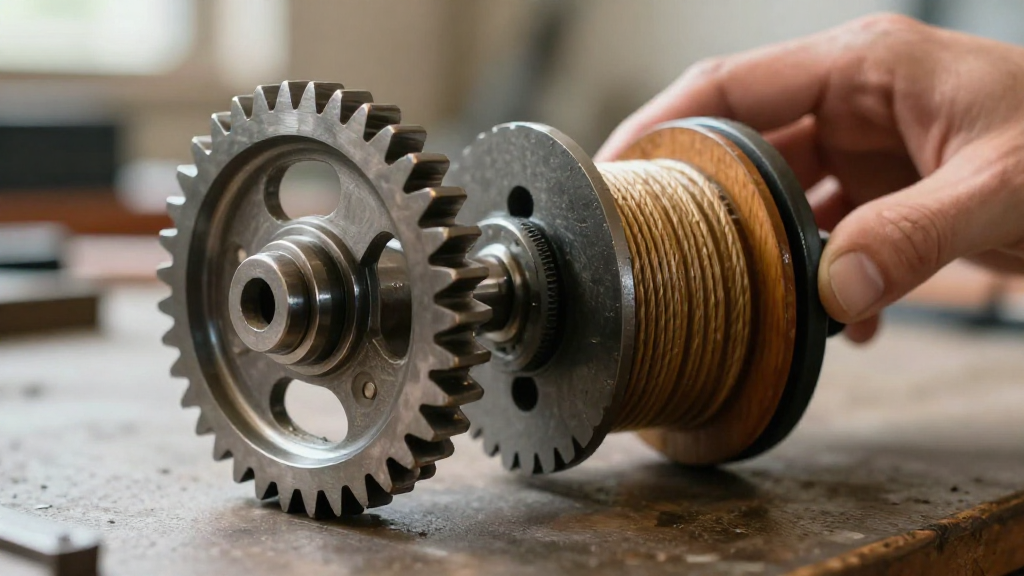
When it comes to mechanical systems, understanding the differences between gears and pulleys is crucial. In this gear vs pulley comparison, we’ll delve into their distinct characteristics, functions, and applications to clarify their roles in various mechanisms.
What Are Gears?
Gears are mechanical components designed to transmit torque and motion between two rotating shafts.
They typically come in pairs, whereby one gear drives the other. The primary characteristics of gears include:
- Teeth: Gears have teeth that interlock with the teeth of another gear.
- Shapes: Common types of gears include spur, helical, bevel, and worm gears.
- Materials: Gears can be made from metal, plastic, or composite materials depending on their application.
How Do Gears Work?
When one gear rotates, its teeth engage with the teeth of another gear.
This engagement allows the rotational motion to be transmitted effectively, potentially changing the speed and torque.
Some key points in understanding their function include:
- Speed Ratio: The size of the gears determines the speed at which they rotate. For example, a large gear driving a small gear increases speed.
- Torque: Gears can multiply torque; a small input gear driving a larger output gear increases force.
- Direction: Gears can also change the direction of rotation, with meshing gears rotating in opposite directions.
What Are Pulleys?
Pulleys, on the other hand, are systems used primarily to lift loads by changing the direction of force applied.
They consist of a wheel with a groove around its circumference through which a rope, belt, or cable passes.
Here are some notable features of pulleys:
- Single vs. Compound: A single pulley changes the direction of force, while compound pulleys (block and tackle) reduce the effort needed to lift heavy objects.
- Materials: Pulleys can be made from metal, plastic, or wood.
- Applications: Commonly used in cranes, elevators, and various lifting devices.
How Do Pulleys Work?
Pulleys function by supporting a load and distributing the weight along the belt or cable.
When you pull down on a rope, the pulley allows you to lift something upwards more easily.
Key points to understand their utility include:
- Mechanical Advantage: By using multiple pulleys, you can gain significant mechanical advantage, increasing the lifting capability with less effort.
- Direction Change: Unlike gears, pulleys are mostly about changing the direction of force rather than transferring motion directly.
How Are Gears and Pulleys Different?
In our gear vs pulley comparison, we see several critical differences between these two mechanical systems.
-
Functionality:
– Gears transmit rotational motion.
– Pulleys facilitate lifting by changing the direction of force. -
Design and Structure:
– Gears have interlocking teeth and come in various shapes.
– Pulleys consist of a wheel with a groove for a rope or belt. -
Mechanical Advantage:
– Gears are designed to increase speed or torque.
– Pulleys provide a mechanical advantage that reduces the effort required to lift a load. -
Applications:
– Gears are commonly found in clocks, vehicles, and machinery.
– Pulleys are used in construction, elevators, and cable systems.
When Should You Use Gears or Pulleys?
Choosing between gears and pulleys depends on your project’s requirements.
Consider the following factors:
- For rotational motion: If you need to transfer power efficiently, gears are the better choice.
- For lifting loads: If your objective is to lift weights with less effort, opt for pulleys.
- For speed vs. torque: If speed is crucial (like in motors), gears excel. If you need to lift heavy objects, pulleys are more advantageous.
Examples in Engineering
- Gears are used in:
- Cars: Transmission systems rely heavily on gears.
-
Machines: Conveyors often consist of a system of gears to maintain motion.
-
Pulleys are used in:
- Construction: Cranes utilize pulleys for heavy lifting.
- Elevators: The pulley system allows for the smooth vertical movement of the cabin.
Can Gears and Pulleys Work Together?
Yes, gears and pulleys can work together in complex systems to achieve specific objectives.
For example:
-
In some vehicles, both gears and pulleys are part of the transmission system, allowing efficient power transfer while also managing torque and speed.
-
Robots often utilize both components to move and manipulate objects effectively.
Advantages of Integration
- Efficiency: Combining the two provides enhanced control over movements and forces.
- Versatility: Allows for more complex machinery designs that can perform multiple functions.
- Optimized Performance: Different configurations can maximize performance tailored to the task at hand.
Conclusion: Gears vs. Pulleys
In summary, understanding the differences highlighted in this gear vs pulley comparison is essential for anyone involved in mechanical design or engineering.
Both gears and pulleys serve unique functions that can be pivotal in various applications.
- Use gears when you require speed or torque.
- Choose pulleys for lifting loads efficiently.
By leveraging both technologies appropriately, one can optimize mechanical systems for enhanced performance and functionality.
Choosing the right approach significantly impacts the effectiveness of your mechanical system, simplifying tasks and achieving objectives with greater efficacy.