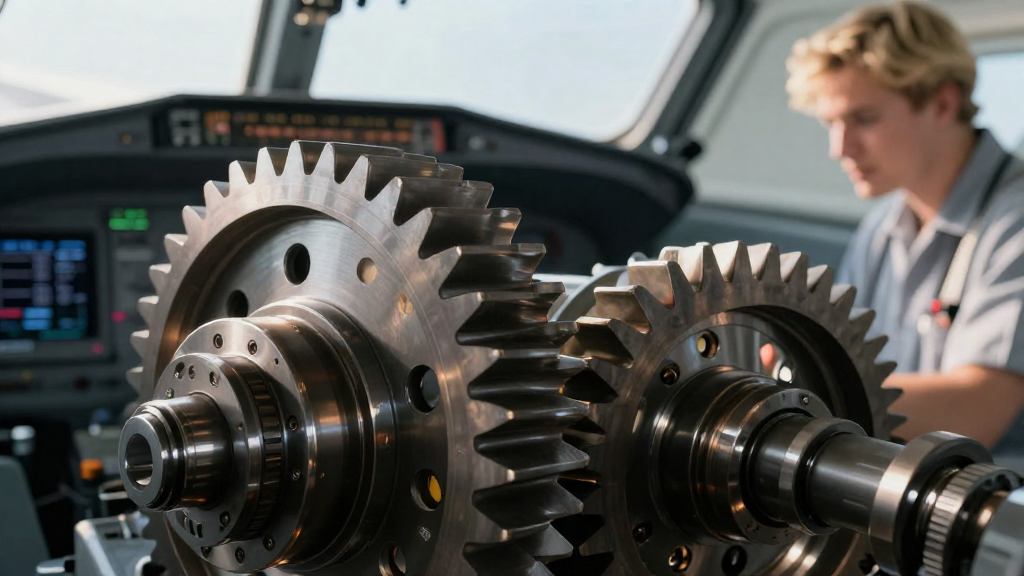
When discussing gear in aerospace systems, one must recognize their critical role in ensuring reliability, efficiency, and safety in aviation and space travel.
What Is the Role of Gears in Aerospace Systems?
Gears are mechanical components that transmit power and motion between different parts of a system.
In aerospace systems, they serve several essential purposes:
- Power Transmission: Gears help transfer engine power to various components.
- Speed Control: By changing gear ratios, they adjust the speed of the rotating parts.
- Torque Multiplication: Gears can amplify torque, allowing for powerful movements with smaller engines.
Understanding how gears work in aerospace systems is vital for engineers and designers aiming to optimize performance.
How Do Gears Work Together in Aerospace Engineering?
In aerospace engineering, gears typically work in meshes, meaning that the teeth of one gear interlock with those of another.
This interaction allows one gear to drive another, significantly affecting overall system performance. Here are some ways these interactions optimize gear use in aerospace systems:
-
Types of Gears:
– Spur Gears: Often used for simple, linear power transfer.
– Helical Gears: Provide smoother and quieter operation.
– Planetary Gears: Used in applications requiring compact designs and high torque. -
Material Selection:
– Gears in aerospace systems are often made from lightweight materials like titanium or composites.
– These materials provide strength and reduce weight, which is crucial in aircraft and spacecraft. -
Precision Manufacturing:
– Aerospace gears are manufactured with extreme precision.
– Tolerances are often within microns to ensure smooth operation and reliability.
Why Are Gear Ratios Important in Aerospace Systems?
Gear ratios determine how power is distributed among various systems.
This concept is crucial in aerospace systems for several reasons:
- Optimized Performance: Different phases of flight (takeoff, cruising, landing) require different power settings.
- Fuel Efficiency: Proper gear ratios ensure optimal engine speed, which can lead to better fuel consumption.
- Safety: Incorrect gear ratios can lead to catastrophic failures if not aligned with system requirements.
How Do Gears Contribute to Aircraft Control Surfaces?
Control surfaces are essential for maneuvering an aircraft, and gears play a significant role in their functionality.
Here’s how gears contribute to the performance of these vital components:
- Flaps and Slats: Gears help extend and retract these devices, allowing for better lift during takeoff and landing.
- Rudder and Ailerons: Gears ensure precise movements, allowing for accurate steering and stability.
- Landing Gear: Gears allow for efficient retraction and extension, critical for safe landings.
What Are the Challenges in Designing Gears for Aerospace Systems?
Designing gears for aerospace systems presents unique challenges.
These challenges include:
- Weight Constraints: Aerospace components need to be lightweight.
- Space Limitations: Designs must often fit into compact spaces.
- High-Stress Environments: Gears must withstand extreme forces, temperatures, and speeds.
Addressing Design Challenges
To address these challenges, engineers employ several strategies:
- Advanced Material Science: Utilizing composites and advanced alloys to reduce weight without sacrificing strength.
- Innovative Design Techniques: Using computer simulations to optimize gear shapes and profiles before physical prototypes are made.
- Rigorous Testing: Ensuring that gears can withstand operational stresses through extensive testing.
What Are the Safety Considerations for Gears in Aerospace Systems?
Safety is paramount in aerospace engineering, and gears are no exception.
Implementing safety measures is crucial for ensuring the reliability of gear in aerospace systems. Some key considerations include:
- Failure Modes: Understanding potential failure points, such as fatigue or wear on gear teeth.
- Regular Maintenance: Implementing scheduled inspections and maintenance regimens.
- Redundant Systems: Using multiple gears or systems to ensure backup in case of failure.
How Do Innovations Impact Gears in Aerospace Systems?
In recent years, technological advancements have spurred innovations in gear design and functionality in aerospace systems.
These innovations often lead to enhanced performance and efficiency. Key innovations include:
- Additive Manufacturing (3D Printing): Allows for the production of complex gear geometries that were previously impossible to manufacture.
- Smart Materials: These materials can adapt to changing conditions, improving performance and reliability.
- Digital Twin Technology: This simulation technology allows engineers to monitor gear performance in real-time, enhancing preventive maintenance efforts.
Why Are Gears Critical for Spacecraft Systems?
Gears are not just essential for aircraft but play a vital role in spacecraft systems as well.
In space, gears serve several unique functions:
- Antenna Positioning: Gears help position antennas for optimal communication.
- Deployable Solar Arrays: Gears ensure that solar panels can be deployed efficiently to harness sunlight.
- Robotic Manipulators: Gears allow robotic arms and devices to function accurately in zero-gravity environments.
How Do Gears in Aerospace Systems Evolve with Industry Needs?
As the aerospace industry evolves, so must gear technology.
Changes in environmental regulations, fuel efficiency demands, and advancements in flight technology drive these shifts. The evolution of gears in aerospace systems includes:
- Sustainability: Developing gears made from recycled materials or designed to minimize waste.
- Urban Air Mobility: Innovations in gear design are being pushed by the need for urban air transportation systems, leading to new applications and configurations for gear systems.
- Electrification: As more electric propulsion systems emerge, gears are being designed to efficiently transfer power without traditional engines.
Conclusion: The Integral Role of Gears in Aerospace Systems
In conclusion, gears play an integral role in the functionality and safety of aerospace systems.
From ensuring efficient power transmission to allowing precise control of aircraft and spacecraft operations,
the importance of appropriately designed gears cannot be overstated.
As technology advances and industry needs change, the development of efficient, robust, and lightweight gears will remain central to the future of aerospace engineering.
Understanding the mechanics of gear in aerospace systems not only enhances performance but is also critical for the safety and success of aviation and space exploration endeavors.