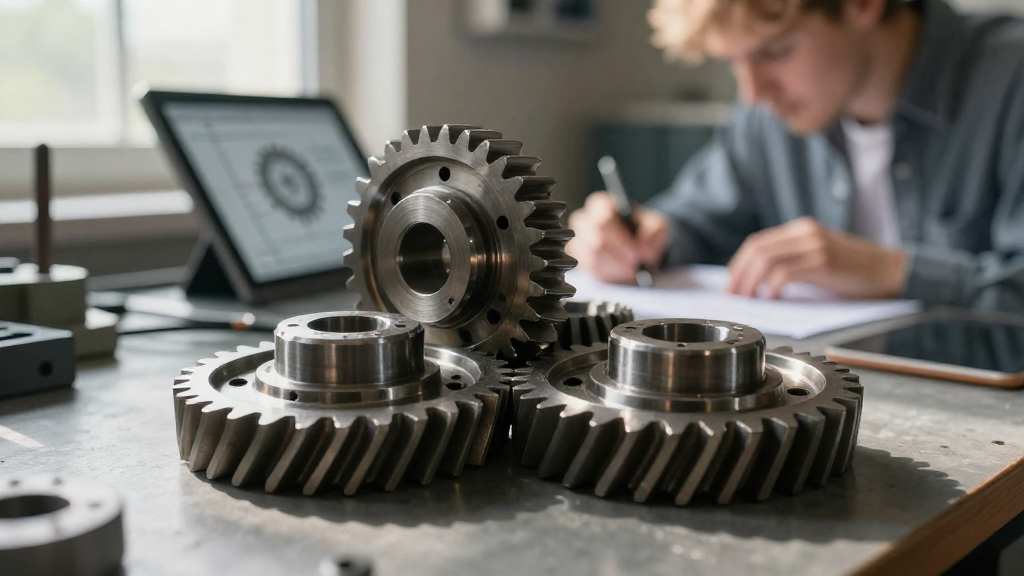
Modeling gears is an essential aspect of mechanical engineering, but it is often fraught with difficulties.
These gear modeling challenges can affect the performance and efficiency of machines significantly.
In this article, we will explore some of the most common gear modeling challenges faced by engineers and designers, along with potential solutions and best practices.
What Are the Most Common Gear Modeling Challenges?
Gear modeling involves creating precise and accurate 3D representations of gears, which can be complex due to:
-
Geometry Complexity: Gears come in various shapes and sizes, including spur, bevel, helical, and worm gears. Each of these types has specific geometric parameters that must be accurately captured.
-
Material Properties: Different materials present unique challenges in modeling, impacting factors such as strength, friction, and wear.
-
Interference Issues: Ensuring that gears mesh correctly and do not interfere with adjacent components is a common issue in gear modeling.
-
Dynamic Behavior: Gears often operate under dynamic loads, making it critical to model not just the static conditions but also how gears behave under motion.
-
Manufacturing Constraints: The models must consider real-world manufacturing processes to ensure that they can be feasibly produced.
Understanding these gear modeling challenges is crucial for creating effective designs that perform well in real-world applications.
How Can Geometry Complexity Affect Gear Modeling?
With the rise of advanced modeling software, designers can create intricate geometric models of gears. However, this complexity often leads to specific challenges:
-
Accuracy of Parameters:
– Gears must have precise dimensions, including pitch diameter, tooth height, and base circle.
– A small error in the tooth profile can result in improper meshing, leading to mechanical failure. -
Variable Gear Types:
– Different gear types require unique modeling approaches.
– For instance, bevel gears require complex angle calculations for tooth alignment, while spur gears can be modeled relatively straightforwardly. -
Software Limitations:
– Not all CAD software is equipped to handle advanced gear modeling features, necessitating workarounds or specialized tools.
To overcome these challenges, it’s essential to invest in quality modeling software that accommodates complex geometries and allows for real-time adjustments.
What Role Do Material Properties Play in Gear Modeling?
Material selection heavily influences gear performance. Here are some key considerations:
-
Strength and Durability: Specific materials may not withstand certain loads or environmental conditions, so it’s important to model how materials respond under various stress levels.
-
Friction and Wear: Different materials have different frictions. For instance, metal gears typically have a different friction profile than plastic gears. Miscalculating these properties can lead to unnecessary wear and tear.
-
Thermal Effects: Some materials are sensitive to temperature changes, which can affect performance over time. Engineers must consider how temperature affects material properties during gear modeling.
By being cognizant of these material properties in gear modeling, designers can avoid premature failure and ensure long-lasting performance.
How Can Interference Issues Be Minimally Impactful in Gear Modeling?
Interference issues are a common gear modeling challenge that can significantly affect gearbox efficiency. The following methods can help mitigate these potential interferences:
-
Clearance and Tolerance:
– Maintaining appropriate clearance between gear teeth ensures smooth operation.
– Ensure tolerances are defined accurately based on the gear type and its application. -
Simulation Testing:
– Use simulation tools to visualize how gears will interact.
– This allows for adjustments to be made early in the design process, reducing the risk of unexpected interferences. -
Prototype Testing:
– Physical prototypes can reveal unforeseen issues that may not be apparent in digital modeling.
– Real-world testing is vital for verifying the accuracy of models. -
Standardized Gear Data:
– Utilizing standardized gear sizing guidelines can help minimize interference issues from the outset.
– Resources like the ANSI/AGMA standards provide useful references for design parameters.
By proactively addressing interference in gear modeling, teams can avoid compatibility issues and improve machine performance.
What Are the Challenges of Dynamic Behavior in Gear Modeling?
Dynamic behavior modeling adds another layer of complexity to gear modeling. Some of the primary challenges include:
- Load Variability:
- Gears often operate under varying load conditions.
-
This necessitates modeling both static and dynamic responses accurately.
-
Vibration and Noise:
- Poorly designed gear systems can generate excessive vibrations and noise.
-
Advanced modeling can help predict potential issues, resulting in quieter, smoother operation.
-
Fatigue Life Prediction:
- Gears subjected to dynamic loading can be prone to fatigue.
- Accurately estimating fatigue life requires advanced methods and understanding of material properties.
Implementing dynamic simulation software allows engineers to better analyze gear behavior under real-world conditions, identifying potential issues before they occur.
How Can Manufacturing Constraints Influence Gear Modeling?
Manufacturing processes significantly affect the feasibility of gear designs. Here are some constraints to consider:
- Availability of Materials:
- Not all high-performance materials may be readily available.
-
It’s crucial to select materials that can be sourced easily to ensure production timelines.
-
Production Techniques:
- Advanced techniques like 3D printing or CNC machining offer various capabilities and limitations.
-
Incorporating manufacturing considerations into gear modeling ensures more reliable production.
-
Cost Implications:
- Complex designs can drive up production costs.
- Balancing performance advantages against cost constraints is essential in gear modeling.
Considering these manufacturing constraints will lead to designs that are practical and cost-effective.
Conclusion: How Can We Overcome Gear Modeling Challenges?
Navigating gear modeling challenges is essential for the successful design and production of reliable gear systems.
Focusing on the following strategies can lead to smoother processes and superior outcomes:
- Invest in high-quality modeling software to accommodate complex geometries.
- Make informed material selections based on comprehensive properties.
- Address interference, dynamic behavior, and manufacturing constraints throughout the modeling process.
By implementing these practices, engineers can effectively overcome common gear modeling challenges and develop robust, efficient gear systems that meet the demands of modern applications.
Ultimately, understanding and addressing these challenges can pave the way for innovation and excellence in gear design.