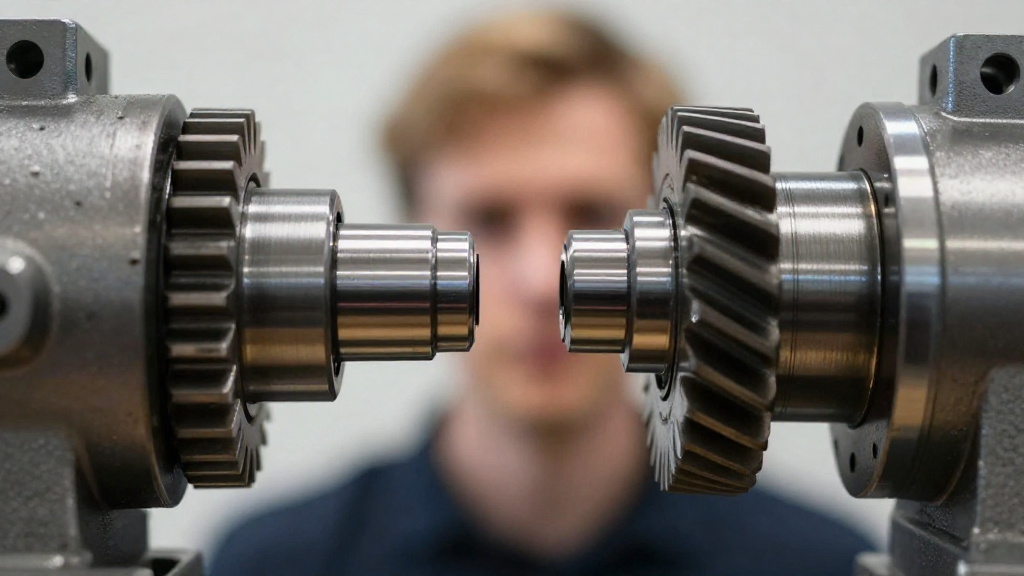
When it comes to mechanical transmission systems, many people ponder the question of gear drive vs friction drive.
In this article, we will explore the fundamental differences, advantages, and disadvantages of each system to help you make an informed decision.
What Exactly Are Gear Drives and Friction Drives?
Gear Drive
A gear drive is a permanent mechanical connection between two or more rotating elements.
This connection is established via gears that interlock and transfer motion and torque.
They are commonly found in applications ranging from car transmissions to industrial machinery.
Friction Drive
On the other hand, a friction drive uses the friction between two surfaces to transmit power.
This system relies on contact pressure between the driving and driven elements.
Friction drives can be seen in belt drives and even some types of electric motors.
What Are the Major Differences Between Gear Drive and Friction Drive?
-
Transmission Method
– Gear Drive: Uses teeth on gears to create a direct mechanical link.
– Friction Drive: Relies on the frictional contact of surfaces. -
Efficiency
– Gear Drive: Typically more efficient due to less slippage.
– Friction Drive: Can suffer from energy loss due to slipping. -
Torque Capacity
– Gear Drive: Generally able to handle greater loads and torque.
– Friction Drive: Limited torque capacity; more likely to slip under heavy loads. -
Wear and Tear
– Gear Drive: Subject to wear over time; lubricants are often needed.
– Friction Drive: Can experience surface degradation; maintenance may involve inspecting contact surfaces. -
Cost
– Gear Drive: Generally more expensive due to complexity and materials.
– Friction Drive: Usually less costly, especially for simple applications.
What Are the Advantages of Gear Drives?
When discussing gear drive vs friction drive, it’s crucial to consider the benefits of gear drives:
- Higher Efficiency: Gear drives can achieve efficiency ratings of up to 98%.
- Precision: They provide precise speed ratios, allowing for smooth operation.
- Robustness: Gear drives are often more durable and less prone to failure under heavy loads.
- Varied Ratios: They allow for a wide range of gear ratios.
- Less Slipping: The interlocking nature of gears minimizes slippage, leading to maximum power transfer.
What Are the Disadvantages of Gear Drives?
Despite their many advantages, gear drives do present some downsides:
- Cost: Higher manufacturing and material costs can make gear drives less economical.
- Complexity: The design and implementation can be more complicated than friction systems.
- Noise: Gears can create noise during operation, which may be undesirable in certain applications.
- Weight: Gear systems tend to weigh more due to their construction, which can be a drawback in mobile applications.
What Are the Advantages of Friction Drives?
Friction drives also come with their own unique set of advantages:
- Simplicity: The design is often simpler than gear systems, making it easier to manufacture and maintain.
- Lower Cost: Friction drives are typically less expensive to produce and implement.
- Reduced Weight: They often weigh less, making them suitable for lightweight applications.
- Smooth Operation: These drives can operate more quietly compared to gear systems.
What Are the Disadvantages of Friction Drives?
While friction drives do have benefits, they also come with certain limitations:
- Slippage: The reliance on friction means there is a potential for slippage under load.
- Wear and Tear: Contact surfaces can degrade over time, requiring regular maintenance.
- Less Torque Capacity: Generally, friction drives are not ideal for high-torque applications.
- Temperature Sensitivity: Performance can be affected by changes in temperature and material properties.
How Do Gear Drives and Friction Drives Compare in Real-World Applications?
Understanding gear drive vs friction drive in practical applications can shed light on their best uses:
-
Automotive Industry:
- Gear Drive: Most automotive transmissions use gear drives for efficiency and torque transfer.
- Friction Drive: Some electric vehicles use friction systems in their motors.
-
Industrial Machinery:
- Gear Drive: Common in heavy machinery for precise control over large forces.
- Friction Drive: Used in conveyors and lighter equipment where cost and weight are crucial.
-
Home Appliances:
- Gear Drive: Found in washing machines and power tools.
- Friction Drive: Used in small motors and some vacuum cleaners.
What Does the Future Hold for Gear Drives and Friction Drives?
As technology continues to evolve, both gear drives and friction drives will likely be refined and improved.
-
Innovative Materials: Lightweight, durable materials will enhance performance and reduce maintenance needs.
-
Energy Efficiency: Ongoing research aims to improve both systems’ efficiency, lowering energy consumption.
-
Advanced Designs: New designs may combine the best of both world systems for increased versatility.
Conclusion: Which Should You Choose?
Choosing between gear drive vs friction drive ultimately comes down to your specific requirements.
If you need high efficiency, high torque, and durability, gear drives are a solid choice.
Conversely, if you’re looking for simplicity, lower costs, and lightweight solutions, friction drives may be more appropriate.
By carefully considering the advantages and disadvantages of both systems, you can make a fully informed decision that aligns with your needs.
Remember to assess the specific application you are looking at, as the optimal choice will vary depending on the use case.