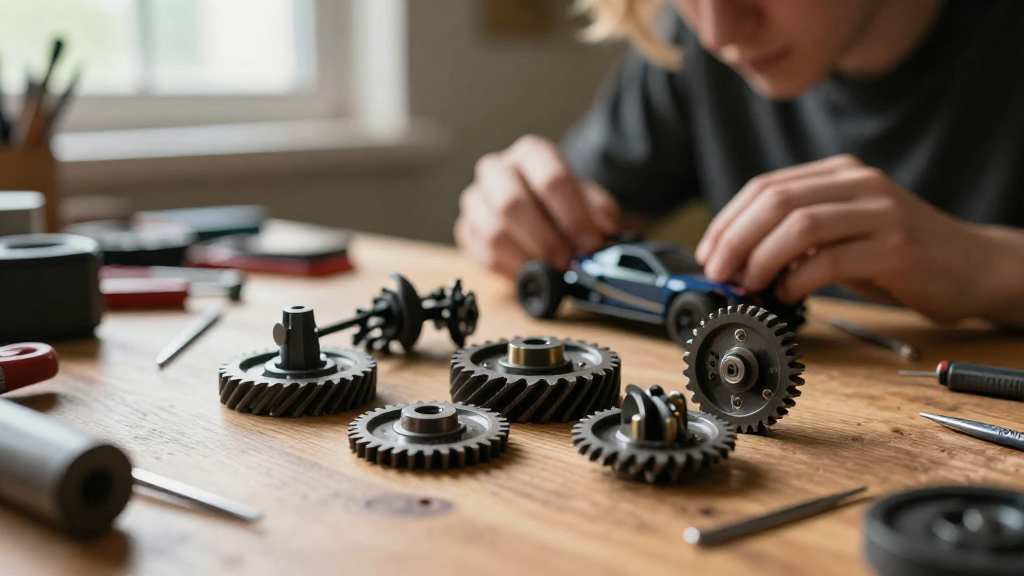
Understanding RC car gears is crucial for any beginner in the world of remote-controlled cars.
This article will provide a comprehensive breakdown of the topic, ensuring you grasp the fundamentals of RC car gears.
What are RC Car Gears?
RC car gears play a vital role in how your remote-controlled vehicle functions.
In simple terms, gears are mechanical components that help transfer power from one part of the car to another.
They work together to control the speed and torque of your RC car.
Why Do You Need Gears in Your RC Car?
Gears in an RC car serve multiple purposes:
- Speed Control: They determine how fast your car can go.
- Torque Management: They help handle the power transmitted to the wheels.
- Efficiency: Well-geared systems maximize battery life and performance.
Without proper RC car gears, your vehicle could face various performance issues, including sluggishness or poor handling.
How are RC Car Gears Configured?
What Types of Gears are Commonly Used?
When you’re diving into the world of RC car gears, you’ll encounter several types of gears:
-
Spur Gear: This is the main gear attached to the motor. It usually comes in a variety of tooth counts for different speed setups.
-
Pinion Gear: This gear connects to the spur gear and is responsible for transferring power.
-
Differential Gears: Found in many cars, these gears assist in turning corners by allowing the outside wheels to turn faster than the inner wheels.
-
Gear Ratio: It’s critical to understand that the relationship between the spur gear and the pinion gear dictates the gear ratio, affecting speed and torque.
How Do Gear Ratios Work?
Gear ratios are calculated by comparing the number of teeth on the spur gear to the number of teeth on the pinion gear.
For example:
- If the spur gear has 48 teeth and the pinion has 12 teeth, the gear ratio would be 4:1.
This means the motor has to turn 4 times for the spur gear to make one complete rotation.
Here’s how it impacts your RC car:
- A lower gear ratio (e.g., 3:1) generally means higher speed but less torque.
- A higher gear ratio (e.g., 6:1) generally means more torque and lower speed.
How Can You Upgrade Your RC Car Gears?
Which Upgrades Are Beneficial?
If you’re looking to enhance your RC car’s performance, upgrading your gears can be a great start.
Common upgrades include:
-
Metal Gears: Provide greater durability compared to plastic ones and can handle more stress.
-
High-Speed Gears: Designed for speed enthusiasts who want to improve top-end performance.
-
Torque Gears: Perfect for off-road enthusiasts who need more pulling power for climbing and rough terrains.
How Do You Change Your RC Car Gears?
Changing gears may sound daunting, but it’s a straightforward process once you get the hang of it.
Here’s a step-by-step guide:
-
Gather Tools: You’ll typically need a screwdriver, an Allen wrench, and possibly some pliers.
-
Remove the Gear Cover: Unscrew any screws to access the gear components.
-
Take Out the Old Gears: Remove the existing spur and pinion gears carefully.
-
Install New Gears: Align the new gears properly and ensure they mesh well together.
-
Reassemble the Car: Replace the gear cover and tighten all screws.
-
Test Your Car: Once reassembled, take the car for a test run to ensure everything operates smoothly.
What are the Common Issues with RC Car Gears?
How Do You Identify Gear Problems?
Even the best gears can run into issues. Here are common problems you may encounter:
-
Stripped Gears: Often caused by improper alignment or too much stress.
-
Slipping Gears: When gears don’t mesh properly, leading to loss of power transmission.
-
Unusual Noises: Grinding or whining sounds while your car is running can indicate worn or damaged gears.
What Are the Solutions?
Here’s how to tackle common gear problems:
-
Regular Maintenance: Regularly clean and lubricate gears to keep them functioning well.
-
Checking Alignment: Ensure that gears align properly when you replace them.
-
Replace Worn Gears: If any gears show significant wear, replacing them will allow for better performance.
How Do You Maintain Your RC Car Gears?
What Maintenance Tips Should You Follow?
Maintaining your RC car gears is essential for longevity and performance. Here are some vital tips:
-
Cleaning: Regularly clean dirt and debris from gears. Use a soft brush or cloth for best results.
-
Lubrication: Apply a small amount of grease or oil designed for RC cars to prevent friction.
-
Inspect Regularly: Check for wear or damage during each maintenance session to catch issues early.
-
Upgrade When Necessary: Don’t hesitate to replace worn gears or upgrade for better performance.
Conclusion: Why Knowing About RC Car Gears Matters
As you’ve seen in this article about RC car gears explained, understanding how to work with and maintain gears is crucial for any RC car enthusiast.
From improving performance with gear upgrades to performing regular maintenance, your knowledge will serve you well in ensuring your remote-controlled car runs smoothly and efficiently.
Don’t overlook the importance of gears in your RC car’s performance.
With this foundational knowledge, you’re now better equipped to enhance your RC car experience.
Get ready to dive in and enjoy more exhilarating rides with your fully tailored and maintained RC car gears!