Choosing astronomy gear for astrophotography is easier when you match the equipment to your target objects, camera type, and setup style. A strong tracker’s stability, a camera’s sensor performance, and clean power delivery all matter more than flashy extras.
Below, you’ll find 10 practical options for beginners and advanced users alike, from portable star trackers to dedicated planetary cameras and smart telescopes.
Best 10 Astronomy Gear for Astrophotography Picks for 2026
Portable Star Tracker
Sky-Watcher Star Adventurer 2i Pro Pack
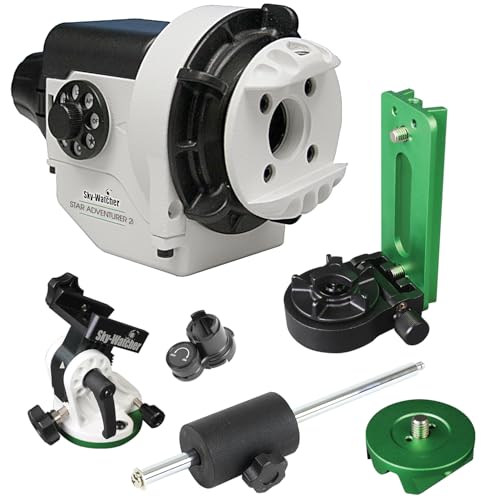
- Motorized tracking platform for nightscapes and Milky Way shots
- Modular design works with existing photographic tripods
- Wi-Fi control via Sky-Watcher SAM Console app
Best For: Travel-friendly wide-field astrophotography and DSLR nightscapes
Beginner Planetary Camera
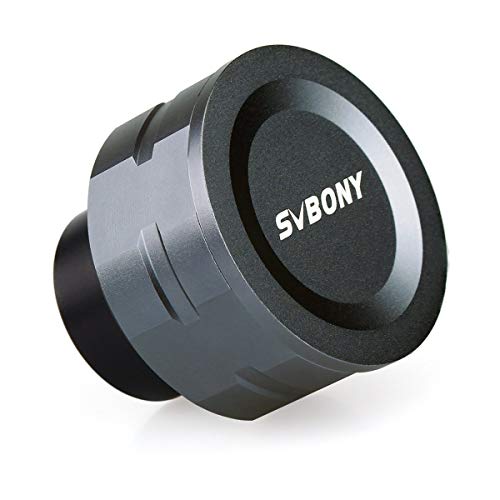
- Plug-and-play USB 2.0 telescope camera with no driver required
- Built for the Moon, planets, and terrestrial targets
- Standard 1.25-inch threaded design works with telescope filters
Best For: Beginners starting lunar and planetary astrophotography
Heavy-Duty Ball Head

- 20 lb capacity with smooth aluminum alloy ball movement
- 360-degree panning plus +/- 90-degree tilt
- Dual bubble levels help with setup and leveling
Best For: Portable camera support for astrophotography and panoramas
High-Resolution Planetary Camera

- IMX715 sensor with 1.45µm pixels for detailed 4K planetary imaging
- USB 3.0 and 512MB DDR3 cache support smooth, high-speed capture
- ST4 autoguider interface adds mount-control flexibility
Best For: Advanced moon and planetary astrophotography
Compact Star Tracker
Equatorial Mount Star Tracker with Ball-Head Gimbal

- Stellar, moon, and custom rotation speeds
- Switches between northern and southern hemispheres
- USB power-bank friendly with no app required
Best For: Portable astrophotographers who want a compact tracker for cameras and time-lapse work.
Planetary Guide Camera

- IMX662 sensor with low-noise performance
- 1920x1080 capture at 107 FPS
- ST4 guiding and computer-only use
Best For: Planetary imagers and guiding users who want a fast USB 3.0 telescope camera for computer-based capture.
Nebula Contrast Filter
SVBONY 1.25" UHC Light Pollution Filter
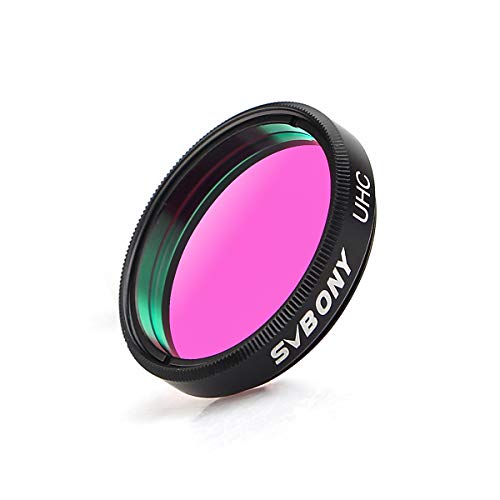
- Cuts selected artificial-light wavelengths
- Improves emission nebula contrast
- Standard 1.25-inch eyepiece fit
Best For: Observers and astrophotographers trying to improve nebula contrast from city or suburban locations.
Smart Sky Capture Pick
ZWO Seestar S30 Pro Smart Telescope
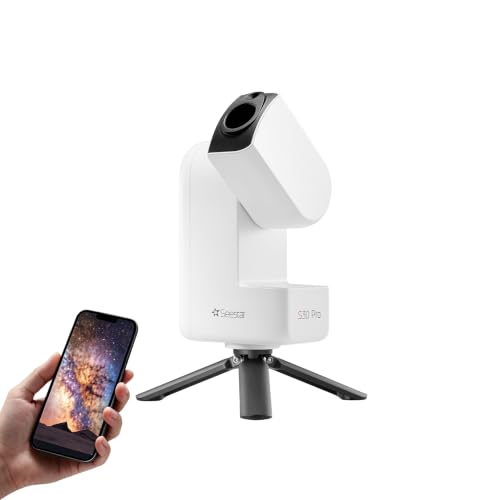
- App-controlled GOTO and tracking
- Dual-camera 4K astrophotography
- One-tap imaging with built-in processing
Best For: Beginners wanting an automated smart telescope for easy astrophotography
Portable Power Hub Pick
SVBONY SV241 Astronomy Power Adapter

- Six DC outputs plus USB and Type-C ports
- Built-in ESD protection and filtering
- Compact 125g field-friendly design
Best For: Field astrophotographers who need a compact multi-output power hub
Wireless Camera Pick
SVBONY SC311 Upgraded WiFi Telescope Camera

- IMX662 sensor with low noise
- Built-in WiFi hotspot for app control
- Up to 30-second exposure and 32GB storage
Best For: Telescope owners wanting a wireless camera for lunar, planetary, and entry-level deep-sky imaging
Portable Star Tracker – Sky-Watcher Star Adventurer 2i Pro Pack
If you’re building astronomy gear for astrophotography around a DSLR or mirrorless setup, the Sky-Watcher Star Adventurer 2i Pro Pack gives you a portable way to track the night sky for sharper Milky Way shots, nightscapes, panoramas, and time-lapse work. Its modular design also makes it easy to integrate with an existing photographic tripod, while the upgraded Wi-Fi control adds convenience in the field.
Best For: Portable wide-field astrophotography with DSLR cameras, especially for travelers and nightscape shooters.
Pros:
- Motorized tracking platform helps capture more detail in Milky Way and other astronomical subjects.
- Modular design supports wide-field astrophotography, time-lapse video, and telescopic use.
- Wi-Fi support lets you control it from a smartphone using the SAM Console app.
- Deluxe equatorial base helps with polar alignment setup.
Cons:
- Designed around camera-based imaging rather than being a complete telescope system.
- Requires careful polar alignment for best tracking results.
For mobile deep-sky framing and nightscape work, this tracker focuses on the essentials: portability, compatibility with existing tripod setups, and easier field control. It is a strong pick if you want a compact mounting solution that supports broader astrophotography creativity.
Beginner Planetary Camera – SVBONY SV105 Telescope Camera
For beginners assembling astronomy gear for astrophotography, the SVBONY SV105 is a simple plug-and-play telescope camera aimed at lunar, planetary, and terrestrial imaging. It connects through USB 2.0 and is designed to send the telescope view to a laptop or PC without requiring a driver, making it a practical first step into electronic imaging.
Best For: Entry-level lunar and planetary imaging with a telescope.
Pros:
- Plug-and-play setup with no driver required.
- Suitable for bright targets like the Moon, planets, and terrestrial subjects.
- Uses a standard 1.25-inch threaded body that works with telescope filters.
- IMX307 sensor supports up to 1920×1080 at 30 fps and 2K video capture.
Cons:
- Best suited to bright targets rather than faint deep-sky objects.
- Windows, Linux, Android, and Mac support depends on specific capture software.
- Not compatible with iOS devices.
This camera is a straightforward way to start recording what your telescope is already showing. If you want an affordable, beginner-friendly entry into planetary imaging, the SV105 keeps the setup simple and focused on easy first results.
Heavy-Duty Ball Head – iOptron SkyTracker Ball Head
When you’re choosing astronomy gear for astrophotography, a stable ball head can make camera framing faster and more precise. The iOptron SkyTracker Ball Head is built for quick camera and lens mounting, with smooth movement, dual bubble levels, and a 360-degree base that suits panoramas and tracking setups.
Best For: Fast camera mounting and stable framing on portable astrophotography rigs.
Pros:
- 20 lb load capacity gives it room for many camera-and-lens combinations.
- Large aluminum alloy ball is designed for smooth movement and strong grip.
- 360-degree panning and +/- 90-degree tilt help with framing flexibility.
- Dual spirit levels aid setup and leveling.
Cons:
- Not a tracking mount on its own.
- Very low working height may not suit every rig.
This is a practical support accessory if you need quick repositioning and dependable hold rather than motorized tracking. For portable astrophotography and panorama work, it offers a compact, no-nonsense way to manage camera placement.
High-Resolution Planetary Camera – SVBONY SC715C IMX715 Camera
For buyers looking at astronomy gear for astrophotography with a focus on planets, the SVBONY SC715C is a compact color camera built around the IMX715 sensor. It emphasizes low noise, high dynamic range, and high-speed USB 3.0 transfer, making it a strong match for detailed lunar and planetary capture with a telescope.
Best For: Detailed moon and planetary imaging with a telescope-based setup.
Pros:
- 1.45µm pixel IMX715 sensor is designed for detailed 4K planetary imaging.
- 512MB DDR3 cache helps reduce delays and keep frames smooth.
- USB 3.0 transfer supports up to 45.5 fps at full resolution.
- ST4 autoguider interface adds flexibility for equatorial mount control.
Cons:
- Not compatible with smartphones.
- No built-in focus adjustment; focusing must be done with the telescope focuser.
- Dedicated software is required for use.
This camera is aimed at users who want more advanced planetary capture features in a small package. If your priority is sharp lunar and planetary detail with software flexibility and fast data transfer, the SC715C is built for that workflow.
Compact Star Tracker – Equatorial Mount Star Tracker with Ball-Head Gimbal
If you want astronomy gear for astrophotography that can handle tracking without adding a lot of setup friction, this equatorial star tracker is built for that role. It supports stellar speed, moon speed, and custom rotation speed, and it can switch between northern and southern hemispheres. It is also ready to run when powered on, with USB-C power from a power bank and no app required.
Best For: Portable astrophotographers who want a compact tracker for cameras and time-lapse work.
Pros:
- Supports stellar speed, moon speed, and custom rotation speed
- Switches between northern and southern hemispheres
- No app needed; powers on and runs from USB power bank
- Can also be used as a gimbal head for time-lapse photography
Cons:
- Requires a ball head for camera connection
- May need a separate 1/4 to 3/8 screw sleeve for many ball heads
- Uses USB A to C cable for power; USB-C to USB-C is prohibited
Overall, this is a practical choice if you want a small, open-source-based tracker that keeps the workflow simple. The quick-release baseplate and hemisphere switching make it flexible, but it is best suited to users who are comfortable assembling the right mounting pieces.
Planetary Guide Camera – SV305C Pro Telescope Camera
For astronomy gear for astrophotography centered on planets and guiding, the SV305C Pro is designed around a sensitive IMX662 sensor and fast USB 3.0 transfer. It is aimed at low-light planetary imaging, with high frame rates, low readout noise, and support for ST4 guiding. The camera is a 1.25-inch model that works with a computer, including MacBook compatibility.
Best For: Planetary imagers and guiding users who want a fast USB 3.0 telescope camera for computer-based capture.
Pros:
- IMX662 sensor with ultra-high sensitivity and low noise
- Up to 1920×1080 at 107 FPS for fast-moving planets
- USB 3.0 transfer speeds for a faster imaging workflow
- ST4 guiding interface with PHD2 and ASCOM compatibility
Cons:
- Does not support iPad connection
- Requires a computer to use
- Fixed 1.25-inch format limits flexibility for some setups
This is a strong fit if your priority is detailed planetary capture and guide-camera compatibility rather than a general-purpose imaging camera. The DDR buffer, ROI support, and heat dissipation features add useful stability for longer sessions.
Nebula Contrast Filter – SVBONY 1.25" UHC Light Pollution Filter
If you are shopping for astronomy gear for astrophotography in light-polluted skies, this 1.25-inch UHC filter is built to improve contrast by reducing selected wavelengths from artificial light. It is meant to darken the sky background and make emission nebulae stand out more clearly. The optical glass lens and aluminum frame make it a straightforward accessory for compatible eyepieces and telescope setups.
Best For: Observers and astrophotographers trying to improve nebula contrast from city or suburban locations.
Pros:
- Reduces transmission of certain artificial-light wavelengths
- Improves contrast of emission nebulae against darker skies
- Works for both viewing and astrophotography
- Standard 1.25-inch barrel with optical glass and aluminum frame
Cons:
- Only fits 1.25-inch threaded accessories
- Designed for nebula contrast, not general all-purpose filtering
- Not water resistant
This filter is a practical upgrade when background glow is the main problem and you want a simple accessory rather than a more complex imaging change. It is especially relevant if your target is emission nebula detail from light-polluted sites.
Smart Sky Capture Pick – ZWO Seestar S30 Pro Smart Telescope
If you want astronomy gear for astrophotography without the usual setup hassle, the ZWO Seestar S30 Pro is built around one-tap imaging and app control. It automatically finds and tracks targets, then helps process captures for deep-sky objects, the Milky Way, star trails, and wide-field night scenes.
Best For: Beginners and casual astrophotographers who want a portable, app-controlled smart telescope that handles aiming, tracking, and processing.
Pros:
- Automatic GOTO targeting and tracking simplify object finding.
- Dual-camera design supports both detailed deep-sky views and wide Milky Way scenes.
- One-tap imaging modes cover Milky Way, star trails, planets, and galaxies.
- Built-in filters, anti-dew protection, and 128GB storage help with long sessions.
Cons:
- Uses a 30mm objective, so it is not a large-aperture visual telescope.
- Best results depend on the app-driven workflow rather than manual control.
This is a strong fit if you want a compact, beginner-friendly system that reduces the learning curve for night-sky imaging. Its strengths are convenience, automation, and broad imaging modes rather than traditional telescope customization.
Portable Power Hub Pick – SVBONY SV241 Astronomy Power Adapter
For astronomy gear for astrophotography, stable power and clean cable management matter as much as the camera itself. The SVBONY SV241 is a compact DC and USB hub box designed to distribute power to mounts, guide cameras, dew heaters, and other outdoor imaging accessories from a single portable unit.
Best For: Astrophotographers who want a compact, multi-output power hub for powering and organizing a field setup.
Pros:
- Six DC outputs support multiple accessories at once.
- Includes USB 3.1, USB 2.0, and Type-C ports for camera and mount connections.
- Built-in ESD protection and filtering add a layer of safety.
- Lightweight, compact design is easy to pack for field use.
Cons:
- Input must stay within 12V/10A, so power planning matters.
- Some ports require a data cable connection to activate output.
This is a practical accessory if your astrophotography rig needs one central power point. It is less about imaging performance and more about making a setup cleaner, safer, and easier to run outdoors.
Wireless Camera Pick – SVBONY SC311 Upgraded WiFi Telescope Camera
If you want astronomy gear for astrophotography that works like a compact imaging module, the SVBONY SC311 Upgraded WiFi Telescope Camera focuses on wireless capture and easy control. Its IMX662 sensor, 30-second exposure support, and app-based operation make it a practical choice for lunar, planetary, EAA, and beginner deep-sky sessions.
Best For: Telescope owners who want a wireless 1.25-inch camera for simple planetary, lunar, and entry-level deep-sky imaging.
Pros:
- IMX662 sensor offers low noise and enhanced red/NIR sensitivity.
- Built-in WiFi creates a hotspot for phone or tablet control.
- Supports up to 30-second exposure and real-time stacking for EAA.
- Includes 32GB storage and a 2500mAh battery for portable use.
Cons:
- No image preview in photo mode, so capture workflow is less immediate.
- App compatibility is specific to the upgraded model.
This camera is a good middle ground between a simple eyepiece and a more advanced astro-imaging setup. It delivers wireless convenience and flexible capture options without requiring a full computer-based rig.
How We Picked the Best Astronomy Gear for Astrophotography
We focused on gear that solves the biggest pain points in real-world imaging: tracking accuracy, ease of use, sensor quality, compatibility, and dependable power or connectivity. For Astronomy Gear for Astrophotography, the best choices are the ones that reduce setup friction while improving your odds of getting keepable frames.
Quick Comparison: Which Type of Gear Do You Need?
If you shoot wide-field skies, a star tracker and a sturdy ball head should be the first priorities. If you want lunar or planetary detail, a dedicated high-frame-rate camera matters more. If you want the simplest path to results, a smart telescope can bundle tracking, capture, and processing into one system. Accessories like filters and power hubs complete the setup and help the rest of your gear perform consistently.
Star Trackers and Mounts
Best for DSLR or mirrorless users who want longer exposures, better Milky Way shots, and more flexibility with lenses.
Planetary and Telescope Cameras
Best for Moon, planets, and small deep-sky targets when paired with a telescope and the right capture software.
Filters, Power, and Smart Imaging Tools
Best for improving contrast, extending session time, and simplifying operation in the field.
Key Buying Factors for Astronomy Gear for Astrophotography
Start with sensor and workflow compatibility. A camera that matches your telescope’s focus train or your preferred imaging platform is more valuable than one with impressive specs that are hard to integrate. Check connection type, image buffer, and exposure handling if you plan to capture a lot of frames.
Tracking capacity and balance are equally important. For portable rigs, weight limits and vibration control can make or break sharpness. For smart telescopes, look for reliable auto-tracking, app stability, and export options so you are not locked into a single workflow.
Don’t overlook contrast and power. Light pollution filters can help in the right conditions, while a clean power solution can prevent USB dropouts and mid-session shutdowns. For longer nights, gear that manages cables and power efficiently will save far more time than minor feature differences.
Who Should Buy Which Astronomy Gear for Astrophotography?
Beginners who want the simplest results should lean toward smart telescopes or a basic tracker with a camera they already own. DSLR and mirrorless users usually get the most value from a star tracker plus a solid ball head. Planetary imagers should prioritize a fast, low-noise telescope camera and a stable telescope mount. If you are building a more complete setup, add a power hub and a filter to round out your Astronomy Gear for Astrophotography and improve consistency on longer sessions.