Choosing the right bushcraft gear for backpacking means balancing survival utility with pack weight, bulk, and versatility. The best picks handle the essentials without overloading your kit.
Below, we focus on compact tools that earn their place on the trail: dependable fire starters, cutting tools, shelter options, and practical camp accessories.
Best 10 Bushcraft Gear for Backpacking Picks for 2026
Bushcraft Knife Pick

- Full tang 1066 carbon steel blade
- Includes leather sheath and ferro rod
- Walnut handle with scandi grind
Best For: Backpackers who want a fixed blade bushcraft knife with a fire starter
Fire Starter Pick

- 4-inch ferrocerium rod with paracord grip
- Includes tool-grade HSS striker
- Weatherproof for wet or windy conditions
Best For: Backpackers who want a compact, dependable fire starter
Folding Saw Pick

- 7.5-inch rust-protected folding blade
- XT toothing for fast wood cuts
- Secure lock and non-slip handle
Best For: Backpackers who need a compact saw for wood processing
Multi-Tool Fire Starter Pick
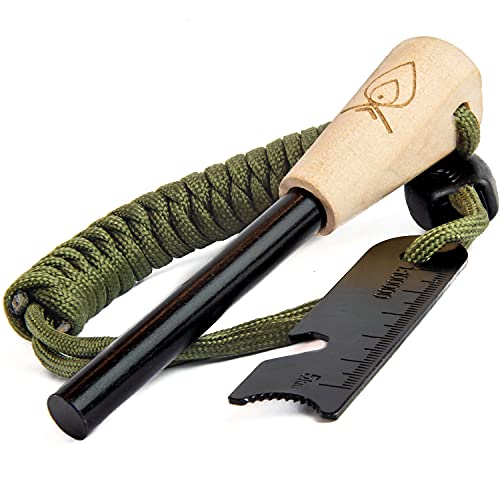
- Weather-resistant ferro rod fire starter
- Includes survival tool and paracord lanyard
- Designed for 15,000+ strikes
Best For: Backpackers who want extra utility in a fire starter
Bushcraft Hole-Making Tool
Scotch Eye Auger for Campcraft

- Heavy-duty alloy steel with black oxide finish.
- Hand-powered drilling with scotch eye leverage.
- Includes protective case and hook for carry.
Best For: Backpackers who need a compact hand auger for wood projects.
Compact Fire Support Tool
Pocket Bellows for Wet Conditions
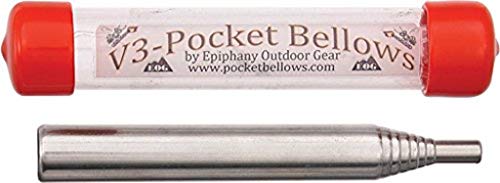
- Collapsible stainless steel build for easy packing.
- Focuses oxygen to stoke wet or dry wood.
- Extendable design helps keep faces farther from flames.
Best For: Campers and backpackers who want a tiny fire-stoking tool.
Lightweight Shelter Cover
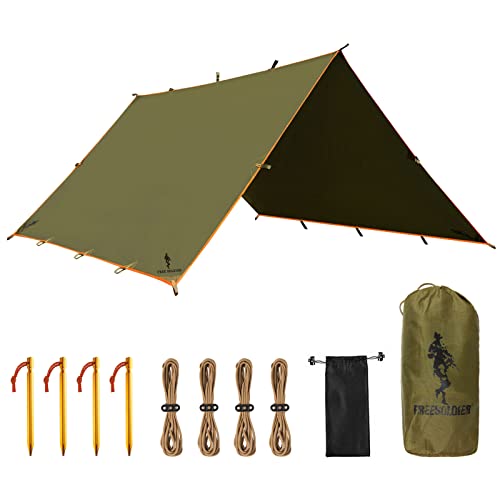
- 210T ripstop polyester with 2500 PU waterproofing.
- Large tarp size works as shelter or awning.
- Includes guy lines, tensioners, and stuff sack.
Best For: Backpackers wanting a durable tarp for rain and sun coverage.
Compact Survival Hatchet
Gerber Pack Hatchet for Bushcraft & Camping

- Full-tang 3.5-inch blade
- 9.46-inch compact, 20.8-ounce build
- Mountable nylon sheath for easy carry
Best For: Backpackers needing a small hatchet for light campsite and survival tasks
Ultralight Trail Trowel
3-in-1 Backpacking Shovel for Leave-No-Trace Use

- Only 1.6 ounces for ultralight carry
- Aluminum alloy body with rust resistance
- Made for digging, waste disposal, and light excavation
Best For: Ultralight hikers who need a tiny trowel for backcountry hygiene
Emergency Cut Tool
Sucrain Pocket Chainsaw for Backpacking

- 24-inch folding chain saw for wood cutting
- About 170 grams and pack-friendly
- Heat-treated Mn steel chain with paracord handles
Best For: Backpackers who want a compact saw for emergency wood cutting
Bushcraft Knife Pick – BPSKNIVES Adventurer
If you want bushcraft gear for backpacking that can handle fire prep, carving, and general campsite work, the BPSKNIVES Adventurer is a strong fixed-blade option. Its full tang 1066 carbon steel build, true scandi grind, and included ferro rod make it a practical do-it-all knife for outdoor trips where you want fewer separate tools.
Best For: Backpackers who want a fixed blade bushcraft knife with a sheath-mounted fire starter.
Pros:
- Full tang carbon steel blade with a true scandi grind for bushcraft tasks
- Includes a leather sheath and ferro rod for safer carry and fire starting
- Walnut wood handle is coated for better moisture and dirt resistance
- Compact enough to pack at 10 inches overall with a relatively light carry weight
Cons:
- High carbon steel needs careful drying and maintenance to help prevent rust
- Blade arrives coated in gun oil and should be wiped clean before first use
This is a solid choice if you prefer a traditional bushcraft knife that prioritizes edge geometry, carry convenience, and simple field use. The extra care required by carbon steel is the tradeoff for a capable cutting tool with built-in fire-starting support.
Fire Starter Pick – Bayite 4" Ferro Rod Kit
For bushcraft gear for backpacking, a reliable ferro rod matters when weather turns wet or windy, and this Bayite kit is built for that job. The 4-inch ferrocerium rod, paracord grip, and included HSS striker make it a compact emergency fire-starting option for camp, trail, or pack carry.
Best For: Backpackers who want a compact ferro rod kit for dependable fire starting in all weather.
Pros:
- 4-inch ferrocerium rod is large enough for good sparks but still packable
- Includes 5 feet of paracord for grip and easy handling
- Comes with a tool-grade HSS striker designed to maximize sparks
- Weatherproof design works in wet conditions and at any altitude
Cons:
- Ferro rods require practice compared with lighter-based fire starters
- Best performance depends on using a suitably hard striker
This is a straightforward backup fire tool for hikers and backpackers who want a durable, low-fuss option in the kit. It is especially appealing if you value spark reliability over multi-tool extras.
Folding Saw Pick – Bahco Laplander Saw
If your bushcraft gear for backpacking needs to include efficient wood processing, the Bahco Laplander is a smart add-on. Its 7.5-inch rust-protected blade, XT toothing, and secure folding design make it useful for campsite prep, trail work, and cutting green or dry wood without taking up much space.
Best For: Backpackers who need a compact folding saw for wood processing and campsite work.
Pros:
- Fast-cutting XT toothing with 7 TPI for wood and brush
- Folds securely with lock positions for open and closed carry
- Rust-protected, low-friction blade designed for outdoor durability
- Non-slip two-component handle and included leather strap improve carry and control
Cons:
- More specialized than a knife if you only need light cutting tasks
- At nearly 8 ounces, it adds another dedicated tool to your pack
This saw makes sense for backpackers who regularly deal with branches, campsite clearing, or larger wood tasks. It is a strong companion tool when you want faster, safer cutting than a knife alone can provide.
Multi-Tool Fire Starter Pick – Texas Bushcraft Ferro Rod
When choosing bushcraft gear for backpacking, it helps to carry a fire starter that does more than just throw sparks. This Texas Bushcraft ferro rod pairs a weather-resistant fire steel with a paracord lanyard and an attached survival tool, making it a compact option for emergency use and everyday camp carry.
Best For: Backpackers who want a ferro rod with extra utility tools built into the setup.
Pros:
- Weather-resistant ferro rod is designed to work when matches fail
- Claims 15,000+ strikes for long-term use
- Includes a survival tool with bottle opener, hex wrench, micro ruler, map scale, and scraper
- 48-inch braided paracord lanyard adds grip and easy retrieval
Cons:
- Still a fire-starting tool, so it requires skill and suitable tinder
- More accessory-focused than a simple ferro rod-only setup
This is a practical choice if you like backup gear with a little extra function built in. It suits backpackers who want a compact emergency tool that stays useful beyond fire starting alone.
Bushcraft Hole-Making Tool – Scotch Eye Auger for Campcraft
If your bushcraft gear for backpacking list needs a tool for making clean holes in wood, this Scotch eye auger is built for that job. It uses heavy-duty alloy steel, a self-tapping guide screw, and a scotch eye design that lets you add leverage with a stick for hand-powered drilling in camp.
Best For: Backpackers and bushcrafters who need a compact hand auger for wood joins, pegs, traps, or camp craft projects.
Pros:
- Heavy-duty steel construction with black oxide finish for long service life.
- Self-tapping guide screw helps improve drilling efficiency.
- Includes a protective case and hook for easier carry.
- Useful for tasks like mallets, fish traps, chairs, and syrup taps.
Cons:
- Hand-powered use takes more effort than a powered drill.
- Best suited to wood-working tasks rather than general campsite chores.
- Requires a stick or similar leverage tool to operate effectively.
This is a specialized tool, not an all-purpose survival accessory, but it fills an important niche for anyone building with wood in camp. If your trips involve repairs, shelter building, or bushcraft projects, it offers real utility in a compact package.
Compact Fire Support Tool – Pocket Bellows for Wet Conditions
When comparing bushcraft gear for backpacking, a fire aid that stays lightweight and works in poor weather is hard to ignore. This collapsible pocket bellows is designed to focus oxygen into the heart of a fire, help stoke wet or dry wood, and keep your face farther from the flames while you work.
Best For: Campers and backpackers who want a small fire-stoking tool for survival kits, bugout bags, and wet-weather fire tending.
Pros:
- Lightweight, collapsible stainless steel design is easy to pack.
- Built to direct oxygen into the fire for better stoking.
- Weatherproof use is highlighted for wet or dry firewood.
- Extendable length helps keep your face farther from the heat.
Cons:
- It is a support tool, not a fire starter by itself.
- Very small size means it’s easy to misplace if not stored carefully.
For campers who already carry tinder and a fire-starting method, this adds a practical way to keep a fire going with less hassle. It is especially appealing if you expect damp conditions or want a compact safety-minded fire accessory.
Lightweight Shelter Cover – Waterproof Backpacking Tarp
For bushcraft gear for backpacking, a tarp is one of the most versatile pieces you can carry, and this model is built around shelter and weather protection. It uses 210T ripstop polyester with a 2500 PU waterproof rating, plus UV protection, so it can serve as a hammock rain fly, awning, or ground shelter.
Best For: Backpackers who want a durable tarp shelter for rain, sun, and multi-use camp setups.
Pros:
- 210T ripstop polyester with 2500 PU waterproof rating.
- UV protection adds sun-blocking coverage.
- Large 10 x 10.5 ft size covers about two people.
- Includes guy lines, tensioners, and a stuff sack for setup.
Cons:
- At 1.2 kg, it is not the lightest shelter option.
- Rectangle shape and multiple guy points may take more setup time than simpler tarps.
This tarp is a solid choice if you value coverage and durability more than ultra-minimal pack weight. It makes sense for hikers and backpackers who want one shelter piece that can handle rain, sun, and general camp use.
Compact Survival Hatchet – Gerber Pack Hatchet for Bushcraft & Camping
If you’re shopping for bushcraft gear for backpacking, this Gerber pack hatchet is a compact option for light wood processing and campsite chores without taking up much room. Its full-tang build, 3.5-inch corrosion-resistant blade, and mountable sheath make it easier to carry on the trail than a larger axe.
Best For: Backpackers and campers who want a small, carry-friendly hatchet for survival tasks and basic cutting work.
Pros:
- Full-tang construction adds durability for outdoor use.
- Compact 9.46-inch length and 20.8-ounce weight suit pack carry.
- Mountable nylon sheath can attach to a pack or belt.
- Rubber grip with finger grooves improves comfort and control.
Cons:
- Short blade limits it to smaller cutting jobs.
- Not as versatile as larger chopping tools for heavy wood.
Overall, this is a practical packable hatchet for users who value portability and simple survival functionality over maximum chopping power.
Ultralight Trail Trowel – 3-in-1 Backpacking Shovel for Leave-No-Trace Use
For bushcraft gear for backpacking, a trowel is one of the lightest tools you can bring, and this 3-in-1 version is built for digging, waste disposal, and light excavation. The aluminum-alloy body and ergonomic non-slip handle are aimed at ultralight hikers who want a small tool that still works on hard ground.
Best For: Ultralight backpackers who need a compact trowel for sanitation and basic digging tasks.
Pros:
- Extremely light at 1.6 ounces for easy pack carry.
- Aluminum alloy construction adds rust and corrosion resistance.
- Ergonomic non-slip handle improves control during use.
- Designed for quick hole digging, waste disposal, and light excavation.
Cons:
- Built for light-duty work rather than heavy digging.
- Very small size may not suit larger campsite chores.
This is a straightforward choice when weight matters most and you want a reliable, easy-to-stow tool for essential backcountry hygiene and minor digging jobs.
Emergency Cut Tool – Sucrain Pocket Chainsaw for Backpacking
If you want bushcraft gear for backpacking that can handle wood cutting in a compact form, this pocket chainsaw is a practical emergency option. At about 170 grams and foldable into a small storage bag, it is easy to stash in a pack while still offering a 24-inch cutting length for pruning and trail-side wood work.
Best For: Hikers and survival-minded backpackers who want a lightweight saw for cutting wood in the field.
Pros:
- 24-inch length gives room for flexible bidirectional cutting motion.
- Heat-treated Mn steel alloy chain is built for durability and rust resistance.
- Folds into a compact bag for belt or backpack carry.
- Paracord handles are designed to be more comfortable in hand.
Cons:
- Best suited to wood cutting and pruning, not heavier chopping jobs.
- Requires manual effort for each cut.
For backpackers who want a portable cutting tool without carrying a full saw, this model offers a simple emergency solution with a compact footprint.
How We Picked the Best Bushcraft Gear for Backpacking
For Bushcraft Gear for Backpacking, we prioritized low weight, reliable field performance, and real utility across common backcountry tasks. We looked for tools that can help with fire prep, cutting, shelter setup, and camp maintenance without adding unnecessary bulk.
We also favored rugged materials, simple operation, packability, and designs that make sense for hikers who need multiuse gear rather than oversized dedicated tools.
Quick Comparison
In a compact backpacking setup, fire starters and small cutting tools do the most work per ounce. Knives, saws, and compact hatchets handle processing and camp tasks, while shelter and support items improve comfort and protection. Smaller accessories like bellows, trowels, and augers can round out a kit when you need more complete backcountry capability.
Key Buying Factors for Bushcraft Gear for Backpacking
Weight and Pack Size
Every ounce matters on the trail. Choose tools that are compact enough to fit cleanly into your pack and light enough to carry all day without regret.
Durability and Materials
Look for carbon steel, full-tang construction, rust-resistant finishes, and weatherproof components where relevant. Backpacking gear should survive moisture, repeated use, and rough handling.
Task Versatility
The best backpacking bushcraft gear can do more than one job. A knife may support carving and food prep, a saw may handle fuel processing, and a tarp can serve as shelter in changing weather.
Ease of Use in the Field
Simple, intuitive tools are better when conditions are wet, cold, or low-light. Fire-making gear should work with minimal fuss, and cutting tools should feel secure and controlled in hand.
Safety and Storage
Sheaths, lanyards, folding designs, and secure carry options matter. Good storage reduces the chance of damage, loss, or accidental injury while moving through the backcountry.
Who Should Buy Which Bushcraft Gear for Backpacking?
Fast-and-light hikers should focus on the most compact essentials first: a reliable fire starter, a small knife, and a folding saw. Those building a more capable bushcraft setup may want to add a hatchet, tarp, and fire-support tools for longer trips or basecamp use.
If you want Bushcraft Gear for Backpacking that stays practical instead of excessive, build around the tasks you actually perform most often. Start with fire, cutting, shelter, and sanitation, then add specialty tools only if they solve a real problem for your trips.