Building a video podcast is easier when your gear does more than record sound. The best setups help you capture clear audio, manage cameras, and keep production simple.
Below, we focus on podcasting gear for video podcasts that supports reliable recording, flexible connectivity, and creator-friendly workflows for beginners and growing studios alike.
Best 10 Podcasting Gear for Video Podcasts Picks for 2026
Video Podcast Switching Hub

- 4 video inputs with custom scene switching
- Revolution Preamps for XLR audio capture
- Streams and records with ISO flexibility
Best For: Creators building a multi-camera video podcast setup
Starter Mic Bundle

- USB/XLR dynamic mic for flexible setups
- Includes arm, pop filter, stand, and cables
- Headphone monitoring with level control
Best For: Beginners who want a simple podcast microphone bundle
Portable Video Recorder

- Records 4K video with a 150° wide-angle lens
- Built-in stereo mics handle loud sound sources
- USB streaming works with major platforms
Best For: Mobile creators who want a compact all-in-one recorder
Compact Audio Studio
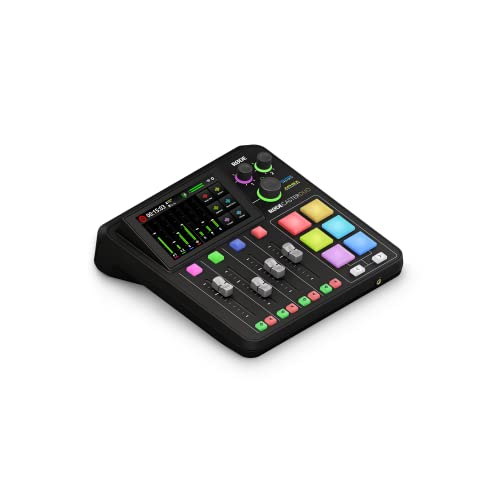
- Two combo inputs with Revolution Preamps
- Four faders plus touchscreen and SMART pads
- APHEX processing for broadcast-style sound
Best For: Small shows that need a compact pro audio hub
Complete 2-Person Studio Bundle
All-in-One Video Podcast Setup

- Two 4K cameras included
- Two XLR dynamic mics and boom arms
- USB audio interface with 48V phantom power
Best For: Co-hosted shows, interviews, and small panel recordings
Ultra-Compact Wireless Lavalier Kit
Flexible Multi-Device Recording

- Tiny 9g transmitters
- 48kHz/24-bit audio with noise cancelling
- Up to 300m line-of-sight range
Best For: Mobile interviews, solo shows, and creators on the move
Pro USB/XLR Broadcast Mic
Shure MV7+ Podcast Dynamic Mic

- USB-C and XLR connectivity
- Voice isolation with real-time denoiser
- Includes desktop stand and windscreen
Best For: Creators who want a flexible single-mic podcast and streaming solution
All-in-One Video Recorder
4K Video Recorder for Musicians & Podcasters

- Records 4K video at 30fps with four-track audio.
- Includes two XLR inputs with phantom power.
- USB webcam mode and SD recording add flexibility.
Best For: Solo creators needing one device for video and multi-track audio
Flexible Two-Person Kit

- Wireless, USB, and XLR connection options.
- Two mics can run through one receiver.
- Noise cancellation and cardioid pickup help clean up voice.
Best For: Two-person podcasts and interview setups
Premium Camera-Ready Mic
USB-C/XLR Podcast Mic with Auto Level

- USB-C and XLR outputs support flexible setups.
- Auto Level and denoising help keep voice consistent.
- LED touch panel adds mute control and level monitoring.
Best For: Solo video podcasters who want a polished dynamic mic
Video Podcast Switching Hub – RØDECaster Video S
If you want podcasting gear for video podcasts that can handle switching, audio, and live output in one box, the RØDECaster Video S is built for that workflow. It gives you up to four video sources, custom scenes, and front-panel controls for overlays, transitions, and chroma keying, so you can manage a polished show without bouncing between multiple tools.
Best For: Video podcasters who need multi-camera switching, scene control, and built-in audio handling in a compact production hub.
Pros:
- Switches between 3 HDMI inputs and 1 USB video source.
- Supports five customizable multi-source scenes plus transitions and overlays.
- Includes two Neutrik combo jacks with Revolution Preamps for XLR mics or instruments.
- Can stream via Wi-Fi, Ethernet, or USB and record to external USB storage, including ISO recording.
Cons:
- Designed as a video production center, so it is more complex than a basic podcast interface.
- Best suited to creators who will actually use multi-camera and scene-building features.
The RØDECaster Video S is a strong fit if your show is moving beyond a simple webcam setup and into multi-angle production. Its mix of switching, audio input quality, and recording flexibility makes it a practical centerpiece for video podcasting.
Starter Mic Bundle – Samson Q2U Podcasting Pack
For creators assembling podcasting gear for video podcasts on a simpler budget, the Samson Q2U Recording and Podcasting Pack covers the essentials. It combines a USB/XLR dynamic microphone with a pop filter, mic arm, tripod stand, and cables, making it easy to start recording into a computer or expand into a mixer-based setup later.
Best For: Beginner podcasters and solo hosts who want an easy USB mic bundle with room to grow into XLR.
Pros:
- USB output works with Mac, PC, and Chromebook.
- XLR output lets you connect to a mixer or PA system.
- Includes a desktop tripod stand, mic clip, USB cable, XLR cable, pop filter, and mic arm.
- Offers zero-latency monitoring with headphone output and level control.
Cons:
- It is a single-mic solution, so multi-person video podcasts will need additional mics.
- As a bundle, it is more focused on audio basics than full video production.
This pack is a straightforward way to upgrade audio without overcomplicating your setup. If you need reliable voice capture and a useful accessory bundle to get started fast, it delivers the basics well.
Portable Video Recorder – Zoom Q2n-4K
If your podcasting gear for video podcasts needs to be portable, the Zoom Q2n-4K is a compact recorder with a built-in wide-angle lens and stereo microphones. It is aimed at creators who want an all-in-one camera-and-audio device for recording or streaming from a small setup, especially when mobility matters more than studio routing.
Best For: Mobile creators, streamers, and solo hosts who want a pocket-sized 4K recorder with built-in audio.
Pros:
- Captures 4K video with a 150° wide-angle lens.
- Built-in X/Y microphones are rated to handle up to 120dB SPL.
- Offers HDR with 12 scene presets for different lighting conditions.
- Can stream directly to YouTube, Twitch, Facebook, and more through USB.
Cons:
- Fixed-focus, pocket-style design is less flexible than a full multi-camera rig.
- Best when you need simplicity and portability rather than studio switching features.
The Q2n-4K makes sense for podcasters who travel, record quickly, or want a compact video solution with audio built in. It is less of a studio hub and more of a grab-and-go recorder, which is exactly the point for some shows.
Compact Audio Studio – RØDECaster Duo
For creators who want podcasting gear for video podcasts without stepping up to a full switcher, the RØDECaster Duo is a compact all-in-one production solution. It focuses on clean audio capture, hands-on control, and built-in processing, making it a strong center for smaller video podcast setups, streaming, or content creation workflows.
Best For: Small podcast teams, solo hosts, and streamers who want a compact production hub with pro-level audio features.
Pros:
- Two Neutrik combo jacks with high-gain Revolution Preamps for microphones or instruments.
- Four broadcast-quality faders and a high-resolution touchscreen for hands-on control.
- Six SMART pads with bank switching for quick actions and show control.
- Includes APHEX processing such as Aural Exciter and Big Bottom effects.
Cons:
- Supports two combo inputs, so it is not built for larger multi-mic panel setups.
- Does not include video switching features like the RØDECaster Video S.
The RØDECaster Duo is best viewed as a streamlined audio centerpiece rather than a full video production switcher. If your video podcast needs strong sound control in a compact footprint, it is a very practical choice.
Complete 2-Person Studio Bundle – All-in-One Video Podcast Setup
If you want podcasting gear for video podcasts without piecing together a studio one item at a time, this Movo bundle is built for a fast start. It combines two 4K cameras, two XLR dynamic microphones, two boom arms, and a USB audio interface so a two-person show can record both strong visuals and clean dialogue from the same package.
Best For: Co-hosted podcasts, interview shows, and small panels that need a complete plug-and-play setup.
Pros:
- Includes two 4K UHD cameras for a multi-angle video podcast setup.
- Comes with two cardioid dynamic microphones that help reject background noise.
- USB-C audio interface offers 48V phantom power and dual monitor outputs.
- All-in-one bundle reduces the need to buy core gear separately.
Cons:
- Designed around a two-person workflow, so it may be more than solo creators need.
- Large bundle means more components to set up at once.
For creators building a polished video-first show, this package covers the main production pieces in one purchase. It is especially practical if you want matching audio and camera gear from day one.
Ultra-Compact Wireless Lavalier Kit – Flexible Multi-Device Recording
This Hollyland Lark M2 kit is a strong pick for podcasting gear for video podcasts when you need wireless freedom and broad device compatibility. The tiny transmitters, long transmission range, and pre-paired setup make it easy to move between phones, cameras, and computers without a complicated rig.
Best For: Mobile interviews, solo video podcasts, and creators who need a compact wireless mic system.
Pros:
- Very small 9g transmitters are easy to wear and carry.
- 48kHz/24-bit recording aims for clean, high-fidelity voice capture.
- Up to 300m line-of-sight transmission supports flexible shooting setups.
- Charging case and extended battery life help through longer recording days.
Cons:
- Wireless lav setup is less of a studio centerpiece than a full podcast package.
- Mono/stereo switching on the camera version depends on the 3.5mm connection.
If your show moves between rooms, locations, or devices, this system keeps audio simple and portable. It is a good fit when convenience and low-profile mics matter more than a desk-based broadcast rig.
Pro USB/XLR Broadcast Mic – Shure MV7+ Podcast Dynamic Mic
The Shure MV7+ is a practical upgrade if you want podcasting gear for video podcasts with a more refined microphone workflow. It offers both USB-C and XLR connections, built-in DSP tools, and OBS-certified compatibility, making it useful for creators who want one mic that can grow with their setup.
Best For: Podcasters, streamers, and video creators who want a flexible dynamic mic with onboard controls.
Pros:
- USB-C and XLR connectivity supports beginner and pro setups.
- Voice isolation, real-time denoiser, and auto level help keep vocals clean.
- LED touch panel adds mute control and customizable lighting.
- Includes a desktop stand, foam windscreen, and USB-C cable in the bundle.
Cons:
- It is a single microphone, so you will need additional gear for multi-host shows.
- Desktop-focused form factor may not suit every camera or travel setup.
For creators who want broadcast-style audio and flexible connections in one mic, the MV7+ is an easy recommendation. It fits well in a desktop podcasting workflow where sound quality and simple control both matter.
All-in-One Video Recorder – 4K Video Recorder for Musicians & Podcasters
If you want podcasting gear for video podcasts that can handle both the image and the sound in one compact unit, the Zoom Q8n-4K is built for that kind of workflow. It records 4K video at 30fps and supports up to four audio tracks, so it fits creators who need a flexible all-in-one setup for interviews, music, or streaming.
Best For: Solo creators and video podcasters who want a single device for 4K capture and multi-track audio.
Pros:
- Records 4K video at 30fps with up to four simultaneous audio tracks.
- Two XLR inputs with phantom power support external mics or a mixer feed.
- Wide-angle lens with five field-of-view settings and scene presets for different lighting.
- USB webcam mode and local SD recording make it useful for live and recorded sessions.
Cons:
- More specialized than a simple USB mic, so it may be overkill for audio-only podcasting.
- Best results depend on understanding camera and audio setup options.
This is a strong choice if your priority is reducing the number of separate devices on set while keeping control over both video and audio. It is especially appealing when you need a creator-friendly recorder that can support podcasts, live streaming, and more camera-driven content.
Flexible Two-Person Kit – Wireless Duo Podcast Mic Kit
For podcasting gear for video podcasts where two hosts want more freedom on camera, the MAONO PD200W bundle is designed around flexible recording. It gives you wireless, USB, and XLR options, plus a setup that supports two mics on one receiver for duo conversations and interview-style sessions.
Best For: Two-person podcasts and creator setups that need flexible mic connections and easy dual recording.
Pros:
- Three connection options: wireless, USB, and XLR.
- Supports two wireless desktop mics on one receiver for co-hosted shows.
- Each mic can record to its own track for easier editing.
- Cardioid design and three-stage noise cancellation help reduce background noise.
Cons:
- Camera and Lightning accessories are sold separately for camera/video sync use.
- Dual-mic wireless bundles can be more setup-heavy than a single USB mic.
This bundle stands out when you want a creator kit that can move between casual plug-and-play and a more polished podcast workflow. The included stands, cables, and app control make it easy to build a practical two-host recording setup right out of the box.
Premium Camera-Ready Mic – USB-C/XLR Podcast Mic with Auto Level
If you need podcasting gear for video podcasts that looks polished on camera and stays simple to use, the Shure MV7+ is a strong fit. It combines USB-C and XLR outputs with auto level, real-time denoising, and a customizable LED touch panel, making it a practical mic for creators who want clean voice capture with minimal fuss.
Best For: Video podcasters who want a premium-looking dynamic mic with easy plug-and-play control.
Pros:
- USB-C and XLR outputs support both simple and advanced setups.
- Auto Level Mode helps keep audio consistent as your distance changes.
- Real-time denoising reduces background noise during recordings.
- LED touch panel adds tap-to-mute and visual level monitoring.
Cons:
- Single-mic design is better for one speaker than multi-host kits.
- Reverb effects and LED features may be more than some users need.
The MV7+ makes sense if you want a broadcast-style mic that can grow with your setup. It is especially useful for podcasters who record on camera and want dependable voice quality without giving up the option to move into an XLR studio chain later.
How We Picked the Best Podcasting Gear for Video Podcasts
We looked for gear that solves real production problems: clean voice capture, dependable camera integration, simple monitoring, and enough flexibility for solo creators, duos, and multi-camera shows. Priority went to products with strong input/output options, practical mounting or portability, and features that reduce editing time.
We also considered how well each item fits common video-podcast workflows, including direct-to-computer recording, mobile setups, and hybrid audio/video production.
Quick Comparison
If you want an all-in-one command center, a video switcher or audio production hub is the fastest way to simplify a studio. If your priority is voice quality, a dynamic USB/XLR mic is often the best starting point. For on-the-go creators, compact video recorders and wireless mic systems offer more flexibility. Bundles can be the best value when you need multiple essentials at once.
Key Buying Factors for Podcasting Gear for Video Podcasts
Audio Quality First
Video may be what viewers see, but audio is what keeps them watching. Dynamic microphones help reduce room noise, while wireless lav systems are useful when hosts move around or record in less controlled spaces.
Camera and Input Compatibility
For Podcasting Gear for Video Podcasts, check whether the device supports HDMI, USB, XLR, or smartphone connections. Multi-source compatibility matters if you plan to expand from one camera to several.
Ease of Setup
Look for gear with clear controls, direct monitoring, and straightforward software. The less time spent troubleshooting, the more time you can spend recording.
Portability and Scalability
Creators who record in different locations should favor compact recorders, wireless systems, or modular kits. If you expect to grow, choose equipment that can add mics, cameras, or guests later.
Who Should Buy Which Podcasting Gear for Video Podcasts?
Solo podcasters and streamers usually benefit most from a strong USB/XLR microphone or an all-in-one audio interface. Two-host shows should consider bundles or dual-mic kits for easier coordination. If you record video-heavy interviews or want a polished multi-camera workflow, a switcher or hybrid production hub makes the most sense. Mobile creators, musicians, and field recorders should lean toward compact camera recorders or wireless kits that travel well.
The best choice depends on your format, room, and growth plans. Start with the piece of gear that removes your biggest bottleneck, then build outward from there.