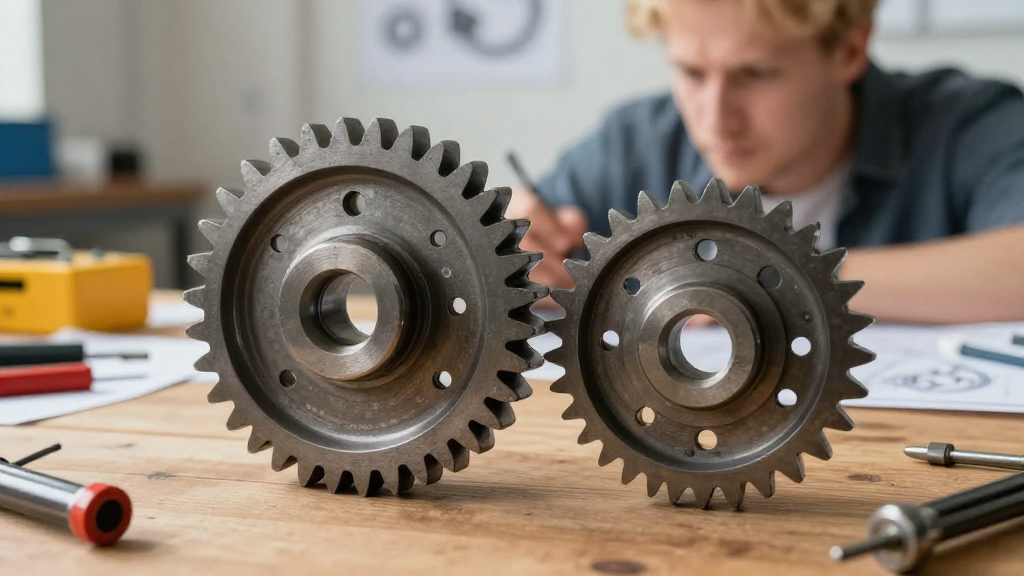
Understanding the difference between gears and sprockets is crucial for anyone involved in mechanical engineering, cycling, automotive design, or even hobbyist projects.
Both gears and sprockets play pivotal roles in transmitting power and motion in machines, yet they have distinct characteristics that set them apart.
What Are Gears?
Gears are toothed mechanical devices that mesh together to transfer rotational motion and torque between shafts.
Key characteristics of gears include:
- Shape: Gears are typically circular with teeth that fit into the teeth of another gear.
- Types: There are several types of gears, including spur gears, bevel gears, and worm gears.
- Applications: Gears are used in various applications ranging from watches and bicycles to heavy machinery and automotive engines.
Gears are designed to maintain a strong grip on one another, thus enabling smooth and efficient transmission of motion.
What Are Sprockets?
Sprockets, on the other hand, are toothed wheels that interlock with a chain to transmit power.
Key characteristics of sprockets include:
- Shape: Sprockets typically have a more rugged design compared to gears.
- Functionality: They work specifically with chains to facilitate movement, as seen in bicycles and motorcycles.
- Types: Sprockets can be categorized into single-strand and multi-strand types, based on the number of chain strands they engage.
The primary function of sprockets is to convert rotational motion from a driving wheel into linear motion via the chain.
What’s the Major Difference Between Gears and Sprockets?
To clarify the difference between gears and sprockets, let’s break down the distinctions:
1. Connection Method
- Gears: They connect through direct contact between their teeth and require close tolerances for smooth operation.
- Sprockets: They connect with a chain rather than directly with another sprocket or gear.
2. Transmission of Motion
- Gears: They are ideal for precise control of speed and torque, often used in applications where accuracy is key.
- Sprockets: They are more suited for applications needing flexibility in movement, often utilizing chains—for example, in a bicycle drivetrain.
3. Use Cases
- Gears: Primarily found in complex machinery, including gearboxes, automotive differentials, and manufacturing equipment.
- Sprockets: Typically found in simpler, more direct drive systems like bicycles, motorcycles, and conveyor belts.
4. Efficiency and Speed
- Gears: Can be engineered to achieve high efficiency, especially in enclosed systems.
- Sprockets: Generally facilitate faster, less efficient systems due to the inherent slippage and friction between chains.
5. Material Composition
- Gears: Often made from metal or durable plastic to withstand high loads and minimize wear.
- Sprockets: More often constructed from metal or reinforced polymer to ensure proper durability against wear caused by the chain.
Why Does Choosing Matter?
Understanding the difference between gears and sprockets matters significantly depending on the application and requirements:
- Performance: If high torque and reduced slip are needed, gears may be the better option.
- Cost & Maintenance: Sprockets with chains can be less expensive and easier to maintain, important factors for budget-conscious projects.
Using the right device helps avoid complications such as friction losses or excessive wear, leading to longer machine life and less downtime.
Can Gears and Sprockets Work Together?
Absolutely!
While there is a distinct difference between gears and sprockets, these components can be integrated within a single system to enhance functionality.
Examples of their collaboration include:
-
Bicycle Gear Systems: These often combine gears to shift through various speeds while utilizing sprockets for power transfer from pedals.
-
Automotive Applications: Combos of gears and sprockets ensure vehicles can effectively convert engine power into usable motion.
In these applications, both gears and sprockets play integral roles, leveraging their strengths in harmony to achieve efficient functionality.
Conclusion
The difference between gears and sprockets can significantly impact how machines operate.
Gears are used primarily for precision and control, whereas sprockets provide flexibility and a simpler connection to chains.
By understanding these differences, engineers, mechanics, and hobbyists can make informed decisions regarding which component best suits their needs.
Whether you are designing a new vehicle, repairing an existing machine, or building your own bicycle, knowing when to utilize gears over sprockets—or vice versa—will lead to better performance and durability.
Incorporating gears and sprockets correctly can optimize machinery, reduce maintenance costs, and ensure greater efficiency in mechanical systems.
So next time you’re faced with the choice between gears and sprockets, remember these distinctions and implications—they might just lead you to the perfect solution for your project!