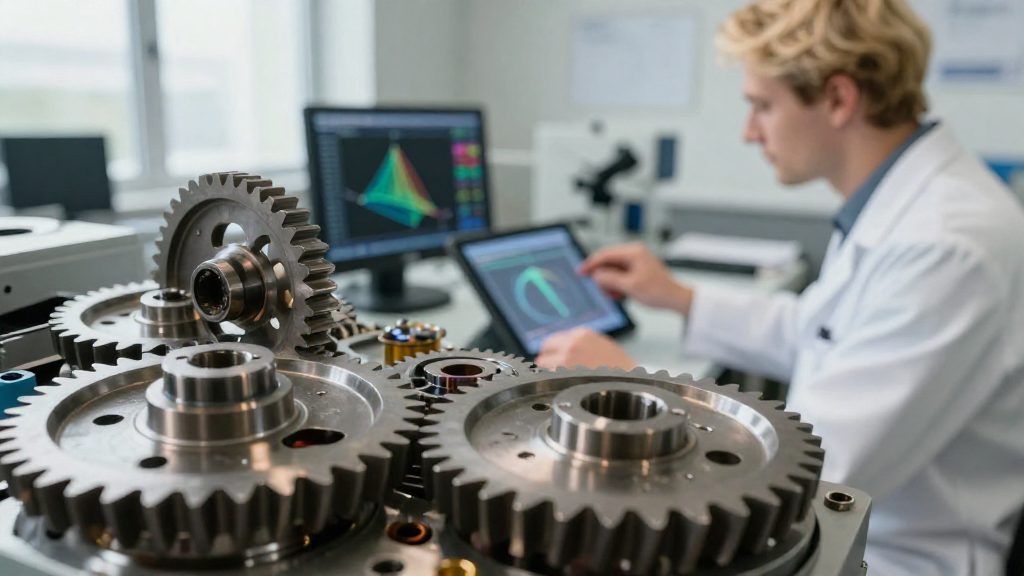
Performing finite element analysis of gears is an essential process in modern engineering that allows for the precise evaluation of gear performance under various conditions.
What is Finite Element Analysis of Gears?
Finite Element Analysis (FEA) is a computational technique used to predict how objects react to external forces, vibrations, heat, and other physical effects.
In the context of gears, finite element analysis enables engineers to simulate and visualize how gears will behave under operational loads.
This analysis is crucial for optimizing gear design, enhancing durability, and preventing failures in mechanical systems.
Why is Finite Element Analysis Important for Gears?
-
Predictive Insight:
– FEA provides valuable insights into how gears will react to stress and strain during their lifecycle. -
Durability Tests:
– It allows for extensive durability tests without the need for physical prototypes. -
Design Optimization:
– Engineers can optimize gear design to minimize weight while maximizing strength and performance. -
Failure Prevention:
– The analysis helps predict potential failure points, allowing for design changes before manufacturing.
What Tools are Used for Finite Element Analysis of Gears?
Given the complexity of gear systems, several tools have emerged to aid in finite element analysis.
Here are some popular software programs:
- ANSYS:
-
A foremost choice for finite element analysis, ANSYS provides advanced simulation tools tailored for gear analysis.
-
Abaqus:
-
Known for its robust features, Abaqus is widely used for simulating dynamic systems like gears.
-
SolidWorks Simulation:
-
Integrating directly with SolidWorks CAD, this tool is ideal for engineers familiar with that platform and looking for straightforward analysis options.
-
COMSOL Multiphysics:
- This software allows for multiphysics simulations, ideal for analyzing thermal and structural aspects in gear performance.
How to Set Up Finite Element Analysis of Gears?
To perform an effective finite element analysis of gears, follow these detailed steps:
Step 1: Model the Gear
- CAD Software:
-
Begin by creating a 3D model of the gear using CAD software like SolidWorks, CATIA, or Autodesk Inventor.
-
Parameters:
- Define key parameters, such as gear tooth profile, pitch diameter, and pressure angle.
Step 2: Define Material Properties
-
Material selection is vital, as the gear’s behavior largely depends on its mechanical properties.
-
Common materials for gears include:
-
Steel:
- Offers high strength and endurance.
-
Bronze:
- Good corrosion resistance and wear properties.
-
Polymer Composites:
- Lightweight and suitable for low-load applications.
-
Input material properties into the FEA software, including tensile strength, modulus of elasticity, and Poisson’s ratio.
Step 3: Apply Boundary Conditions and Loads
- Boundary Conditions:
-
Determine how the gear is supported and its interactions with other components.
-
Load Application:
-
Apply operational loads, including torque, bending, and contact pressures.
-
Dynamic Loads:
- Consider dynamic loads if the gear operates at varying speeds.
Step 4: Mesh the Model
-
A crucial step in finite element analysis of gears is meshing the model.
-
Mesh Quality:
-
A finer mesh can yield more accurate results but requires more computational power.
-
Use automatic meshing options provided by the software while ensuring critical areas (like gear teeth) have a refined mesh.
Step 5: Run the Simulation
-
After the setup, run the finite element analysis simulation.
-
Monitor the solution process and adjust settings if convergence issues arise.
Step 6: Analyze Results
-
Once the simulation is complete, review the output data.
-
Key outputs to look for include:
-
Stress Distribution:
- Identify high-stress areas that may lead to gear failure.
-
Strain Analysis:
- Understand how much the gear will deform under loads.
-
Contact Pressure:
- Evaluate the pressure between interacting gear teeth during operation.
Step 7: Validate and Optimize the Design
-
Compare FEA results with theoretical calculations and existing empirical data.
-
If the results are unsatisfactory, iterate on the design.
-
Adjust parameters such as gear tooth profiles, thickness, or materials to optimize performance.
What are the Challenges in Finite Element Analysis of Gears?
-
Complex Geometry:
– Gears often have intricate geometries that complicate modeling and meshing. -
Dynamic Effects:
– Understanding the impact of dynamic forces on gear performance can be challenging. -
Computational Resources:
– High-resolution simulations require significant computational power and time. -
Interference Fits:
– The interaction between gears needs careful consideration to avoid miscalculations.
How to Interpret Finite Element Analysis Reports for Gears?
Understanding the results generated from finite element analysis of gears is crucial for making informed design decisions.
-
Failure Indicators:
– Look for critical stress levels that exceed the material limit. -
Displacement Patterns:
– Analyze how the gear deforms under load and if it aligns with expected performance. -
Wear Evaluation:
– Use results to predict wear over time, suggesting maintenance schedules or design changes for better longevity. -
Comparison with Standards:
– Ensure results comply with industry standards such as AGMA (American Gear Manufacturers Association) guidelines.
Conclusion
Performing finite element analysis of gears is a vital process that aids in ensuring the reliability and efficiency of mechanical systems.
With the right tools, methodologies, and an understanding of the fundamentals, engineers can effectively use FEA to enhance gear design.
This not only leads to improved performance but also contributes to the advancement of technology in various industries.
By following these guidelines, you can master the intricacies involved in finite element analysis and ensure your gear systems meet the highest standards of quality and reliability.