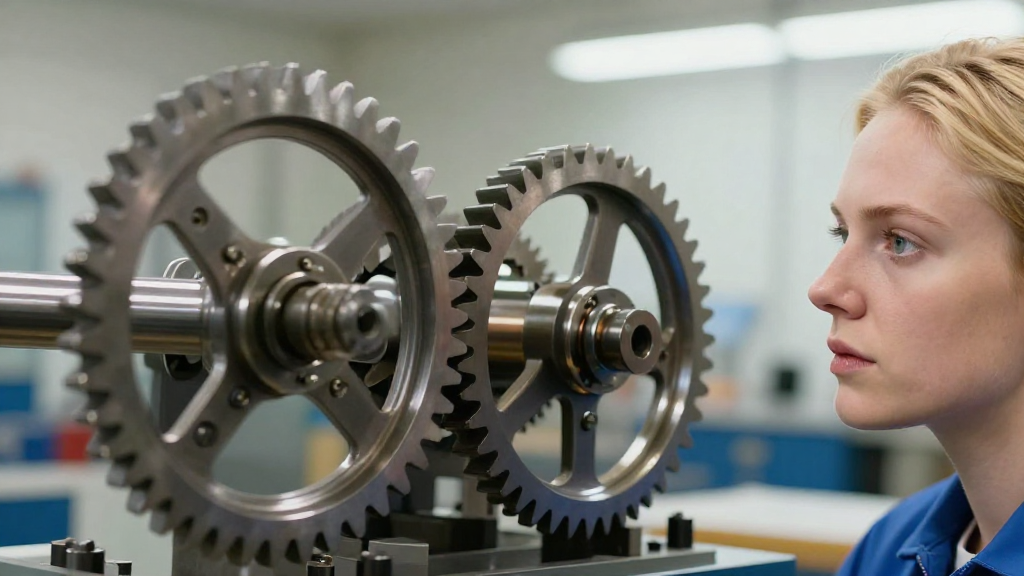
Understanding the gear inertia effect is crucial for engineers, mechanics, and anyone involved in designing machinery.
What is Gear Inertia?
Gear inertia, or the resistance of a gear to changes in its rotational speed, plays a significant role in how machinery operates.
When discussing gear systems, the inertia of the gears can heavily impact performance.
This effect determines:
- Acceleration rates
- Deceleration rates
- Overall efficiency of the machinery
It’s important to grasp how gear inertia affects motion in any mechanical system where gears are in play.
How Does Gear Inertia Influence Motion?
- Acceleration and Deceleration:
Gear inertia impacts how quickly a machine can start moving or stop.
- High inertia means it takes longer to accelerate or decelerate.
- Low inertia facilitates rapid changes in speed.
This difference can dictate machine responsiveness, which is vital in applications such as automotive engines or robotics.
- Energy Consumption:
The energy required to change the speed of a gear system is directly related to its inertia.
- More inertia means more energy consumed during acceleration.
- Conversely, systems with less inertia can operate more efficiently.
This can lead to significant energy savings, making the understanding of the gear inertia effect critical for modern engineering.
- Performance Under Load:
When the gears are under load, the effect of inertia becomes even more pronounced.
The load affects:
- Torque transfer
- Speed consistency
Higher gear inertia can lead to challenges in maintaining consistent motion under varying loads, emphasizing the need for careful design considerations.
Can Gear Inertia Be Reduced?
Yes, it can! Engineers always look for ways to minimize the gear inertia effect. Here are some effective strategies:
-
Material Selection:
Selecting lighter materials can decrease the mass of the rotating components. This contributes to reduced inertia. -
Design Optimization:
Using computer modeling tools to design gears can help in minimizing unnecessary bulk and thereby reducing inertia. -
Gear Configuration:
Employing different gear arrangements like compound gears can help distribute inertia more effectively across the system.
By adopting these strategies, engineering teams can create systems that respond better to changes in motion.
What Are the Applications of Gear Inertia?
Understanding the gear inertia effect is applicable across various industries:
- Automotive Industry:
Gears in vehicles must respond quickly to driver inputs.
- Here, gear inertia affects everything from acceleration to fuel efficiency.
- Robotics:
Robotic systems require precise control over motion.
- A low inertia gear system allows for swift movements and fine-tuned control.
- Manufacturing:
In automated machinery, gears play an important role in production speed.
- A deep understanding of inertia can lead to significant enhancements in efficiency.
- Aerospace:
In aircraft control systems, gear inertia can impact safety and performance.
- Ensuring that gears do not contribute unduly to inertia is a high priority in this sector.
What Is the Relationship Between Gear Inertia and System Efficiency?
The gear inertia effect directly correlates with the overall efficiency of mechanical systems.
-
Reduced Downtime:
Systems with optimal inertia tend to have less downtime as they can achieve desired speeds more quickly. -
Enhanced Productivity:
In high-volume production environments, reducing the negative impact of gear inertia ensures smoother operations. -
Less Wear and Tear:
Lower inertia leads to less strain on components, which translates to longer equipment lifespan and reduced maintenance costs.
Are There Tools to Measure Gear Inertia?
Yes, various tools exist to measure the impact of gear inertia in mechanical systems:
-
Dynamometers:
These measure torque and speed, allowing users to calculate inertia accurately. -
Simulation Software:
Programs can model gear systems to predict how inertia will affect motion before actual implementation. -
Physical Testing:
Hands-on testing on prototypes provides clear insights into real-world gear inertia behavior.
Making use of these tools can help engineers optimize their designs for better performance.
How Can You Calculate Gear Inertia?
Calculating the gear inertia effect is crucial for precise engineering. The general formula for calculating inertia for a rotating gear is:
Inertia (I) = m * r²
Where:
– m is the mass of the gear
– r is the radius
This means a larger or heavier gear will significantly increase its moment of inertia.
What Are the Challenges of Gear Inertia?
While understanding gear inertia is essential, it comes with challenges:
-
Trade-Offs:
Designing for low inertia often means sacrificing strength or durability.
– Finding a balance is critical. -
Complex Systems:
In systems with multiple gears, the calculation of inertia can become complex due to interactions among gears, leading to increased difficulty in design and research. -
Cost:
Investing in advanced materials or manufacturing techniques to reduce inertia might increase overall production costs.
Conclusion
The gear inertia effect is a fundamental concept that can greatly influence the motion and efficiency of mechanical systems. By understanding the basic principles of gear inertia, engineers and technicians can create more responsive, efficient, and reliable machines.
Recognizing its importance across various industries can lead to better designs and innovations that push the boundaries of machinery capabilities.
By actively managing and analyzing gear inertia, we can enhance performance, reduce energy consumption, and ensure that machines operate smoothly and effectively in real-world applications.