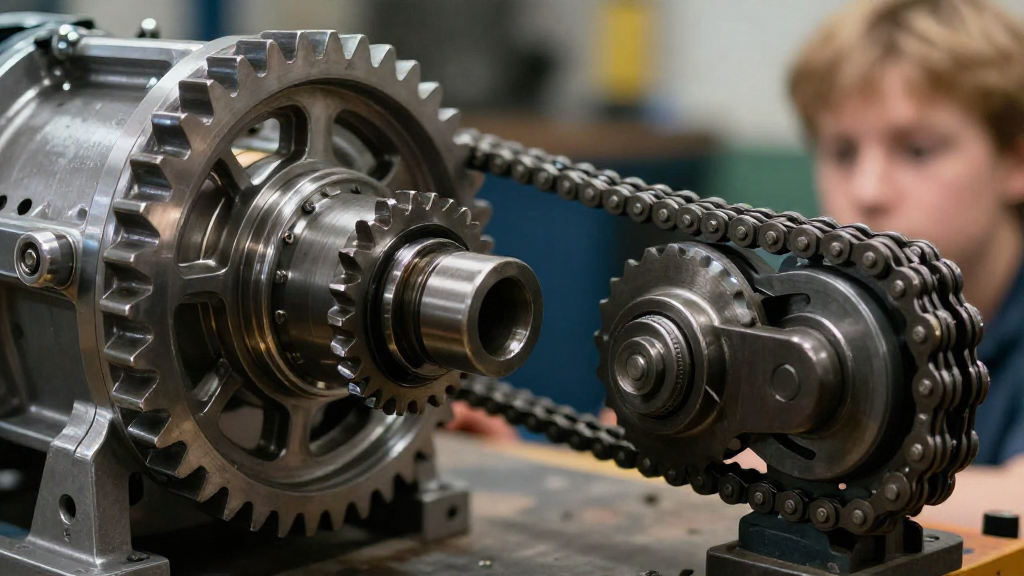
When it comes to selecting the best drive mechanism for a vehicle or machinery, understanding gear transmission vs chain is crucial.
Both systems have their unique attributes, advantages, and applications. In this article, we will dive deep into the details of each system, comparing their pros and cons, operational mechanisms, common applications, and which scenarios each system is best suited for.
What is Gear Transmission?
Gear transmission involves utilizing gears to transfer motion and torque between components. It operates based on the principle of mechanical advantage, where the gear ratios dictate the speed and torque output.
Key Features of Gear Transmission:
-
Higher Efficiency: Gear systems typically offer high efficiency, often reaching up to 98%.
-
Compact Design: Gears can be designed to fit into smaller spaces, making them suitable for various mechanical applications.
-
Customization: By varying the gear ratios, you can easily adjust speed and torque based on the requirements of the machinery.
Advantages of Gear Transmission:
-
Durability: Gears are generally robust and can last longer under heavy loads and stress.
-
Low Maintenance: Once installed, gear transmissions usually require minimal maintenance compared to chain drives.
-
Precision: They provide accurate and consistent motion, crucial for applications requiring precise operations.
-
Less Slippage: Gears work on a meshing principle, minimizing the likelihood of slippage compared to chain drives.
What is Chain Drive?
A chain drive is a system that utilizes a flexible chain to transmit power between two or more sprockets. This type of drive is commonly used in bicycles, motorcycles, and other machinery requiring motion transfer.
Key Features of Chain Drive:
-
Simple Design: The simplicity of the chain drive makes it relatively easy to install and maintain.
-
Cost-Effective: Chain drives often come at a lower initial investment compared to gear systems.
-
Versatile: They can handle substantial loads and are adaptable to various applications.
Advantages of Chain Drive:
-
High Torque Transmission: Chain drives can transmit more torque over longer distances, making them ideal for specific applications.
-
Flexibility: The chain can accommodate misalignment between the driver and driven sprockets.
-
Lower Weight: Chains are often lighter than gear assemblies, which can be an advantage in weight-sensitive applications.
-
Easy Repairs: Replacing a chain is typically more straightforward and less expensive than gears.
Gear Transmission vs Chain: Which is More Efficient?
When discussing gear transmission vs chain, efficiency becomes a focal point. While gear transmissions can achieve high efficiency, chain drives often experience some energy loss due to friction and wear.
Efficiency Comparison:
- Gear Transmission:
- Efficiency rates can reach around 98%.
-
Less energy is wasted, translating to lower fuel consumption in vehicular applications.
-
Chain Drive:
- Efficiency usually ranges between 90-95%.
- Slippage and wear impact performance, particularly in longer chains.
How Do Wear and Tear Compare in Gear Transmission vs Chain?
Maintenance is another critical aspect when evaluating gear transmission vs chain systems.
Wear and Tear Analysis:
- Gear Transmission:
- Gears are generally robust and can withstand significant stress.
-
They require occasional lubrication but are less prone to wear.
-
Chain Drive:
- Chains can stretch and wear out over time, requiring regular adjustment and replacement.
- Maintenance often includes lubrication to reduce friction and prevent deterioration.
What Are the Cost Implications of Gear Transmission vs Chain?
Understanding the financial aspect can help make the right choice.
Cost Analysis:
- Initial Cost:
-
Chain Drive: Generally lower upfront costs, making it more accessible for budget-conscious projects.
-
Gear Transmission: Higher initial investment due to machining and design complexity.
-
Long-Term Cost:
-
Gear Transmission: Although more expensive initially, their durability results in lower long-term maintenance costs.
-
Chain Drive: Frequent maintenance and potential replacements can lead to higher expenses over time.
What Are the Best Applications for Each System?
Both gear transmissions and chain drives have their specific applications where they excel.
Ideal Applications for Gear Transmission:
-
Automobiles: Gear systems are widely used in cars for their efficiency and precise control.
-
Industrial Equipment: Machines like lathes and milling machines rely on gear transmissions for accurate motion.
-
Electric Motors: Often paired with gears to optimize torque and speed.
Ideal Applications for Chain Drive:
-
Bicycles and Motorcycles: Chain drives are commonly found in bicycles for lightweight power transmission.
-
Conveyor Systems: Used in manufacturing for moving items over considerable distances.
-
Heavy Machinery: Equipment like excavators utilizes chains due to their ability to handle heavy loads and robust environments.
Conclusion: Which Should You Choose – Gear Transmission or Chain Drive?
Ultimately, choosing between gear transmission vs chain depends entirely on the application and requirements of your specific project.
Here are some considerations:
-
For Efficiency and Durability: Opt for gear transmission.
-
For Cost and Simplicity: Chain drive might be the better choice.
No matter what, it’s essential to assess your particular needs, project budget, and long-term goals in order to make the best choice for your mechanical drive system. By understanding the nuanced differences between these two systems, you’ll be well-equipped to make an informed decision that leads to improved performance and reliability.
In summary, both gear transmission and chain drive have their own sets of advantages and disadvantages. Your final choice should reflect a thorough understanding of their functionalities and suitability for your intended applications.