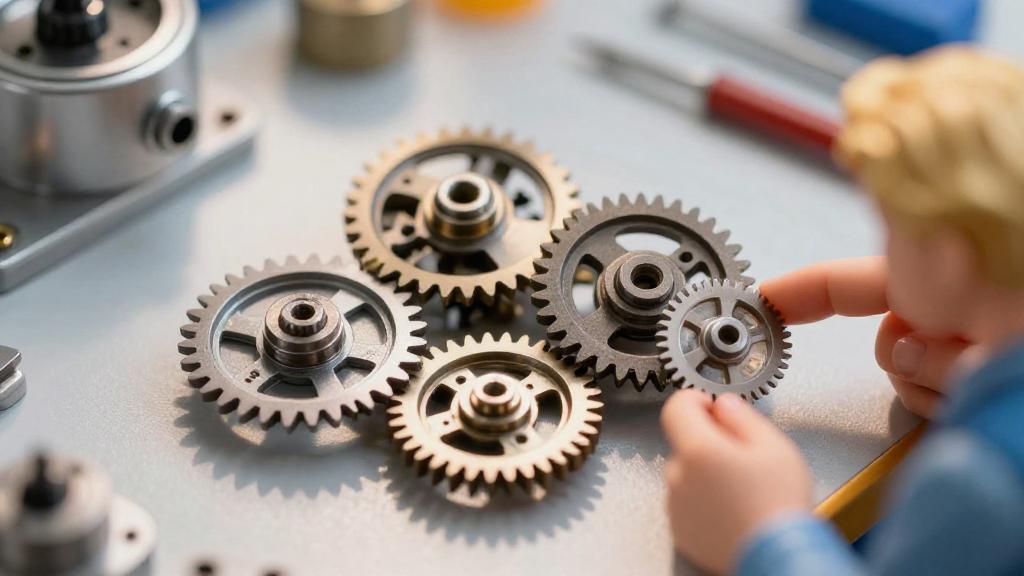
Miniature gears technology has revolutionized various industries by allowing for more compact designs and improved functionality of machines.
These small yet highly effective components play a crucial role in countless applications, from consumer electronics to automotive systems.
But what exactly is miniature gears technology, and how does it impact our daily lives?
What Are Miniature Gears?
Miniature gears are small gearing systems designed to transfer motion and force between mechanical components.
Their size ranges from just a few millimeters to a couple of centimeters in diameter.
These gears come in various shapes and styles, including:
- Spur Gears: Straight-cut teeth that are parallel to the axis of rotation.
- Helical Gears: Teeth that are cut at an angle, allowing for smoother and quieter operation.
- Bevel Gears: Gears that transmit power between shafts that are not parallel.
- Planetary Gears: A system where one or more gears (“planet gears”) revolve around a central gear (“sun gear”).
Miniature gears are typically made from materials like plastic, brass, or stainless steel, depending on their intended use and required strength.
Why Is Miniature Gears Technology Important?
The evolution of miniature gears technology is significant for several reasons:
-
Compact Design:
– Miniature gears allow for the creation of smaller, more compact devices without sacrificing performance. -
Improved Efficiency:
– These gears can provide higher torque in limited spaces, making machines more efficient. -
Versatility:
– They can be used across various industries, including robotics, medical devices, aerospace, and automotive sectors. -
Durability:
– High-quality miniature gears are designed to withstand wear and tear, ensuring longevity in performance. -
Precision Engineering:
– They enable accurate control of movement in applications where precision is critical.
The importance of miniature gears technology makes it a key player in the advancement of engineering and design.
Where Is Miniature Gears Technology Used?
Miniature gears technology finds its application in numerous industries. Here are a few prominent examples:
1. Consumer Electronics
Many electronic devices, such as:
- Smartphones: Use miniature gears within their camera autofocus systems.
- Drones: Have miniature gears controlling their motors for efficient flight.
- Watches: Rely on precise miniature gears for accurate timekeeping.
2. Medical Devices
Miniature gears are essential in medical applications, including:
- Surgical Robots: Use miniature gears for accurate articulation of robotic arms.
- Dental Equipment: Often relies on miniature gear systems for various procedures.
- Portable Diagnostic Equipment: Such as glucose meters and hearing aids benefit from compact gears.
3. Automotive Applications
In modern vehicles, miniature gears are employed in:
- Transmission Systems: Allow for smooth gear shifts and transfer of power.
- Electric Motors: Powering various vehicle features, including windows and seats.
4. Aerospace Industry
In this high-stakes sector, miniature gears are vital for:
- Flight Control Systems: Enabling precise maneuvering of aircraft.
- Satellite Mechanisms: Operating antennas and solar panels efficiently.
5. Robotics
Robotics heavily relies on miniature gears for:
- Joint Movement: Allowing robots to mimic human movement efficiently.
- Drive Systems: Ensuring precision in robotic applications, enhancing their functionality.
How Does Miniature Gears Technology Work?
The effectiveness of miniature gears technology lies in its design and engineering principles.
Here’s a basic overview of how it functions:
1. Meshing of Gears
- Teeth Engagement: The teeth of one gear fit into the spaces of another gear. This engages them, allowing for the transfer of rotational motion.
2. Gear Ratios
- Speed and Torque Control: The ratio between the sizes of the gears affects speed and torque.
- A smaller driving gear turning a larger driven gear will increase torque at the expense of speed.
3. Material Selection
- Durability vs. Weight: Choosing the right material ensures that gears are lightweight yet strong enough to handle the required workload.
4. Manufacturing Techniques
- Precision Machining: Techniques such as CNC machining and 3D printing are often used to achieve high precision and detail in miniature gear production.
What Are the Challenges in Miniature Gears Technology?
While the advancements in miniature gears technology have been remarkable, some challenges persist:
1. Production Cost:
- High precision often translates to higher manufacturing costs, particularly in low-volume production runs.
2. Wear and Tear:
- Due to their size, miniature gears are often subject to greater wear and tear, which necessitates careful material selection and maintenance planning.
3. Heat Generation:
- Increased friction can lead to heat generation, which can affect performance and lifespan. Therefore, effective lubrication is essential.
4. Reliability:
- Ensuring consistent performance over time in various applications can be a challenge, especially in harsh environments.
What Is the Future of Miniature Gears Technology?
The future of miniature gears technology looks promising, driven by ongoing innovations and demands for efficiency. Some trends to watch for include:
1. Smart Materials:
- The incorporation of smart materials could lead to gears that adapt to varying operational conditions, enhancing efficiency and durability.
2. Integration with Automation:
- As automation continues to grow across industries, miniature gears will play a critical role in moving equipment and devices.
3. 3D Printing:
- Advances in 3D printing technology may enable more complex and efficient gear designs while simplifying the production process.
4. Enhanced Precision:
- Continued improvements in manufacturing processes will lead to gears that offer even greater precision and reliability.
Conclusion
Miniature gears technology is a fascinating and essential component in modern engineering and machinery.
From consumer electronics to aerospace applications, the versatility and compactness of miniature gears have paved the way for innovative designs and improved functionality.
As technology progresses, we can anticipate even more exciting developments in miniature gears, making them indispensable in our increasingly complex world.
Understanding miniature gears technology is crucial for engineers, designers, and manufacturers looking to improve efficiency and functionality across a myriad of applications.