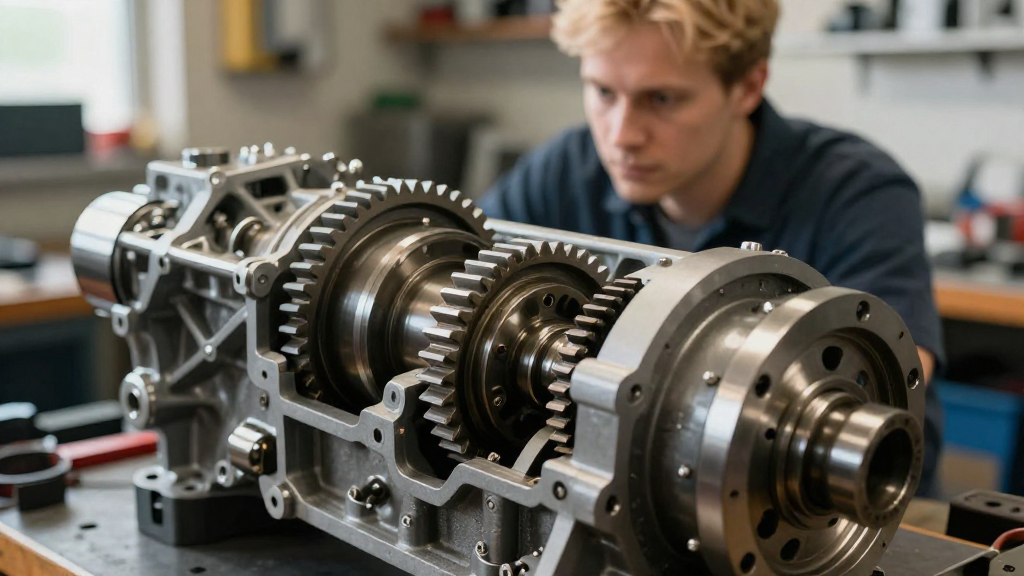
A sequential gearbox function is an essential topic in automotive engineering, especially for those interested in performance vehicles and motorsports.
This article will explore how a sequential gearbox operates, its advantages, and how it differs from traditional gearboxes.
What is a Sequential Gearbox?
A sequential gearbox is a type of manual transmission that allows the driver to change gears in a specific order, often in a straight line rather than in a circular pattern like traditional gear shifters.
How Is a Sequential Gearbox Different From Other Gearboxes?
-
Gear Selection:
– In a sequential gearbox, gears are engaged in a fixed order—one after the other.
– Traditional gearboxes often require the driver to shift through a “H-pattern,” allowing for more freedom but also more complexity. -
Ease of Use:
– Shifting in a sequential gearbox is more straightforward since the driver needs only to push the lever forward or pull it backward to shift up or down.
– This streamlined process reduces the chance of selecting the wrong gear, thus enhancing performance during high-speed situations. -
Mechanical Design:
– A sequential gearbox typically employs a simpler design that uses dog clutches instead of synchros for faster engagement.
– Dog clutches provide a more direct and positive engagement of gears, resulting in quicker shifts and improved performance.
How Does a Sequential Gearbox Function?
The sequential gearbox function relies on several mechanical components that work in harmony to enable efficient gear shifting.
Here’s a breakdown of the essential elements involved:
-
Input Shaft:
– The input shaft connects to the engine and sends power to the gearbox.
– It is responsible for transmitting the rotational force generated by the engine. -
Gearsets:
– A sequential gearbox consists of a series of gears, each corresponding to a specific gear ratio.
– The arrangement allows for a smooth transition between gears, facilitating speed adjustments without losing momentum. -
Shifter Mechanism:
– Unlike traditional gear systems, the shifter mechanism in a sequential gearbox uses either a lever or paddle shifters found in many modern racing cars.
– This mechanism is engineered for precision and ease, allowing for quick engagement without much effort. -
Dog Clutches:
– Dog clutches are the key components that engage and disengage gears.
– These clutches have pawls that interlock with each gear’s teeth for a solid connection, allowing rapid changes without the grinding that can occur in standard gear systems. -
Output Shaft:
– The output shaft transmits power from the selected gear to the wheels of the vehicle.
– It delivers the torque required for accelerating and maintaining speed, influenced by the gear selected.
What Are the Benefits of a Sequential Gearbox?
Understanding the sequential gearbox function reveals several advantages that make it popular in motorsport and performance vehicles:
-
Faster Shifts:
– The design of sequential gearboxes allows for quicker shifts compared to traditional options, reducing the time spent in neutral.
– This leads to enhanced acceleration and performance on the track or road. -
Improved Control:
– Drivers can make precise gear changes with reduced chance for error, leading to better control of the vehicle.
– It’s especially beneficial during high-speed cornering, where maintaining momentum is essential. -
Durability and Reliability:
– Sequential gearboxes often feature robust designs capable of handling high levels of torque.
– The simplicity of the design reduces the complexity of repairs and maintenance, contributing to longevity. -
Race-Tuned Performance:
– Many sequential gearboxes are specifically designed for peak performance, making them ideal for racing applications.
– The ability to shift at high RPMs increases the potential for maximizing engine output.
In What Situations is a Sequential Gearbox Used?
The sequential gearbox function truly shines in specific applications. Here are some common uses:
-
Motorsports:
– Widely used in racing cars (such as Formula 1, rally cars, and touring cars) where rapid shifts and performance are critical.
– The gearbox allows for quick downshifts and upshifts, crucial for competitive racing. -
High-Performance Road Cars:
– Certain sports cars and supercars come equipped with sequential gearboxes for improved performance and driving experiences.
– Brands like Ferrari, Lamborghini, and others have adapted sequential designs in their higher-end models. -
Off-Road and Rally Vehicles:
– Off-road races often feature varying terrain, making a sequential gearbox beneficial for handling the challenges.
– The reliability and quick shifts help drivers maintain control over unpredictable surfaces.
Are There Any Drawbacks to a Sequential Gearbox?
While the sequential gearbox function offers several benefits, it is essential to acknowledge some limitations:
-
Cost:
– Sequential gearboxes can be significantly more expensive than traditional manual transmissions.
– The advanced technology and materials used in their construction contribute to higher manufacturing costs. -
Usability:
– While easier for skilled drivers, inexperienced drivers may find sequential gearboxes less forgiving than an automatic transmission.
– The learning curve could deter some potential users who prefer simplicity. -
Comfort:
– Sequential gearboxes are typically less comfortable for everyday driving due to their performance-oriented design.
– The direct engagement can lead to a harsher driving experience, especially in stop-and-go traffic.
Conclusion: How to Make the Most of a Sequential Gearbox
Understanding the sequential gearbox function enhances the driving experience, especially for enthusiasts seeking performance and control.
Key takeaways about sequential gearboxes include:
- Their rapid shifts allow for heightened acceleration and better control, especially in racing scenarios.
- They feature a simplistic design that improves reliability, but user costs can be higher.
- Drivers should familiarize themselves with the unique nuances of using a sequential gearbox to maximize its potential.
In conclusion, for those passionate about driving and performance, a sequential gearbox is more than just a transmission.
It’s a step toward better control, faster shifts, and ultimately, an enhanced driving experience. Embracing the sequential gearbox function may be the ticket to harnessing the full potential of any performance vehicle.