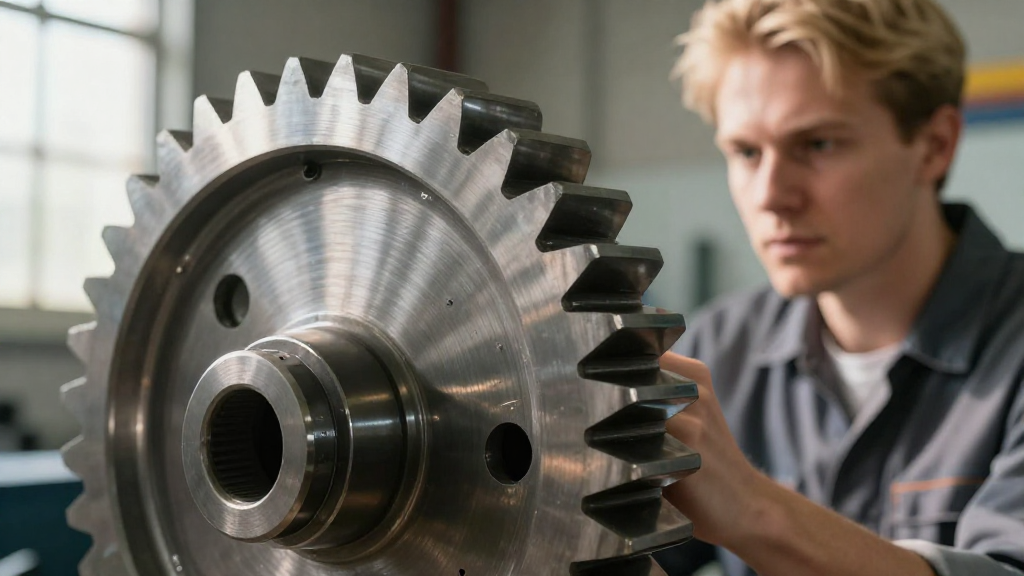
Understanding the spur gear function is essential for anyone working in mechanical engineering or design.
Spur gears are one of the most commonly used gears in machinery today.
What Are Spur Gears?
Spur gears are cylindrical wheels with teeth that project radially.
These teeth engage with other gears to transmit power and motion efficiently.
Typically, spur gears are mounted on parallel shafts, allowing them to create a smooth and effective transfer of rotary motion.
Some notable features of spur gears include:
- Straight teeth: Unlike helical gears, spur gears have teeth that are straight and run parallel to the axle.
- Simple design: Their straightforward design makes spur gears easier to manufacture and install.
- High efficiency: They provide a high level of power transmission efficiency due to minimal sliding between the teeth.
What Is the Primary Spur Gear Function?
The primary spur gear function is to transmit torque between shafts in a variety of mechanical systems.
This is achieved by the interlocking of the gear teeth, which result in the following outcomes:
-
Conversion of Rotational Motion: Spur gears convert the rotation of one shaft into the rotation of another.
-
Speed Reduction: In configurations where the driving gear is smaller than the driven gear, the output speed is reduced, increasing the torque.
-
Speed Increase: Conversely, if the driving gear is larger than the driven gear, the output speed increases while reducing the torque.
-
Direction Change: Spur gears can also change the direction of rotation in a system. For example, a gear on one shaft can drive another shaft at a 90-degree angle using intermediary gears.
Where Are Spur Gears Commonly Used?
You will find the spur gear function utilized in various applications across multiple industries.
Here are some common usages:
-
Automotive Industry: In transmissions to facilitate speed changes.
-
Industrial Machinery: For operational components such as conveyors and lifts.
-
Power Tools: To convert electric motor speed into usable torque.
-
Toy Models: In robotic kits and toy cars to develop rudimentary mechanical understanding.
Why Are Spur Gears So Popular?
The popularity of spur gears can be attributed to several key factors:
-
Cost-Effectiveness: Their simple design and ease of production mean lower manufacturing costs.
-
Reliability: Due to minimal wear and tear and high resistance to forces, spur gears tend to have a long lifespan.
-
Versatility: They can be used in diverse applications, accommodating various power and speed requirements.
Are There Any Disadvantages?
While understanding the spur gear function, it’s essential to acknowledge potential drawbacks:
-
Noise Levels: Spur gears can generate significant noise during operation, particularly at high speeds.
-
Load Distribution: Due to the tooth design, load distribution might not be as even as in helical gears.
-
Limited Gear Ratio: The potential for extreme gear ratios is less than with other types of gears because of their design limitations.
What Factors Affect Spur Gear Performance?
Several factors can influence the effectiveness of spur gears, enhancing or inhibiting their performance:
-
Material Selection: The choice of materials impacts durability and wear resistance. Common materials include steel, brass, and polymers.
-
Gear Design: The tooth design significantly affects the gear’s efficiency. Proper tooth shaping and spacing lead to smoother operation.
-
Lubrication: Adequate lubrication minimizes friction between the teeth, enhancing efficiency and extending gear life.
-
Alignment: Proper shaft alignment is crucial to ensure that gears mesh correctly, reducing wear and increasing performance.
How Is a Spur Gear Different from Other Gears?
Understanding the differences between spur gears and other types of gears helps illuminate the spur gear function more distinctly. Here’s how they compare:
-
Spur Gears vs. Helical Gears: Helical gears have angled teeth, allowing for smoother engagement and quieter operation. However, they also generate axial thrust and are generally more complex to manufacture.
-
Spur Gears vs. Bevel Gears: Bevel gears are used for shafts that intersect at an angle, allowing a change of direction in motion, whereas spur gears work on parallel shafts.
-
Spur Gears vs. Worm Gears: Worm gears can provide high torque and significant speed reduction, but they are generally less efficient due to higher friction.
How to Choose the Right Spur Gear for Your Application?
Selecting the appropriate spur gear involves understanding your needs and considering several criteria:
-
Tooth Size and Count: Assess the mechanical requirements for torque and speed to determine the necessary gear ratio.
-
Material: Choose materials based on the environment of use (e.g., outdoor, high temperature).
-
Load Characteristics: Consider the maximum load that the gear will have to withstand during operation.
-
Manufacturing Tolerance: Ensure gear tolerances meet application demands for precise operation.
-
Cost Implications: Balance quality and performance with your budgetary constraints.
Conclusion: What We Learned About Spur Gear Function
In summary, the spur gear function is fundamental in connecting various mechanical elements through rotary motion transfer.
The advantages of spur gears, including efficiency, reliability, and versatility, make them a preferred choice in various applications.
However, recognizing their limitations, such as noise and uneven load distribution, is crucial for effective utilization.
In understanding the spur gear function, we appreciate how these simple, robust components fit into the complex machinery of our modern world.
Choosing the right spur gear requires careful consideration of several factors, ensuring that the gear’s design meets the application’s requirements efficiently and cost-effectively.
By applying this knowledge, engineers and designers can make informed decisions that optimize performance and longevity in their systems.