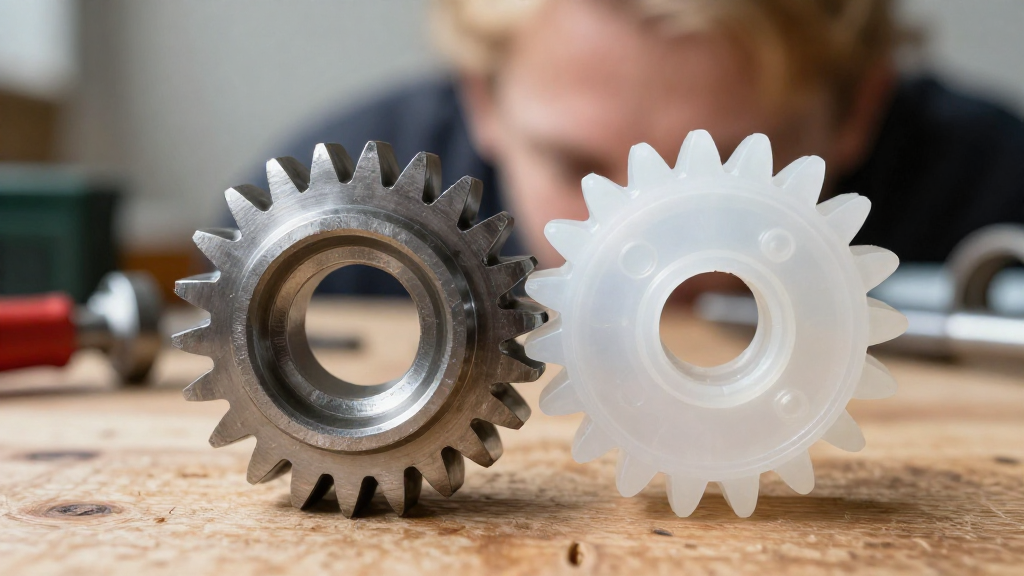
When it comes to mechanical applications, one critical decision awaits: steel vs plastic gears.
Each material comes with distinct advantages and disadvantages that can significantly impact your project.
What Are Steel Gears?
Steel gears are made from various types of steel, providing excellent strength, durability, and high load-bearing capacity.
These gears are commonly used in applications requiring:
- High torque
- Heavy loads
- Precision
What Are Plastic Gears?
Plastic gears, on the other hand, are made from different types of polymers and resins, offering lightweight solutions for various applications.
They are typically favored for:
- Low friction
- Corrosion resistance
- Cost-effectiveness
Why Choose Steel Gears?
So, what are some reasons to go with steel gears in the steel vs plastic gears debate?
-
Durability
Steel gears can withstand substantial wear and tear, making them ideal for demanding environments. -
Precision Engineering
Precision in manufacturing results in gears that fit tightly, reducing backlash and improving performance. -
High Load Capacity
Steel is capable of handling more significant loads than plastic gears, making it suitable for heavy machinery. -
Heat Resistance
Steel gears are less likely to deform under high temperatures, which is essential for applications like automotive engines.
What Are the Advantages of Plastic Gears?
While steel gears have their strengths, plastic gears offer a different set of benefits that may make them more suitable for certain applications:
-
Lightweight
Plastic gears weigh significantly less than steel gears, easing transportation and installation. -
Noise Reduction
The design of plastic gears often results in quieter operation, appealing in scenarios such as robotic or consumer applications. -
Self-Lubrication
Many plastic gears have low friction properties and can operate without additional lubricants, reducing maintenance needs. -
Corrosion Resistance
Plastic gears don’t rust or corrode, making them ideal for wet or corrosive environments.
What Are the Cost Implications?
When comparing steel vs plastic gears, it’s also crucial to consider cost.
-
Steel Gears
These tend to be more expensive due to the material costs and the manufacturing processes required to achieve the necessary precision and strength.
They are often the go-to choice for long-term durability, negating higher initial investment through longevity. -
Plastic Gears
Generally less expensive, plastic gears can provide a cost-effective solution for low-load or less demanding applications.
However, if the application requires high strength or durability, the long-term costs may increase due to potential replacements and maintenance.
Which Is Better for Your Application: Steel or Plastic Gears?
The answer to the question, “Which is better, steel or plastic gears?” largely depends on specific operational needs:
- For applications requiring:
- High strength
- Durability
- Heavy loads
Steel gears are the preferred choice.
- On the other hand, if you are looking for:
- Lightweight solutions
- Lower operational noise
- Simple maintenance
Then plastic gears may suit your needs better.
Are There Hybrid Solutions?
Interestingly, the steel vs plastic gears discussion has evolved to include hybrid solutions. These incorporate both materials within a single system:
- Steel and Plastic Combinations
Some applications utilize steel gears in high-load areas while using plastic gears in low-load, less critical areas. This dual approach can balance the strengths of each material.
What About Performance and Efficiency?
In terms of performance, consider the following aspects:
-
Friction:
Plastic gears usually have lower coefficients of friction compared to steel gears, allowing for smoother operation without the need for lubrication. -
Load Handling:
Steel gears outperform plastic gears in terms of load capacity, which is crucial for heavy machinery. -
Heat Generation:
Steel has a higher thermal conductivity than plastic, which means it can dissipate heat more effectively. However, plastic gears can operate at a wider temperature range without deforming.
How Do Environmental Conditions Impact Gear Choice?
When debating steel vs plastic gears, one must also factor in environmental conditions:
-
Moisture:
Plastic gears thrive in humid conditions where steel gears might corrode. -
Chemical Exposure:
If your application involves corrosive substances, plastic gears are usually a more reliable option. -
Temperature Extremes:
Steel gears can better withstand extreme temperatures, while plastic may degrade over time.
Conclusion: Which Should You Choose?
In the steel vs plastic gears debate, the best choice will be dictated by your specific application requirements:
- If you need high strength, durability, and performance under stress, steel gears are the better choice.
- For applications that prioritize weight reduction, lower costs, and quieter operation, plastic gears provide a compelling alternative.
Before making any decisions, assess your project’s unique constraints and requirements.
This thorough understanding will help determine which gear solution best aligns with your needs.
Ultimately, each material has distinct advantages that cater to various applications, thus emphasizing the importance of informed decision-making in engineering and design.