Glacier travel demands gear that balances traction, support, safety, and real-world usability. The right setup helps you move efficiently while staying prepared for changing snow, ice, and crevasse terrain.
In this roundup, we focus on practical mountaineering gear for glacier travel that works for both newer climbers building a system and experienced users refining one.
Best 10 Mountaineering Gear for Glacier Travel Picks for 2026
Ultralight Technical Snowshoes
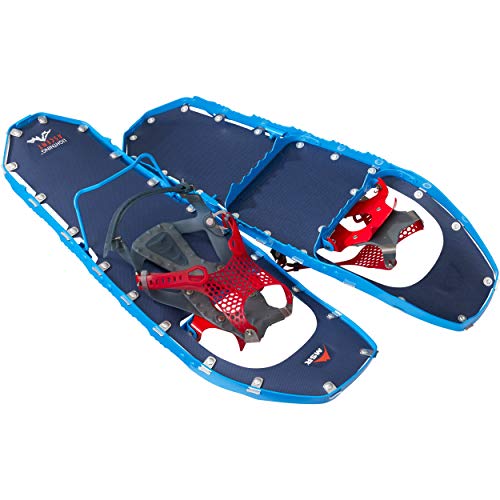
- 4.33 lb pair
- 360-degree traction frame with steel DTX crampons
- Heel lift bar for steep ascents
Best For: Steep, technical snow travel and backcountry climbs
Classic Alpine Crampons

- 12-point crampon for classic mountaineering
- Two long front points for hard snow grip
- ANTISNOW system helps limit snow buildup
Best For: General alpine travel and glacier approaches
Backcountry Snowshoes with Tails

- Steel traction rails and brake bars
- Freeze-resistant Tri fit bindings
- Optional flotation tails for heavier loads
Best For: Steep backcountry travel with adaptable load support
Technical Glacier Axe

- Lightweight ice axe with leash included
- 3 mm steel pick for anchoring
- Grooved shaft and stainless steel spike
Best For: Glacier travel and basic alpine axe use
Technical Snowshoes for Steep Terrain

- ExoTract deck and steel crampons improve traction.
- Paragon bindings conform securely to boots.
- Heel lift bar helps on steep ascents.
Best For: Steep glacier approaches and alpine travel
Classic Ice Axe

- Lightweight aluminum shaft with secure grip grooves.
- Steel pick and adze support hard snow and ice use.
- Stainless spike and pick holes add practical utility.
Best For: Glacier travel and basic mountaineering technique
Insulated Mountaineering Boots
La Sportiva Nepal Cube GTX Boots

- GORE-TEX Insulated Comfort adds waterproof protection.
- Thick leather upper and rand improve durability.
- Carbon Tech insulation supports cold-weather use.
Best For: Cold glacier routes and technical alpine climbing
Ultralight Ski-Ready Harness

- 150g ultra-light design
- Fits over skis, crampons, or boots
- Glove-friendly buckle and compact pack size
Best For: Ski mountaineers and glacier travelers who prioritize minimal weight
Budget Aluminum Ice Axe

- Lightweight aluminum-alloy build
- Curved toothed pick head for grip
- Includes sheath for storage
Best For: Buyers seeking a basic, affordable glacier tool for winter use
Durable Adjustable Ski Harness

- High-strength webbing and steel buckle
- Color-coded setup for easier use
- Two gear loops plus ice screw retainers
Best For: Frequent ski mountaineers wanting a durable, easy-to-handle harness
Ultralight Technical Snowshoes – MSR Lightning Ascent
For mountaineering gear for glacier travel, the MSR Lightning Ascent is a technical snowshoe built for steep, rugged approaches where traction matters as much as flotation. Its 360-degree Traction Frames and steel DTX crampons are aimed at secure grip on traverses and alpine steeps, while the heel lift bar helps reduce fatigue on sustained climbs.
Best For: Climbers and winter travelers who want a lightweight, aggressive snowshoe for steep terrain and technical backcountry travel.
Pros:
- Ultralight 4.33 lb pair for a technical snowshoe
- 360-degree traction frame and steel DTX crampons for strong bite
- Paragon bindings wrap securely and help improve foot control
- Ergo Televator heel lift bar supports efficient steep ascents
Cons:
- 220-pound load limit may not suit heavier users with full gear
- More specialized than a basic snowshoe for casual winter use
This model stands out when the route is steep, icy, and demanding, and you need a snowshoe that prioritizes traction and uphill efficiency over simplicity. It is a strong fit for technical objectives where careful foot placement and secure climbing performance are essential.
Classic Alpine Crampons – Petzl VASAK 12-Point
For mountaineering gear for glacier travel, the Petzl VASAK is a classic 12-point crampon designed to improve grip and walking comfort on hard snow and ice. The two long wide front points are built for solid traction, and the ANTISNOW system helps limit buildup when conditions change underfoot.
Best For: Mountaineers who need a dependable general-purpose crampon for classic alpine travel on snow and ice.
Pros:
- 12-point design balances grip and walking comfort
- Two long wide front points support traction on hard snow
- ANTISNOW system helps reduce snow buildup
- LEVERLOCK UNIVERSEL fits boots with heel piping
Cons:
- Built for classic mountaineering, not a specialty technical ice setup
- Boot compatibility depends on heel piping
The VASAK is a straightforward choice when you want reliable crampon performance without overcomplicating the setup. For glacier travel and general alpine objectives, it offers the kind of grip and comfort that make long days on snow and ice more manageable.
Backcountry Snowshoes with Tails – MSR Evo Ascent 22
When looking at mountaineering gear for glacier travel, the MSR Evo Ascent offers a practical snowshoe option with steel traction rails, brake bars, and glove-friendly Tri fit bindings. The Televator heel lifts help on steep sections, and the modular flotation tails add flexibility if you need to carry heavier loads.
Best For: Climbers who want a durable snowshoe for backcountry travel, steep approaches, and variable load needs.
Pros:
- Steel traction rails and brake bars add secure grip
- Tri fit bindings are freeze-resistant and glove-friendly
- Televator heel lifts reduce fatigue on steep climbs
- Modular flotation tails available for heavier loads
Cons:
- 180-pound maximum recommended weight without tails is limiting for some users
- Flotation tails are sold separately
This is a versatile snowshoe for climbers who need dependable traction and the option to expand load-carrying capacity later. It fits well for steep backcountry travel where reliable performance and easy handling in cold conditions matter.
Technical Glacier Axe – Petzl Glacier Linkin
For mountaineering gear for glacier travel, the PETZL Glacier Linkin is a lightweight ice axe designed for secure anchoring and practical handling on snow and ice. Its steel pick, stainless steel spike, and grooved shaft support a confident grip, while the included leash adds retention for committed mountain travel.
Best For: Mountaineers and glacier travelers who want a lightweight, functional ice axe for self-arrest, support, and anchoring.
Pros:
- Steel pick tapered to 3 mm for solid anchoring
- Stainless steel spike penetrates hard snow and ice
- Grooved shaft improves grip during technical use
- Includes leash, pick protector, and spike protector
Cons:
- At 15.68 ounces, it is still a specialized piece rather than a general tool
- Wood handle may not be the preference for every user
This ice axe is a strong companion for glacier routes where a secure, easy-to-handle tool matters. With its lightweight build and practical features, it covers the core needs of alpine travel without unnecessary complexity.
Technical Snowshoes for Steep Terrain – MSR Revo Ascent Snowshoes
MSR Revo Ascent Backcountry & Mountaineering Snowshoes with Paragon Bindings, 25 Inch Pair, Olive
Check Price On AmazonIf you’re building mountaineering gear for glacier travel, these MSR Revo Ascent snowshoes are aimed at steep, technical approaches where secure traction matters more than comfort-oriented trail use. The edge-to-edge ExoTract deck, steel crampons, and heel lift bar are all designed to help you move efficiently on traverses, climbs, and kicksteps in alpine terrain.
Best For: Mountaineers who need rugged snowshoes with strong traction and uphill support for steep glacier approaches.
Pros:
- Edge-to-edge traction from the ExoTract deck helps on traverses and steep slopes.
- One-piece steel crampons add bite for technical uphill travel.
- Paragon bindings wrap securely around boots for a glove-like fit.
- Ergo Televator heel lift helps reduce strain on steep ascents.
Cons:
- At 4.67 pounds per pair, they are relatively heavy for a footwear tool.
- 220-pound load capacity may not suit every user carrying a full mountain kit.
- Best suited to alpine terrain rather than casual snowshoeing.
For glacier travel, these are a purpose-built traction tool rather than an all-around snowshoe. If your route includes steep skin tracks, kicksteps, or firm snow where control matters, their rugged construction and binding security make a strong case.
Classic Ice Axe – PETZL Glacier Ice Axe
For mountaineering gear for glacier travel, an ice axe is a core safety item, and the PETZL Glacier is built as a lightweight, straightforward tool for anchoring and self-arrest basics. Its steel pick, stainless spike, and aluminum shaft keep the design focused on secure penetration and practical handling in hard snow and ice.
Best For: Climbers who want a lightweight, classic ice axe for glacier travel and basic mountaineering technique.
Pros:
- Steel pick is tapered to 3mm at the tip for solid penetration in hard ice.
- Aluminum shaft with machined grooves offers a secure grip.
- Steel adze is optimized for cutting steps.
- Stainless steel spike helps with penetration in hard snow.
Cons:
- As a classic axe, it is more specialized than adjustable or modular tools.
- Performance depends on choosing the correct length for your route and size.
This is a practical, no-nonsense option if you want a light axe with proven glacier-travel features. The updated finish is cosmetic, but the underlying build remains centered on the fundamentals that matter on snow and ice.
Insulated Mountaineering Boots – La Sportiva Nepal Cube GTX Boots
When you’re choosing mountaineering gear for glacier travel, boots need to balance warmth, weather protection, and support. The La Sportiva Nepal Cube GTX is built around a thick leather upper, GORE-TEX Insulated Comfort waterproofing, and Carbon Tech insulation, making it a serious cold-weather boot for alpine environments.
Best For: Climbers who need insulated, waterproof boots for cold glacier routes and technical mountain use.
Pros:
- GORE-TEX Insulated Comfort helps keep water out while adding weather protection.
- 3.2mm silicone-impregnated roughout leather and abrasion-resistant textile reinforce the upper.
- Carbon Tech honeycomb insulation supports warmth in cold conditions.
- Air-injected rubber rand adds durability around the boot.
Cons:
- Built for technical mountain use, so they are not a lightweight everyday boot.
- Lace closure may take more time to adjust than simpler closure systems.
These boots are clearly aimed at serious alpine conditions rather than general winter wear. If your glacier travel includes cold exposure, rough terrain, and the need for waterproof insulation, this model brings the right kind of construction to the job.
Ultralight Ski-Ready Harness – PETZL ALTITUDE Harness
If you’re building mountaineering gear for glacier travel, the PETZL ALTITUDE is aimed at fast, low-bulk missions where a harness needs to stay out of the way until you need it. Its wireframe design focuses on load distribution without foam padding, and it packs down tiny for trips where space in the pack matters.
Best For: Ski mountaineers and glacier travelers who want an ultra-light harness that can be donned with skis, crampons, or heavy boots still on.
Pros:
- Weighs only 150g and packs into a very small carry bag
- Can be put on or removed with both feet on the ground
- DoubleBack Light buckle is glove-friendly for winter use
- Four integrated gear loops help keep equipment organized
Cons:
- Wireframe construction is designed for minimal bulk, not padded comfort
- Fewer features than more robust touring-style harnesses
This is a strong fit if you value minimal weight, compact storage, and winter-glove usability over extra structure. It looks purpose-built for efficient glacier travel and ski touring rather than all-day hanging comfort.
Budget Aluminum Ice Axe – 70cm Glacier Tool
For mountaineering gear for glacier travel on a tighter budget, this 70 cm aluminum-alloy ice axe covers the basics for winter walking, hiking, climbing, and skill training. The design emphasizes lightweight handling, a curved toothed pick head, and a sheath for storage.
Best For: Budget-minded buyers who want a basic glacier-climbing tool for winter walking and practice use.
Pros:
- High-strength aluminum alloy construction keeps it lightweight
- Curved toothed pick head is shaped for secure grip and self-arrest
- Wide pickaxe end can be used for scraping ice and snow
- Includes a sheath
Cons:
- Generic design and materials are simpler than premium technical axes
- Positioning is more general-purpose than specialized
This is a straightforward option if you want an affordable, lightweight ice axe for basic glacier movement and winter training. It makes sense when you need simple function more than advanced refinement.
Durable Adjustable Ski Harness – PETZL TOUR Harness
The PETZL TOUR is a practical choice for mountaineering gear for glacier travel when durability and easy handling matter more than shaving every gram. It uses high-strength polyester webbing and a steel DoubleBack buckle, with color coding that helps make setup clearer in low light.
Best For: Ski mountaineers and glacier travelers who want a more durable, glove-friendly harness for repeated use.
Pros:
- Durable polyester webbing and steel buckle are built for longevity
- Can be put on or taken off with skis, crampons, or boots still on
- Color-coded straps help with quick, correct setup
- Two gear loops plus ice screw retainers support organized carry
Cons:
- At 320g, it is heavier than ultra-light touring harnesses
- Less compact than race-focused minimalist options
This harness is a solid pick if you expect frequent use and want a straightforward, rugged layout for winter missions. It trades some weight savings for durability and easier everyday handling on snow and ice.
How We Picked the Best Mountaineering Gear for Glacier Travel
We prioritized compatibility, weight, durability, and ease of use across a glacier-travel system. That means assessing how each item supports movement on firm snow, blue ice, and mixed terrain, plus whether it pairs well with the rest of your kit.
For Mountaineering Gear for Glacier Travel, the best choices are not always the lightest. They need secure fit, dependable adjustment, and enough stiffness or structure to handle steepening snow and emergency maneuvers.
Quick Comparison
Think in systems: boots drive crampon performance, crampons determine traction, ice axes support balance and self-arrest, and harnesses matter when rope travel or crevasse rescue is part of the plan. Snowshoes are useful for low-angle approaches, but they are not a substitute for crampons on ice.
Match the Tool to the Terrain
Use snowshoes for softer approaches, crampons for firm snow and glacier surfaces, a proper ice axe for arrest and stability, and a well-fitted harness when roped travel is expected.
Key Buying Factors for Mountaineering Gear for Glacier Travel
Compatibility: Make sure crampons match your boots and bindings, and that harnesses fit over your layers without restricting movement.
Weight vs. strength: Lighter gear reduces fatigue, but ultralight options should not compromise durability or security in harsh conditions.
Adjustability: Adjustable harnesses and length-correct ice axes can make a system more versatile across seasons and users.
Fit and control: Boots should provide enough stiffness for front-pointing and edging, while crampons should stay stable without excessive flex.
Condition-specific design: Choose tools built for glacier travel rather than general hiking; the demands are closer to technical mountaineering than everyday backcountry use.
Who Should Buy Which Mountaineering Gear for Glacier Travel?
Newer glacier travelers: Start with reliable foundational pieces—boots, crampons, a standard ice axe, and a harness that is simple to put on and take off.
All-around mountaineers: Prioritize versatile, proven gear that can handle mixed conditions and repeated use across guided climbs, training days, and alpine routes.
Fast-and-light users: Focus on compact harnesses, lighter axes, and efficient traction systems, but only if the gear still meets the technical demands of the route.
Approach-heavy trips: Snowshoes can save energy on low-angle terrain, while glacier-specific traction remains essential once conditions firm up.