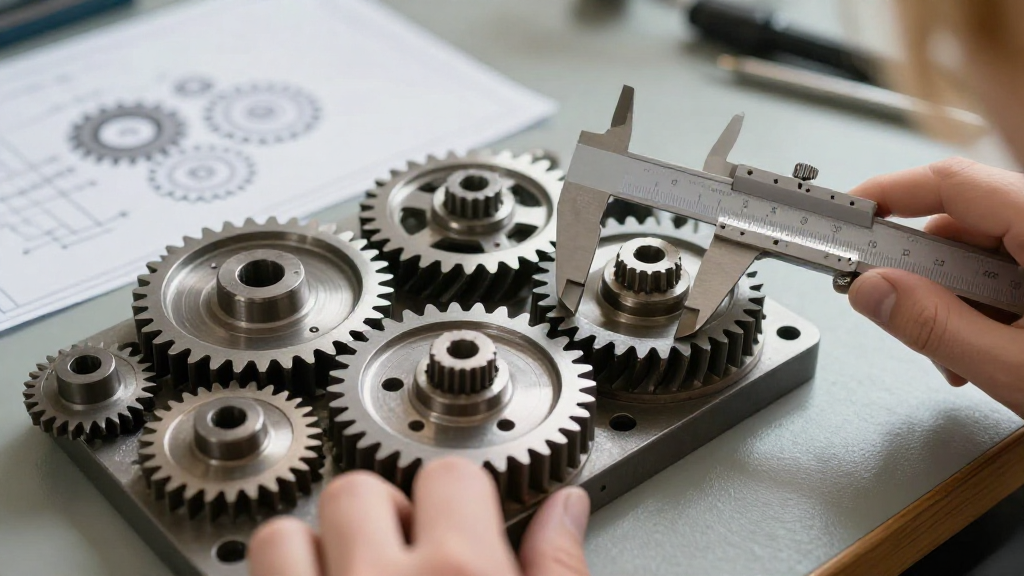
Understanding how to calculate gear ratio is essential for anyone involved in mechanics, engineering, or automotive maintenance.
This fundamental concept helps you determine how power is transmitted through gears, which is crucial for optimizing performance and efficiency in various applications.
What is Gear Ratio?
Gear ratio is the relationship between the number of teeth on two meshing gears. It represents how many times one gear must turn in relation to another gear.
To calculate gear ratio, you simply follow a straightforward formula:
Gear Ratio = Number of Teeth on Driven Gear ÷ Number of Teeth on Driving Gear
This formula highlights that gear ratios are an essential part of any mechanical system that involves gears, from bicycles to complex machinery.
Why is Gear Ratio Important?
Knowing how to calculate gear ratio is crucial for several reasons:
- Power Output: Gear ratio determines how power is distributed from the engine to the wheels in vehicles.
- Speed Control: Higher gear ratios allow for greater speed, while lower ratios provide better torque.
- Efficiency: Proper gear ratios optimize fuel consumption and reduce wear on machinery.
- Performance Tuning: Racing enthusiasts often change gear ratios to achieve desired speed or acceleration.
How is Gear Ratio Calculated?
Now, let’s delve into the steps to calculate gear ratio. Understanding this method will empower you to analyze diverse mechanical systems confidently.
Step 1: Identify the Gears
A typical gear system includes a driving gear and a driven gear.
– The driving gear is the gear that receives input from a power source (like an engine).
– The driven gear is the gear that is driven by the input from the driving gear.
Step 2: Count the Teeth
Next, you need to count the number of teeth on each gear.
For this example:
– If the driving gear has 12 teeth.
– If the driven gear has 36 teeth.
Step 3: Apply the Gear Ratio Formula
Once you have the number of teeth:
– Use the formula: Gear Ratio = Teeth on Driven Gear ÷ Teeth on Driving Gear.
Continuing our example, the calculation would be:
– Gear Ratio = 36 teeth (driven) ÷ 12 teeth (driving) = 3.0
This results in a gear ratio of 3:1.
This means the driven gear will rotate once for every three rotations of the driving gear.
Can Gear Ratios be Simplified?
Yes, they can! Gear ratios can often be expressed in their simplest form:
- In our example, 3:1 is already simple, but if it were 6:4, you could simplify it to 3:2.
How to Calculate Gear Ratio in Complex Systems?
In more complex systems involving multiple gears, calculating the gear ratio can become a little intricate but is still manageable.
Step 1: Break Down the Gears
For systems with multiple gears engaged in a series, consider each pair of driving and driven gears separately.
Step 2: Calculate Individual Ratios
Follow the steps outlined above for each gear set.
Step 3: Multiply the Ratios
Once you have the individual gear ratios:
- Multiply them together to get the total gear ratio.
For instance, if you have two sets of gears:
– Set 1 ratio becomes 2:1
– Set 2 ratio becomes 3:1
Total gear ratio calculation would be:
- Total Gear Ratio = 2:1 × 3:1 = 6:1
How Does Gear Ratio Affect Torque and Speed?
When you know how to calculate gear ratio, it’s essential to understand how it impacts torque and speed.
- Higher Gear Ratios: They increase speed but reduce torque. Good for high-speed applications.
- Lower Gear Ratios: They increase torque but reduce speed. Beneficial for applications requiring high power, like towing.
Understanding this can help you refine the performance characteristics of any mechanical system.
Common Applications of Gear Ratios
Considering various applications where how to calculate gear ratio comes in handy:
- Bicycles: Different gear ratios affect climbing ability and speed on flat surfaces.
- Cars: Gear ratios in transmissions optimize the balance between acceleration and fuel efficiency.
- Industrial Machines: Gear ratios influence the operation and efficiency of various machinery.
Tips for Maintaining Gear Systems
Understanding how to calculate gear ratio is important, but proper maintenance of gear systems is equally crucial.
- Regular Inspections: Regularly check for wear and tear on gears.
- Lubrication: Ensure that gears are adequately lubricated to reduce friction.
- Alignment Checks: Misaligned gears can throw off your intended gear ratio and lead to premature wear.
Conclusion
Now that you’ve learned how to calculate gear ratio, you can apply this knowledge across various mechanical systems.
Whether you’re working on vehicles, bicycles, or industrial machinery, understanding gear ratios empowers you to make informed decisions about performance and efficiency.
Make sure to practice calculating gear ratios with different gear setups.
The more you practice, the more intuitive the process will become!
By mastering this fundamental concept, you are now better equipped to optimize the performance of any gear-driven system you encounter.
Whether you’re a hobbyist, a professional mechanic, or simply curious about how things work, the principles of gear ratios will benefit you throughout your projects.
Feel free to share this article with others who might be interested in learning how to calculate gear ratio!