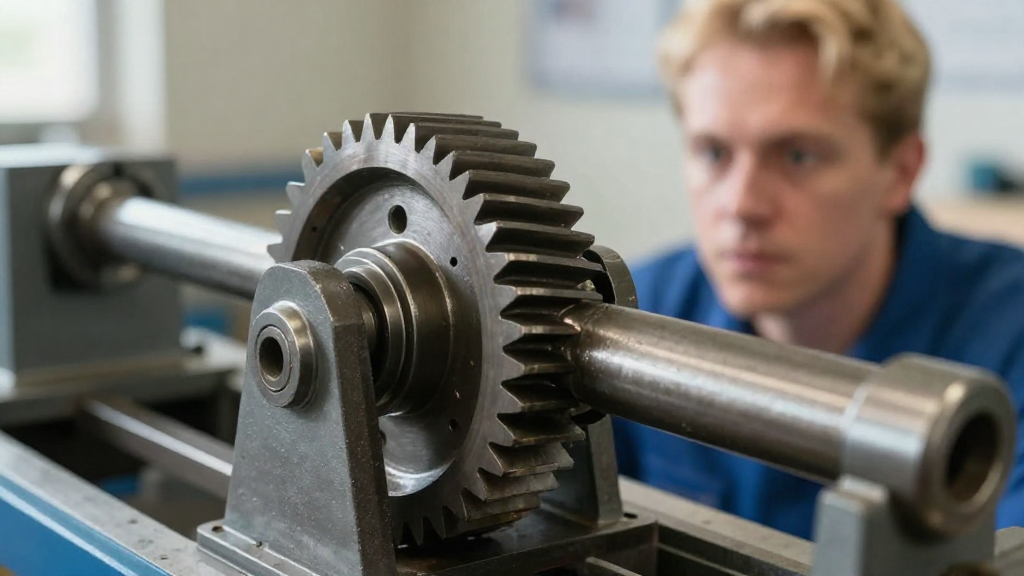
The rack and pinion mechanism is an essential mechanical system used in various applications, converting rotational motion into linear motion.
What Is a Rack and Pinion Mechanism?
A rack and pinion mechanism consists of two primary components: the rack and the pinion.
- Rack: A straight bar with teeth aligned in a straight line.
- Pinion: A round gear with teeth that engages with the rack’s teeth.
When the pinion rotates, it engages with the rack, causing linear movement. This simple yet effective mechanism is widely utilized in automobiles, steering systems, CNC machines, and many other applications that require precise linear motion.
How Does It Function?
Understanding how a rack and pinion mechanism operates involves breaking down its process into a few simple stages:
-
Rotation of the Pinion:
– When force is applied to the pinion, it begins to rotate. -
Engagement with Rack Teeth:
– As the pinion turns, its teeth mesh with the teeth of the rack. -
Linear Movement of the Rack:
– This engagement causes the rack to move linearly along a straight path. -
Continuous Motion:
– As the pinion continues to rotate, it will push or pull the rack further along its path.
This process allows for the conversion of circular motion into linear motion, which is fundamental for many mechanical systems.
What Are the Applications of a Rack and Pinion Mechanism?
The versatility of the rack and pinion mechanism leads to its usage in various fields, including:
- Automotive Steering Systems:
-
Converting the rotational movement of the steering wheel into linear motion to steer the vehicle.
-
Robotics:
-
Providing precise linear motion control in robotic arms and automated equipment.
-
Elevators:
-
Enabling up and down movement by converting motor rotation into linear motion.
-
CNC Machines:
-
Enhancing precision in machining processes by converting rotational motor movement into tool movement.
-
Industrial Equipment:
- Used in conveyor belts and various machines that require precise linear positioning.
Why Choose a Rack and Pinion Mechanism?
There are several advantages to employing a rack and pinion mechanism in mechanical designs:
- Simplicity:
-
The design is straightforward and easy to understand.
-
Precision:
-
Offers high accuracy in linear movement applications.
-
Cost Efficiency:
-
Generally inexpensive to manufacture and maintain due to its simplicity.
-
Low Friction:
- Provides efficient motion transfer with minimal resistance.
What Are the Limitations of a Rack and Pinion Mechanism?
While the rack and pinion mechanism has many advantages, it also has some limitations to consider:
- Wear and Tear:
-
Continuous use can lead to wearing down of the teeth, requiring replacements.
-
Load Capacity:
-
It may not be suitable for high-load applications unless specifically designed for it.
-
Backlash:
- This mechanism can experience backlash, which is the slight movement that occurs when changing the direction of the motion.
How Can You Maintain a Rack and Pinion Mechanism?
Proper maintenance can help extend the lifespan of a rack and pinion mechanism. Here are some maintenance tips:
- Regular Inspections:
-
Check for signs of wear and tear on the teeth.
-
Lubrication:
-
Apply lubrication to reduce friction and wear.
-
Alignment:
-
Ensure that the rack and pinion are properly aligned to prevent uneven wear.
-
Debris Removal:
- Keep the mechanism free from dirt and debris that could hinder movement.
What Materials Are Used in Rack and Pinion Mechanisms?
The material choice for a rack and pinion mechanism can significantly influence its performance. Common materials include:
- Steel:
-
Offers high strength and durability for heavy-duty applications.
-
Aluminum:
-
Lightweight and resistant to corrosion, ideal for mobile applications.
-
Plastic:
-
Used in lightweight and low-load applications, minimizing production costs.
-
Bronze:
- Offers good wear resistance for marine applications.
Can You Use a Rack and Pinion Mechanism in Custom Projects?
Absolutely! The rack and pinion mechanism is incredibly versatile and can be customized for a range of project needs.
- Design Modifications:
-
Customize the size and length of the rack to suit specific applications.
-
Pinion Gear Selection:
-
Choose different gear sizes for varying speed and torque requirements.
-
Adaptive Applications:
- Use it in various industries, from aerospace engineering to consumer products.
With a variety of options for customization, engineers and designers can easily integrate this mechanism into their projects, enhancing functionality and performance.
Final Thoughts on the Rack and Pinion Mechanism
In conclusion, the rack and pinion mechanism stands out as a fundamental component in mechanical systems.
Its ability to convert rotational movement into a linear motion allows it to play crucial roles in various industries.
By understanding its functioning principle, applications, advantages, limitations, maintenance, and material choices, you can better appreciate how this simple mechanism impacts our daily lives.
Whether you’re designing a new product or seeking to understand existing machinery, recognizing the capabilities of the rack and pinion mechanism will provide valuable insight into its widespread use.