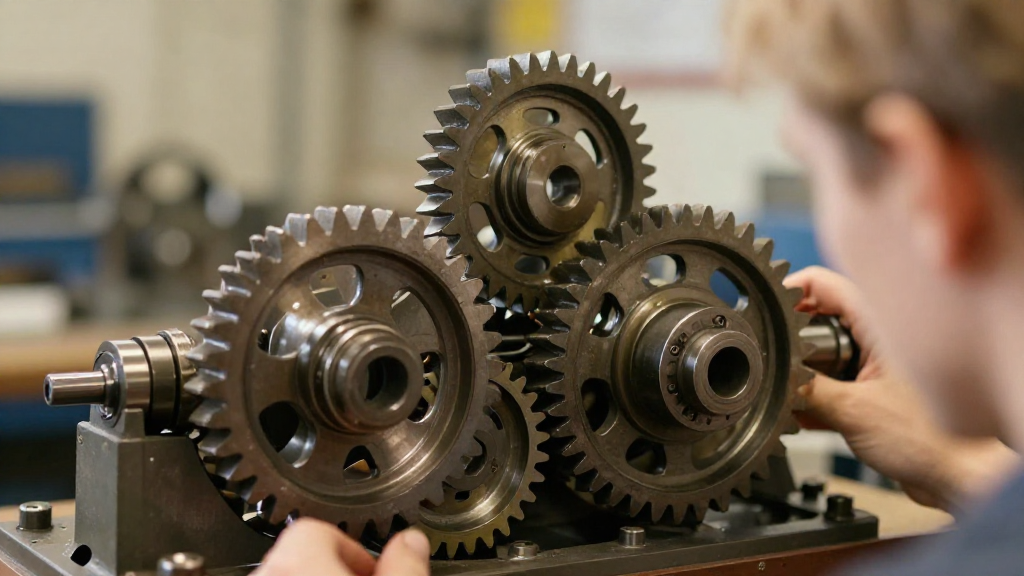
When exploring the fascinating world of machinery, gear train examples frequently arise.
Gear trains, essential components in many devices, allow us to achieve different speeds and torque, making them indispensable in various applications.
What Is a Gear Train?
A gear train is a configuration of gears that work together to transmit motion and torque between shafts.
They consist of a series of gears that transform rotational motion and modify the speed and force with which one component drives another.
Characteristics of Gear Trains
- Speed: Gear trains can increase or decrease the speed of rotation.
- Torque: They can also amplify or reduce the torque.
- Direction: Gears change the direction of the output shaft.
- Efficiency: Most gear trains are designed for efficiency, minimizing energy loss.
What Are the Different Types of Gear Train Examples?
There are several gear train examples categorized based on their configurations and applications. Some of the most common types include:
1. Simple Gear Train
A simple gear train consists of only two or more gears that work together.
- Details:
- This setup transfers motion through direct contact between gears.
- Each gear turns the one directly connected to it.
2. Compound Gear Train
A compound gear train includes one or more gears that are mounted on a common shaft.
- Characteristics:
- This type allows for a greater gear ratio in a more compact design.
- It can achieve higher speeds and torque outputs.
3. Epicyclic Gear Train
An epicyclic gear train, also known as a planetary gear train, features one or more gears (the planets) revolving around a central gear (the sun).
- Advantages:
- It allows for high torque transmission in a smaller space.
- Ideal for automotive and aerospace applications.
4. Rack and Pinion
This gear train converts rotational motion into linear motion.
- Applications:
- Found in steering systems of vehicles and certain machinery.
Where Do We Find Common Gear Train Examples?
Gear trains are utilized in numerous everyday tools and machinery. Here are some significant gear train examples across various applications:
1. Automotive Transmissions
Automobiles rely heavily on gear trains to shift between different speeds seamlessly.
- Function:
- They allow the engine power to be transmitted to the wheels effectively.
2. Electric Motors
Gear trains are used to adjust the output speed and torque of electric motors.
- Use-case:
- They moderate the high RPM (revolutions per minute) outputs to usable speeds in devices such as fans and drives.
3. Clocks and Watches
Mechanical clocks and watches utilize intricate gear trains to measure and display time accurately.
- Characteristics:
- The precision of these gears is crucial for maintaining accurate timekeeping.
4. Industrial Machinery
In various industries, gear trains are vital in machines for cutting, milling, and other manufacturing processes.
- Functionality:
- They provide the necessary force and rotational speed to operate heavy machines efficiently.
What Are the Benefits of Using Gear Trains?
When considering gear train examples, it’s crucial to understand their advantages:
1. Increased Speed Control
Gear trains enable precise control over speed and torque characteristics.
- Details:
- This is essential in applications requiring specific operational speeds.
2. Size Efficiency
They can package power transmission components into compact designs.
- Benefit:
- This is advantageous in limited spaces, such as in automotive and electronic applications.
3. Versatility
Gear trains are adaptable for various applications, from simple machines to complex systems.
- Examples:
- They are commonly found in everything from household devices to large industrial equipment.
4. Durability
When designed correctly, gear trains can handle significant loads over extended periods.
- Impact:
- This increases the operational lifespan of machinery and reduces maintenance costs.
How Do Gear Trains Influence Performance in Machinery?
The performance of various machines is significantly influenced by the type and configuration of gear trains.
1. Torque Multiplication
In many contemporary applications, the need for torque multiplication is paramount.
- Application in Vehicles:
- Automobiles rely on gear trains to enable acceleration from a standstill.
2. Speed Reduction
Conversely, in some machinery, lower speeds are favorable.
- Example:
- Gear trains can efficiently reduce speeds for drills and milling machines, allowing controlled operation.
3. Customizable Gear Ratios
Gear trains can be designed to accommodate specific gear ratios based on application needs.
- Benefit:
- This customization is essential in optimizing the performance and efficiency of the machinery involved.
4. Enhanced Control
By providing mechanical advantage and variable output options, gear trains allow for improved control of machines.
- Importance:
- This is especially crucial in applications like robotics, where precision is key.
What Are the Future Trends in Gear Train Technology?
As technology evolves, so does the design and application of gear trains. Here are some anticipated trends:
1. Advanced Materials
The development of new materials may influence gear design.
- Benefits:
- Lighter and stronger materials can enhance performance and reduce energy consumption.
2. Digital Systems Integration
Integration with digital systems could revolutionize gear train applications.
- Example:
- Smart gear designs may enable real-time adjustments based on operational requirements.
3. Enhanced Lubrication Solutions
New lubrication technologies may reduce friction further, improving efficiency.
- Impact:
- This leads to lower operating temperatures and longer service life.
4. Sustainable Manufacturing
A focus on sustainability could lead to more environmentally friendly production processes for gear trains.
- Benefits:
- This trend will influence how gear trains are manufactured and their overall lifecycle.
Conclusion
Understanding gear train examples enriches our grasp of mechanical systems across various applications.
From automotive machinery to industrial tools, the influence of gear trains is ubiquitous and vital.
As technology advances, the versatility, efficiency, and sustainability of gear train designs will likely evolve, continuing their essential role in modern machinery and manufacturing practices.