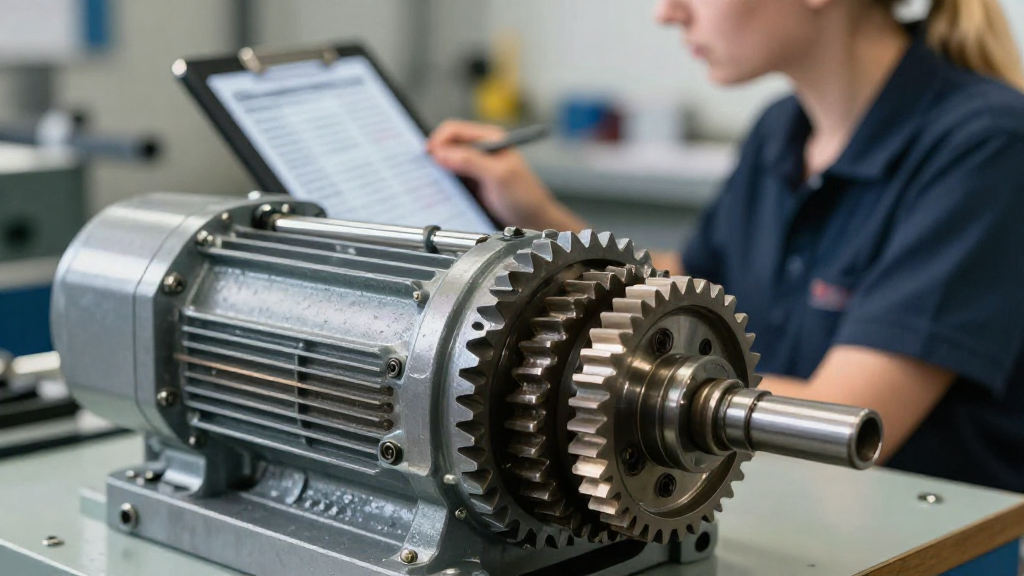
Gear reducer torque ratings are crucial for ensuring the efficiency and longevity of mechanical systems.
Understanding gear reducer torque ratings allows engineers to select the appropriate gear reducers for their applications and helps in reducing costs associated with equipment failure.
What is Gear Reducer Torque?
Gear reducer torque can be defined as the force transmitted through the gear set that causes rotation to occur.
It is a measure of how much torque output a gear reducer can supply to a driven machine or component.
Key points to understand:
-
Torque Explained: Torque refers to the rotational force acting on an object. In gear systems, it’s about how much ‘twisting’ force the system can handle.
-
Measurement Units: Torque is typically measured in Newton-meters (Nm) or foot-pounds (ft-lbs).
How Do Gear Reducers Work?
Gear reducers function by reducing the speed of the input shaft while increasing the output torque.
This process involves several key components:
-
Input Shaft: This is where the power source (like an electric motor) connects to the gear reducer.
-
Gear Teeth: The gears inside the reducer mesh, altering the rotational speed and torque.
-
Output Shaft: The modified speed and increased torque are transferred to the output shaft, driving the attached load.
This mechanism allows gear reducers to efficiently manage heavy loads without requiring excessive amounts of energy from the power source.
Why are Torque Ratings Important?
Understanding gear reducer torque ratings is essential for several reasons:
-
Performance and Efficiency
– Proper torque ratings ensure that gear reducers can handle the expected loads without overheating or failing. -
Equipment Durability
– Adhering to the correct torque ratings will prolong the life of the equipment and reduce maintenance costs. -
Application Suitability
– Different applications have varying torque requirements, and understanding these can lead to better performance in the field.
What Factors Affect Gear Reducer Torque Ratings?
Several factors can influence the torque ratings of a gear reducer:
-
Gear Ratio: The ratio of the number of teeth between two gears changes the output torque. Higher gear ratios increase output torque while decreasing speed.
-
Load Conditions: The type of load (static vs. dynamic) can impact how much torque a gear reducer can safely handle.
-
Gear Material: The durability and strength of the materials used in manufacturing the gear set significantly affect torque ratings.
-
Temperature and Environment: Operating conditions can affect the performance of the gear reducer, including expansions that may occur due to heat.
How to Calculate Gear Reducer Torque?
Calculating the required torque is a straightforward process that involves understanding both the input power and the speed of the application.
Formula for Torque Calculation:
The basic formula for calculating torque in a gear reducer is:
[ \text{Torque} (T) = \frac{\text{Power} (P)}{\text{Speed} (N)} ]
Where:
- Torque (T) is in Nm or ft-lbs.
- Power (P) is in Watts or Horsepower (HP).
- Speed (N) is in Revolutions Per Minute (RPM).
Example Breakdown:
- If you have a motor that outputs 1HP at a speed of 1800 RPM:
[ \text{Power in Watts} = 746 \text{ (since 1 HP = 746 Watts)} ]
- Using the torque formula:
[ T = \frac{746 \text{ Watts}}{1800 \text{ RPM}} \approx 0.414 \text{ Nm} ]
- This indicates that your gear reducer must accommodate at least 0.414 Nm of torque for the desired application. Adjust accordingly based on the gear ratio and load conditions.
What Are Common Applications of Gear Reducers?
Gear reducers are utilized in a wide variety of applications across different industries. Here are some common examples:
-
Automotive Applications: Gear reducers are used in manual and automatic transmissions to adjust torque and speed for vehicle power requirements.
-
Industrial Machinery: Many machines, such as conveyors and mixers, depend on gear reducers to control speed and increase torque.
-
Robotics: Gear reducers play a vital role in robotics, providing precise control over motors and movements.
-
Appliances: Household appliances, such as washing machines, utilize gear reducers for efficient motor performance.
How to Choose the Right Gear Reducer?
Choosing the right gear reducer involves careful consideration of several factors:
-
Torque Requirements: Assess the maximum torque needed for your application.
-
Speed Requirements: Determine the desired speed of operation to select an appropriate gear ratio.
-
Physical Size and Weight: Ensure that the reducer fits within any spatial constraints of your mechanical system.
-
Motor Compatibility: Verify that the gear reducer is compatible with the motor in use, considering both power and mounting specifications.
-
Environmental Factors: Consider factors such as moisture, temperature, and dust exposure when selecting a gear reducer.
What to Watch Out for with Gear Reducers?
When dealing with gear reducer torque ratings, it’s essential to be aware of common pitfalls and issues:
-
Exceeding Torque Ratings: Overloading gear reducers can lead to premature failure, overheating, or breakdown.
-
Ignoring Gear Ratio: Not considering the impact of gear ratios on the output torque can lead to inadequate performance.
-
Lack of Maintenance: Regular inspections and maintenance can prevent many common failure points and ensure longevity.
Conclusion
In conclusion, understanding gear reducer torque ratings is a key element in selecting and maintaining mechanical systems.
Using the correct gear reducer based on your application’s torque requirements not only enhances performance but also ensures reliability and efficiency.
By considering factors such as load conditions, gear ratios, and application suitability, you can make informed decisions and maximize the lifespan of your equipment.
This knowledge not only saves time and costs in the long run but also contributes to smoother operations across various industries.
Understanding gear reducer torque ratings is not just about numbers; it’s about ensuring the fluid operation of machines that shape our world.