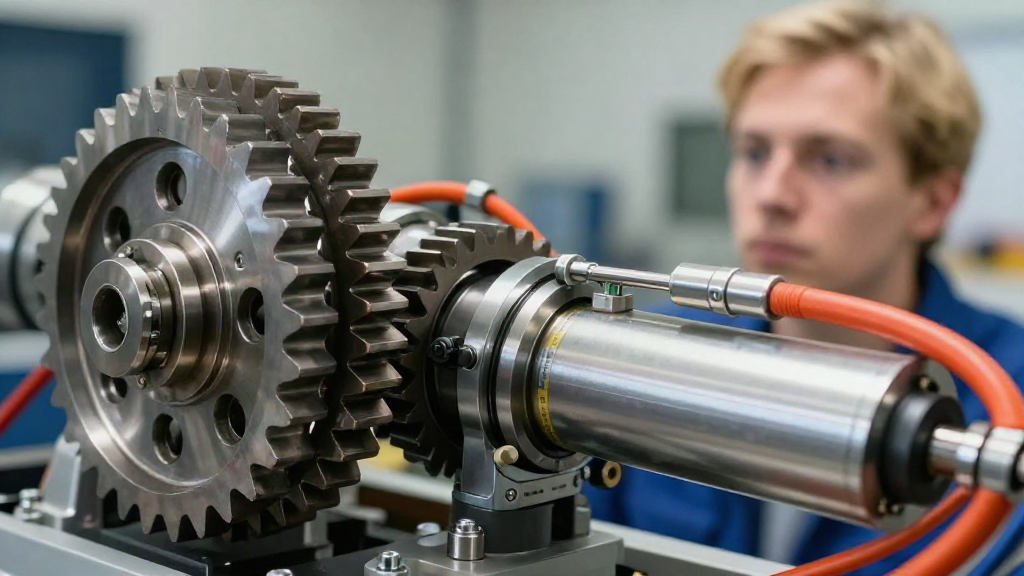
When choosing between technology options, many often find themselves pondering the question: gear vs hydraulic drive.
In this article, we will explore the key differences, advantages, and disadvantages of gear drives and hydraulic drives. By the end, you’ll have a clearer understanding of which system might best meet your needs.
What is a Gear Drive?
A gear drive is a mechanical device that transmits power using gears.
- Mechanism: Gear drives work by meshing gears of different sizes, enabling the transfer of torque and rotational force.
- Types: Common configurations include spur gears, helical gears, bevel gears, and worm gears.
- Applications: Gear drives are used in various applications ranging from automotive to heavy machinery.
What Are the Advantages of Gear Drives?
-
High Efficiency:
– Gear drives generally exhibit greater efficiency than other types of drives, often exceeding 95%. -
Low Maintenance:
– Once properly installed, gear drives require minimal intervention. -
Compact Design:
– Gear drives can transmit large amounts of power in a relatively small footprint. -
Precision Positioning:
– They provide excellent precision and repeatability in motion control systems. -
Wide Range of Ratios:
– Gear drives can accommodate various gear ratios, allowing for flexibility in output speed and torque.
What Are the Disadvantages of Gear Drives?
-
Noise:
– Gear drives can be noisy, especially at high speeds. -
Heat Generation:
– The friction between the gears can lead to heat buildup, potentially impacting performance. -
Size Limitations:
– Larger gear systems can be cumbersome and heavy, affecting the design and application. -
Complexity:
– Designing gear systems can be complex, particularly when multiple gears are involved.
What is a Hydraulic Drive?
A hydraulic drive uses fluid power to transmit energy.
– Mechanism: A hydraulic pump generates flow; it then circulates hydraulic fluid through hoses to actuate cylinders or motors.
– Components: Key components include pumps, valves, hoses, and hydraulic actuators.
– Applications: Hydraulic drives are common in construction and manufacturing equipment where high force is needed.
What Are the Advantages of Hydraulic Drives?
-
High Power-to-Weight Ratio:
– Hydraulic systems can provide immense power without adding excessive weight. -
Continuous Power:
– They allow for continuous power transfer, making them ideal for tasks requiring sustained operation. -
Excellent Load Control:
– Hydraulic drives offer precise control of load movements, thanks to adjustability in flow rates. -
Versatility:
– Hydraulic drives can handle a wide range of applications, from small machines to massive equipment. -
Shock Absorption:
– Hydraulic fluids can absorb shocks, providing smoother operation and increased longevity of components.
What Are the Disadvantages of Hydraulic Drives?
-
Fluid Leakage:
– Hydraulic systems can suffer from leaks, which can compromise performance and safety. -
Maintenance Needs:
– Hydraulic systems require regular maintenance, including fluid checks and filter changes. -
Temperature Sensitivity:
– Hydraulic fluids can degrade or vaporize under extreme temperatures, affecting performance. -
Complex Setup:
– Designing a hydraulic system can be more complicated than a gear system due to the many components involved.
How Do Gear Drives Compare to Hydraulic Drives?
When considering gear vs hydraulic drive, it’s crucial to differentiate their primary uses and performance characteristics.
Efficiency: Which is More Efficient?
In general, gear drives are more efficient than hydraulic drives.
- Energy Loss:
- Gear drives lose less energy through heat and friction compared to the energy loss in hydraulic fluid systems.
- Performance:
- If high efficiency and energy conservation are priorities, gear drives may be the better choice.
Applications: When Should You Use Each?
The choice between gear and hydraulic drives depends significantly on the application.
- Gear Drive Applications:
- Precision engineering (CNC machines)
- Automotive (manual transmissions)
-
Robotics
-
Hydraulic Drive Applications:
- Construction (excavators, cranes)
- Manufacturing (presses, conveyor systems)
- Agricultural machinery
Cost: Which is More Cost-Effective?
When comparing gear vs hydraulic drive, cost-effectiveness can vary based on several factors.
- Initial Costs:
-
Gear drives tend to have lower initial costs, while hydraulic systems might require a more substantial investment due to their complexity.
-
Maintenance Costs:
- Hydraulic systems can accrue more maintenance costs over time due to fluid changes and repairs.
Control: Which Provides Better Control?
Control can significantly impact performance in specific applications.
- Gear Drives:
-
Offer precise control over speed and torque but may lack the flexibility of hydraulic systems.
-
Hydraulic Drives:
- Provide superior load control and the ability to vary power outputs smoothly, making them ideal for dynamic applications.
Summary: Which is Better for You?
In the gear vs hydraulic drive debate, the best choice hinges on your specific needs.
Gear Drives are ideal if:
– Efficiency and low maintenance are priorities.
– You require high precision and compact design.
– Your application involves continuous rotational motion.
Hydraulic Drives are preferable if:
– You need to transmit high forces or perform heavy-duty tasks.
– You’re operating in a situation that requires shock absorption and load control.
– Your application requires versatility and continuous power without high-speed requirements.
Conclusion
Understanding the differences between gear drives and hydraulic drives can empower you to select the right system for your application.
Both systems have their own set of advantages and disadvantages, making them suitable for different scenarios.
Evaluate the specific needs of your project, considering factors like efficiency, control, cost, and application requirements, before making a decision.
Whether you choose a gear drive or a hydraulic drive, being informed will help you make the best choice for your operational success.