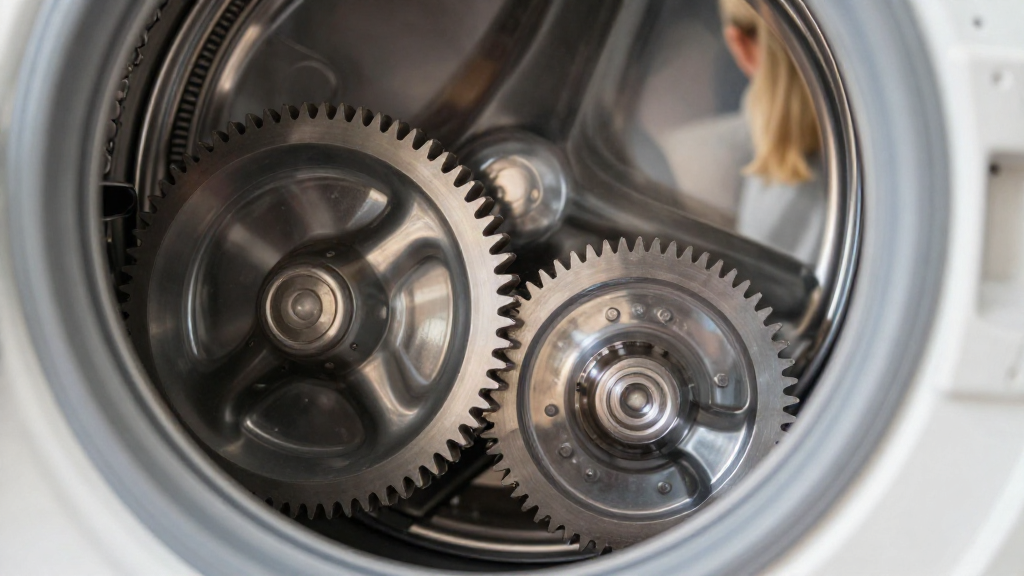
When you think about the mechanics behind laundry, the gears in washing machines play a critical role in ensuring your clothes come out clean and fresh.
What Are Gears in Washing Machines?
Gears in washing machines are essential components that facilitate the various functions of the appliance.
They are responsible for transferring motion and power from the motor to other parts of the machine.
This translates into job-specific actions like spinning, agitating, and pumping water in and out of the washing drum.
Why Are Gears Important in a Washing Machine?
The gears in washing machines help simplify complex operations and enhance the appliance’s efficiency.
Key functions of gears include:
- Changing Speed: Different washing cycles require different speeds for the drum. Gears help regulate these speeds.
- Direction Control: Gears allow the drum to rotate in both clockwise and counterclockwise directions, essential for thorough cleaning.
- Torque Increase: Gears can amplify the power from the motor to ensure all clothes are effectively washed and rinsed.
- Energy Efficiency: Well-designed gear systems can improve energy consumption, resulting in lower electricity bills and environmental benefits.
How Do Gears Work in Washing Machines?
Understanding how gears work is crucial for appreciating their function in washing machines.
Here’s a step-by-step breakdown of the gear mechanism:
-
Motor Activation:
– The motor turns on and begins to rotate. -
Gear Engagement:
– The rotating motor engages with gears, typically using a belt or direct connection. -
Speed Adjustment:
– Gears adjust the speed based on the pre-selected wash cycle (e.g., delicate or heavy-duty). -
Drum Rotation:
– The adjusted speed from the gears makes the drum rotate to agitate the clothes, allowing water and detergent to penetrate the fabric. -
Rinse and Spin Cycle:
– During rinsing and spinning, gears change the motion direction and speed, effectively removing water from the clothes.
What Types of Gears Are Found in Washing Machines?
The variety of gears in washing machines can influence how efficiently and effectively they operate.
Here are some common types:
- Spur Gears:
-
These are the most basic type of gears found in washing machines. They have straight teeth that mesh together to transmit motion directly.
-
Bevel Gears:
-
Bevel gears are used when the direction of the drive needs to be changed. They are essential in washing machines to convert the motor’s rotation to the drum’s spin cycle.
-
Planetary Gears:
- These gears allow multiple gears to work together, increasing torque while minimizing the space required. You will often find them in compact washing machines.
How Do Gear Problems Affect Washing Machine Performance?
Malfunctioning gears in washing machines can lead to a myriad of issues, affecting performance and efficiency.
Some common problems include:
-
No Agitation: If the gears are worn or damaged, the machine may fail to agitate the clothes, resulting in poorly washed laundry.
-
Inefficient Spin Cycle: Damaged gears can prevent the drum from spinning fast enough, causing excessive moisture left in clothes.
-
Noise and Vibration: Gears not functioning properly may cause unusual noises or excessive vibration, suggesting they are not engaging effectively.
-
Increased Power Consumption: Dysfunctional gears may require the motor to work harder, leading to higher electricity bills.
How Can You Maintain Gears in Washing Machines?
Proper maintenance of gears in washing machines can help extend their lifespan and maintain efficiency. Here are some tips:
- Regular Inspection:
-
Periodically check the gears for any signs of wear or corrosion. If you notice any issues, address them immediately.
-
Lubrication:
-
Some gears may require occasional lubrication. Consult your washing machine manual for specific recommendations on maintenance.
-
Clean the Machine:
-
Regularly cleaning the drum and other internal components prevents a buildup of debris that can affect the gears’ performance.
-
Professional Servicing:
- If you encounter persistent issues, don’t hesitate to seek professional help. Technicians can accurately diagnose and address gear-related problems.
What’s the Future of Gears in Washing Machines?
As technology advances, the gears in washing machines are evolving to meet new needs.
Here are some trends in gear technology for washing machines:
- Smart Technology Integration:
-
Future washing machines may incorporate smart gears that adapt based on load size and fabric type for improved efficiency.
-
3D-Printed Gears:
-
Innovations in 3D printing may allow for more versatile gear designs, leading to better efficiency and customization.
-
Durability Improvements:
- Advances in material science might yield more durable gear designs, reducing the need for replacement and enhancing overall performance.
Conclusion
The gears in washing machines play an indispensable role in facilitating the cleaning process.
From ensuring efficient agitation to optimizing spin cycles, these mechanical components are key to the appliance’s overall function.
Maintaining your washing machine’s gears can lead to improved efficiency, longer lifespan, and a better laundry experience.
So, the next time you load your washing machine, consider the crucial role of gears in making your laundry day a success!