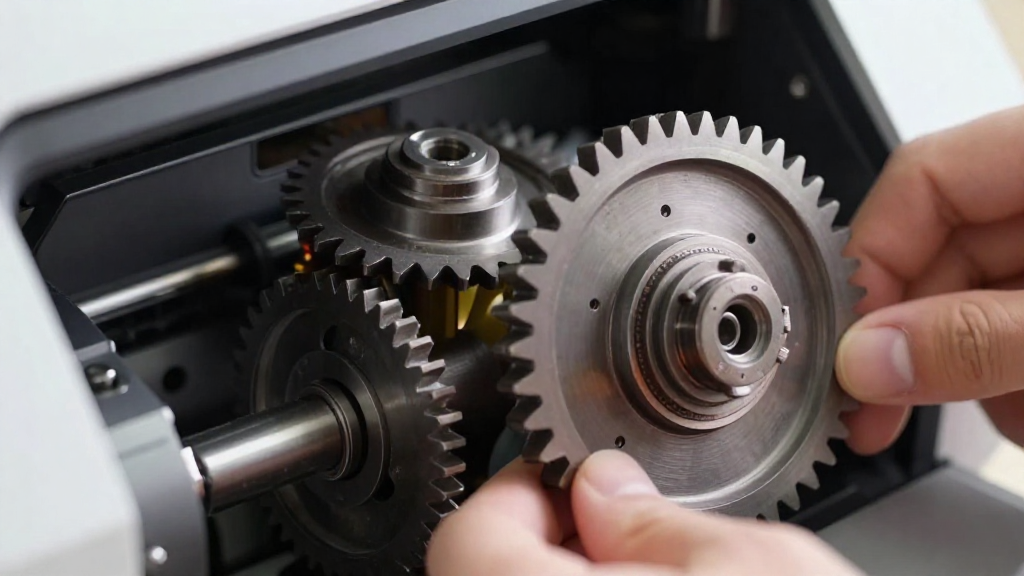
When we think about printers, we often focus on the quality of the output, the speed of printing, and the features offered. However, one critical component that plays a vital role in a printer’s performance is the gears in printers.
What Role Do Gears Play in Printers?
Gears in printers are essential mechanical components that facilitate various movements within the printer.
They contribute to:
- Feed Mechanism: Gears help in feeding paper through the printer.
- Print Head Movement: They control the lateral movement of the print head across the paper.
- Ink Delivery: Gears assist in regulating the flow of ink from the cartridges.
Without these gears, the printing process would be significantly less efficient, and the quality of printed materials would likely suffer.
How Do Gears Contribute to Printer Efficiency?
Gears in printers greatly enhance the overall efficiency of the device.
Here are several ways they achieve this:
-
Precise Movement:
– Gears enable precise control of the movement of the print head and paper feed.
– This precision ensures that the ink is deposited accurately, leading to clean, sharp prints. -
Speed Regulation:
– They allow printers to operate at various speeds depending on the task.
– The right gears can help the printer adjust its speed during complex jobs that require more detail. -
Power Transmission:
– Gears help transmit power from the motor to different components.
– This transmission maintains smooth operation without stalling or jamming. -
Load Distribution:
– By distributing loads evenly across components, gears in printers prevent wear and tear.
– This enhancement leads to a longer lifespan for both the gears and the printer.
Why Are Different Types of Gears Used in Printers?
Different types of gears serve specific functions within printers.
The gear types commonly found in printers include:
- Spur Gears:
- Used for simple movements.
-
Known for their efficiency in power transmission.
-
Bevel Gears:
- Help change the direction of movement.
-
Particularly useful in adjusting the angle of the print head.
-
Rack and Pinion Gears:
- Convert rotary motion into linear motion.
- Essential for moving the print head back and forth.
The choice of gears affects performance, reliability, and service life, making it important for manufacturers to choose the right gear type.
What Happens When Gears Malfunction?
Malfunctioning gears in printers can lead to a range of problems, dramatically affecting performance and print quality.
Common issues include:
- Jams and Paper Feed Errors:
- If gears wear down or break, they can cause the printer to jam.
-
This results in more frequent maintenance and potential replacements.
-
Inconsistent Print Quality:
-
Misalignment caused by faulty gears can lead to smudged or misaligned prints.
-
Increased Noise:
- Worn or damaged gears often produce louder noises during printing operations.
To maintain optimal performance, it’s crucial to address gear-related issues promptly through regular maintenance.
How Can You Maintain Gears in Printers?
Maintaining the gears in printers is essential for ensuring smooth operation and longevity. Here are some practical tips:
-
Regular Cleaning:
– Dust and debris can accumulate around the gears.
– Use a soft cloth or a can of compressed air to keep these areas clean. -
Routine Inspections:
– Check gears for signs of wear, such as cracking or significant loss of teeth.
– Early detection can prevent more serious issues down the line. -
Lubrication:
– Apply appropriate lubricants to ensure smooth movement.
– Be cautious to avoid excess lubricant, which can attract dust. -
Use Quality Paper:
– Low-quality or incompatible paper can cause excessive strain on the gears.
– Stick to recommended types to minimize wear and tear. -
Professional Servicing:
– For complex issues, consult a professional technician.
– Timely servicing can extend the life of the entire printer.
What Innovations Are Influencing Gears in Printers Today?
As technology advances, the role of gears in printers is evolving.
Notable innovations include:
- 3D Printing Technology:
-
Uses a different set of gears and mechanisms to create intricate designs layer by layer.
-
Smart Printers:
-
Integration of sensors to monitor gear performance in real-time for predictive maintenance.
-
Eco-Friendly Designs:
- Manufacturers are developing gears from sustainable materials, reducing environmental impact.
These innovations continue to enhance the efficiency and performance of printing devices.
Conclusion: The Vital Role of Gears in Printers
In summary, the gears in printers serve a critical purpose.
They ensure that printers operate efficiently and effectively, contributing to precise movements, speed regulation, and power transmission.
By understanding the importance and functions of these gears, users can appreciate the technology behind their printing devices.
Whether you are a casual home user or a professional, recognizing the role of gears can help you maintain your printer and utilize it to its fullest potential. Ensuring that these components are in good condition can extend the life of your printer and improve the quality of your prints.