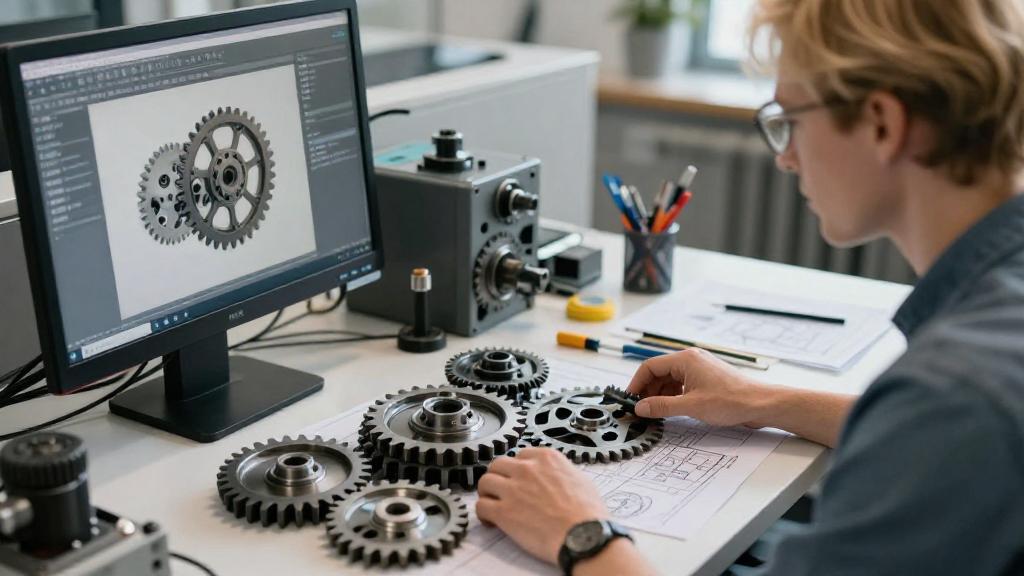
In recent years, AI in gear design has revolutionized how engineers and manufacturers approach mechanical design processes.
What is AI in Gear Design?
AI in gear design refers to the incorporation of artificial intelligence technologies to enhance, optimize, and innovate the design of gears.
This application not only encompasses traditional gear design principles but also integrates machine learning algorithms and advanced simulations to create smarter and more efficient gear systems.
Here are some key aspects of AI used in gear design:
- Data Analysis: AI can process vast datasets to identify trends and optimize gear materials and geometries.
- Predictive Modelling: Machine learning algorithms can forecast gear performance based on historical data, improving reliability.
- Generative Design: AI systems can create numerous design alternatives based on specific constraints, allowing engineers to explore innovative solutions.
How Does AI Improve Gear Design Efficiency?
Implementing AI in gear design significantly enhances efficiency throughout the design lifecycle. Here’s how:
-
Faster Prototyping:
– Traditional gear design often involves lengthy prototyping cycles.
– AI can expedite this process through rapid iterations and simulations.
– Engineers can quickly assess designs before physical manufacturing, saving time and resources. -
Enhanced Accuracy:
– AI algorithms analyze complex data and design parameters with greater precision.
– This leads to reduced human error and better performance predictability.
– The result is gears that meet exact specifications and functional requirements. -
Cost Reduction:
– By optimizing designs and materials, AI helps reduce production costs.
– It minimizes waste and improves the sustainability of gear manufacturing.
– Companies can explore cost-effective alternatives without compromising quality.
What Are the Applications of AI in Gear Design?
The applications of AI in gear design span across various industries. Here are some significant areas where AI is making a mark:
- Automotive Industry:
- The demand for high-performance gears in vehicles is increasing.
- AI helps in designing lightweight, durable gears that enhance fuel efficiency.
-
Predictive analytics ensure optimal gear performance under varying conditions.
-
Aerospace Sector:
- In aerospace, precision is paramount.
- AI in gear design aids in creating complex gear systems that withstand extreme conditions.
-
Advanced simulations forecast various performance scenarios, ensuring safety and reliability.
-
Industrial Machinery:
- Gears are integral components of industrial machines.
- AI techniques enhance the design and functionality of gears used in manufacturing equipment.
-
Predictive maintenance reduces downtime and improves operational efficiency.
-
Robotics:
- The rise of automation has increased the demand for specialized gears in robotics.
- AI algorithms assist in developing gears that allow for precise movements and control.
- This leads to enhanced precision in robotic applications.
How Is Generative Design Leveraging AI in Gear Design?
Generative design, a cutting-edge approach utilizing AI in gear design, allows engineers to input design goals alongside constraints like materials, manufacturing methods, and cost parameters.
From there, the AI system generates a multitude of design options, giving engineers a broader range of choices.
Benefits of Generative Design in Gear Manufacturing:
- Exploratory Design Spaces:
- AI explores multiple design alternatives that engineers may not have considered.
-
The variety of designs helps identify creative solutions to complex engineering challenges.
-
Optimized Performance:
- Each generated design can be critiqued based on performance criteria.
-
This ensures only the most efficient designs are selected for further development.
-
Rapid Innovation:
- Generative design contributes to more rapid innovation cycles.
- Companies can keep pace with industry demands and evolving technologies.
How Does AI Enhance Simulation in Gear Design?
Simulation is a critical part of the gear design process, and AI greatly enhances this capability.
AI-Powered Simulation Benefits:
- Real-time Data Processing:
- AI can analyze simulation results quicker than traditional methods.
-
This allows for immediate feedback for designers to make informed decisions.
-
Complex Problem Solving:
- AI can simulate numerous scenarios to identify potential failure points in gear systems.
-
The analysis helps engineers proactively refine designs and ensure longevity.
-
Virtual Prototyping:
- Virtual testing through AI-driven simulations reduces the need for physical prototypes.
- This approach saves both time and money while still providing accurate performance predictions.
What Are the Challenges of Implementing AI in Gear Design?
Despite the benefits, there are challenges to utilizing AI in gear design. Companies must consider the following:
- Data Quality:
- AI systems rely on high-quality data to function effectively.
-
Inaccurate or insufficient data can lead to suboptimal designs.
-
Integration with Existing Systems:
- Incorporating AI into traditional design workflows may require significant adjustments.
-
Companies need to manage these changes carefully to avoid disruption.
-
Skill Gaps:
- A shift towards AI-driven processes necessitates a workforce skilled in both gear design and AI technologies.
- Investing in training and development is crucial for the successful implementation of AI.
Conclusion: The Future of AI in Gear Design
As technology evolves, AI in gear design will likely become more prominent, influencing innovations in gear systems across various industries.
From automotive to aerospace, companies are realizing the potential of AI to enhance design processes and product performance.
With faster prototyping, optimized materials, and innovative design solutions, AI is paving the way for a new era in gear design.
Businesses must embrace these technological advancements while addressing the challenges, ensuring they stay competitive in a rapidly evolving market.
In summary, leveraging AI in gear design not only provides immediate benefits but also sets the groundwork for future advancements in mechanical engineering.