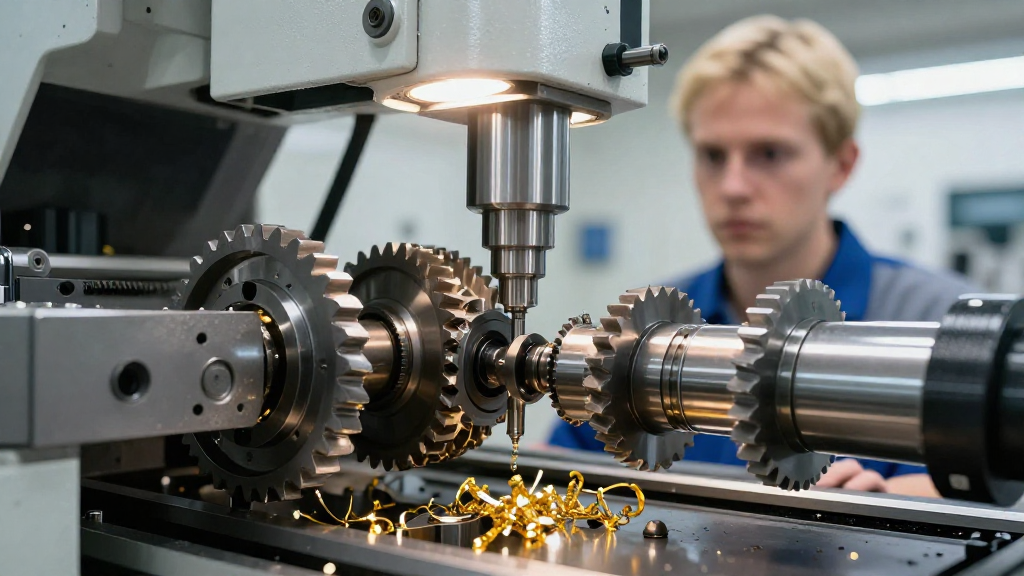
CNC gear machining is a vital process in the manufacturing industry that has significantly transformed how gears are produced.
What is CNC Gear Machining?
CNC gear machining harnesses the power of Computer Numerical Control (CNC) technology to create precise and complex gear shapes.
This method offers several advantages over traditional machining techniques, including:
-
Increased Precision: CNC machines can perform with an accuracy of up to +/- 0.001 inches.
-
Enhanced Efficiency: Automation reduces production time and minimizes human error.
-
Complex Designs: CNC machining can create intricate gear designs that would be difficult or impossible with manual methods.
With CNC gear machining, producers can manufacture various types of gears, including spur gears, helical gears, bevel gears, and worm gears.
Why Choose CNC Gear Machining?
What Are the Benefits of CNC Gear Machining?
The benefits of CNC gear machining are numerous, making it a preferred choice for manufacturers across multiple industries. Here are some key advantages:
-
Cost-Effectiveness:
While the initial investment in CNC machinery may be high, the long-term savings in labor and material costs make it worthwhile. -
Consistency and Repeatability:
CNC machines can produce multiple parts with identical specifications, ensuring high-quality output every time. -
Versatility:
CNC gear machining is adaptable to various materials, including metals and plastics. -
Rapid Prototyping:
Companies can quickly turn their designs into functional prototypes, enabling faster product development cycles. -
Minimal Waste:
CNC machining uses material efficiently, reducing waste during production.
How Does CNC Gear Machining Work?
What Are the Steps Involved in CNC Gear Machining?
Understanding the steps involved in CNC gear machining is critical for appreciating its capabilities.
-
Designing the Gear:
The process starts with creating a detailed CAD (Computer-Aided Design) model of the gear. -
Setting Up the CNC Machine:
The CNC machine is programmed with the necessary specifications from the CAD model. -
Material Selection:
Manufacturers select the appropriate material based on characteristics like strength, weight, and cost. -
Machining Process:
The CNC machine executes the programmed instructions to cut, drill, or shape the gear. -
Quality Control:
After machining, the gear undergoes rigorous testing to ensure it meets all specifications.
What Materials Are Used for CNC Gear Machining?
Why Does Material Choice Matter in CNC Gear Machining?
Material selection is crucial in CNC gear machining as it impacts the gear’s performance and durability. Here are some commonly used materials:
-
Aluminum:
Lightweight and corrosion-resistant, aluminum gears are often used in automotive and aerospace applications. -
Steel:
Known for its strength and durability, steel is commonly used for heavy machinery gears. -
Plastic:
For low-load applications, plastic gears offer low friction and reduced noise. -
Titanium:
This high-strength material is used for specialized applications requiring extreme durability.
What Types of Gears Can Be Machined?
Which Gears Are Best Suited for CNC Machining?
CNC gear machining is adaptable to a variety of gear types. Commonly machined gears include:
-
Spur Gears:
Known for their simplicity and efficiency, spur gears are the most commonly used type. -
Helical Gears:
These gears have teeth that are cut at an angle, allowing for smoother and quieter operation. -
Bevel Gears:
Ideal for changing the direction of motion, bevel gears are used in applications like automotive differentials. -
Worm Gears:
Used for reducing speed and increasing torque, worm gears are integral in conveyor systems.
What Industries Use CNC Gear Machining?
Where is CNC Gear Machining Most Frequently Applied?
CNC gear machining finds applications across a multitude of industries. Some of the most common sectors include:
-
Automotive:
Gears are essential components in vehicles, driving everything from the transmission to the steering system. -
Aerospace:
Precision gears are a necessity in aircraft engines and landing systems. -
Industrial Machinery:
Heavy machinery relies on gears for harnessing power and ensuring smooth operations. -
Consumer Electronics:
Many small appliances and gadgets incorporate gears for functionality.
How to Choose the Right CNC Gear Machining Provider?
What Should You Consider When Selecting a CNC Gear Machining Company?
Choosing the right CNC gear machining provider can make a significant difference in your project’s success. Here are several factors to consider:
-
Experience and Expertise:
Look for a provider with a proven track record in CNC gear machining. -
Technology and Equipment:
Ensure that the company uses state-of-the-art CNC machinery for high-quality results. -
Quality Assurance Processes:
A good provider will have stringent quality control measures in place. -
Customer Service:
Effective communication and support can ensure that your needs are met throughout the process. -
Cost:
While not the sole determinant, pricing should be competitive and reflect the quality of work.
What is the Future of CNC Gear Machining?
How is Technology Changing CNC Gear Machining?
The future of CNC gear machining looks promising due to advancements in technology. Emerging trends include:
-
Automation:
Increased use of robotic automation for material handling and part loading. -
Smart Manufacturing:
Integration with IoT (Internet of Things) for real-time monitoring and predictive maintenance. -
Additive Manufacturing:
The combination of CNC machining with 3D printing for creating complex gear designs.
By staying abreast of technological advancements, manufacturers can harness these trends to enhance their CNC gear machining capabilities.
Conclusion: The Ongoing Importance of CNC Gear Machining
In summary, CNC gear machining is a critical component of modern manufacturing that delivers unparalleled precision and efficiency.
The CNC gear machining overview highlights its capabilities, benefits, and applications, serving as a valuable resource for anyone interested in understanding this crucial manufacturing technology.
As industries continue to evolve, CNC gear machining will undoubtedly play a pivotal role in driving innovation and efficiency across various applications.
By understanding the fundamentals of CNC gear machining, companies can better navigate their manufacturing needs and make informed decisions about their production processes.