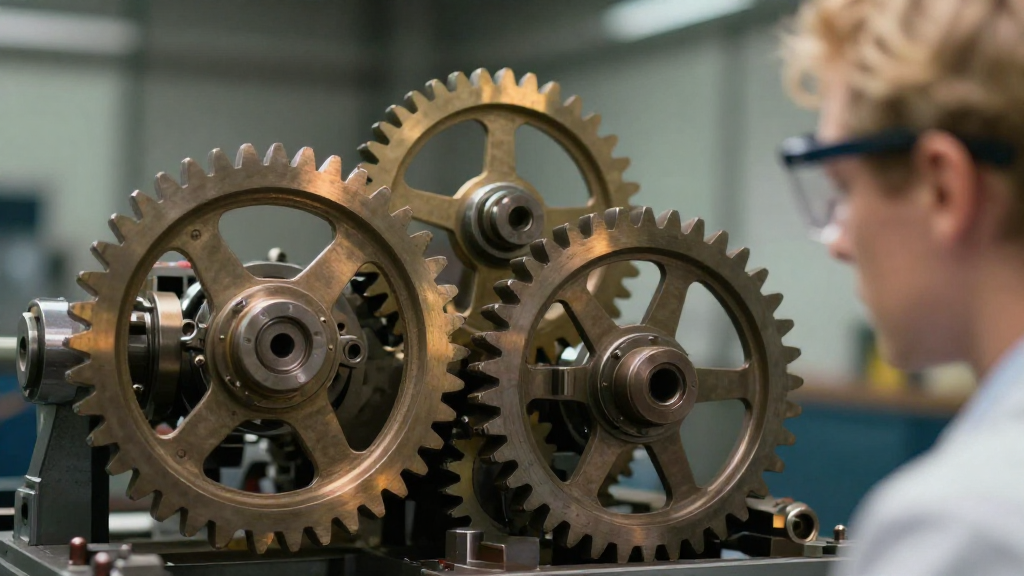
The dynamics of gear systems is a crucial area of study in mechanical engineering that impacts various applications, from simple machines to complex automotive systems.
What are Gear Systems?
Gear systems are assemblies of gears that transfer motion and torque between components.
They are fundamental in machines, enabling speed adjustments and direction changes.
Types of Gear Systems
-
Spur Gears
– Feature straight teeth.
– Align parallel to the gear axis.
– Common in simple gear applications. -
Helical Gears
– Have teeth angled at a helical curve.
– Provide smoother and quieter operation.
– Often used in high-speed applications. -
Bevel Gears
– Designed to change the axis of rotation.
– Available in straight, spiral, and hypoid types.
– Used in applications where shafts intersect. -
Worm Gears
– Consist of a screw (worm) and a gear (worm wheel).
– Allow for a reduction in speed and increase in torque.
– Commonly found in conveyor systems.
By understanding the various types of gear systems, we can better appreciate their roles in the dynamics of gear systems.
How Do Gear Systems Work?
The operation of gear systems is based on the principles of leverage and mechanical advantage.
When one gear rotates, it causes the adjacent gears to move, resulting in a change in speed and torque.
The relationship between the gears can be understood through the following equations:
- Speed Ratio: The ratio of speeds between input and output gears.
- Torque Ratio: The ratio of torques produced by the input and output gears.
Key Components of Gear Systems
To fully grasp the dynamics of gear systems, it is essential to understand their key components:
- Gears: The primary elements that transfer motion.
- Shafts: Rods that connect gears and transmit rotational motion.
- Bearings: Reduce friction and support rotating shafts.
- Casing: Encloses and protects the gears from external elements.
Why are the Dynamics of Gear Systems Important?
Understanding the dynamics of gear systems is vital for several reasons, particularly in engineering and mechanical fields. Here are some crucial points:
-
Efficiency
– Gear systems allow for the efficient transfer of energy.
– Proper design maximizes performance. -
Mechanical Advantage
– Gears can amplify force applied to them, providing mechanical advantage.
– Essential for lifting heavy loads. -
Speed Control
– Adjusts rotational speeds between components.
– Allows for smoother operation in machinery. -
Operational Flexibility
– Can be tailored for various applications.
– Enables different motion profiles in machines.
Understanding these factors is critical for the successful design and operation of gear systems.
What Factors Affect the Dynamics of Gear Systems?
Several factors can influence the dynamics of gear systems, including:
Gear Design
- Tooth shape and size impact engagement and load distribution.
- Improper design can lead to gear failure and excess wear.
Material Selection
- The choice of materials determines the durability and efficiency of gear systems.
- Common materials include steel, plastic, and aluminum.
Load Conditions
- Load types (static or dynamic) affect system performance.
- Overloading can lead to failure or reduced efficiency.
Lubrication
- Proper lubrication reduces friction and wear.
- Enhances gear life and operational efficiency.
How to Analyze the Dynamics of Gear Systems?
Analyzing the dynamics of gear systems involves several key techniques, including:
-
Mathematical Modeling:
Utilize equations to represent relationships between rotational speed, torque, and gear ratios. -
Simulation Software:
Programs like ANSYS or SolidWorks can simulate stress, motion, and interactions within gear systems. -
Experimental Testing:
Physical prototypes allow for real-world testing to validate analytical and simulation results.
How Can Understanding Gear Dynamics Improve Design?
Gaining insights into the dynamics of gear systems can significantly enhance design quality and reliability. Consider the following benefits:
-
Optimized Performance:
In-depth knowledge helps in selecting the right gear types and specifications for applications. -
Cost Savings:
Effective designs minimize material usage and production costs. -
Enhanced Reliability:
Predicting failure points enables the design of more robust systems. -
Innovation Opportunities:
Understanding dynamics can lead to developing new gear systems and applications.
What Trends Are Shaping the Future of Gear Systems?
As industries evolve, several trends influence the dynamics of gear systems:
-
Automation and Robotics
– Increased demand for precision gear systems in automation.
– Involves advanced materials and design techniques. -
Additive Manufacturing
– 3D printing offers new possibilities in gear design.
– Facilitates custom gear systems tailored for specific applications. -
Smart Gear Systems
– Integration of sensors and IoT technology enables real-time monitoring.
– Enhances predictive maintenance capabilities. -
Sustainable Practices
– Focus on reducing waste and improving energy efficiency.
– Development of bio-based lubricants and recyclable materials.
Conclusion: Why is the Study of Gear Dynamics Essential?
In summary, comprehending the dynamics of gear systems is essential for engineers and professionals involved in mechanical design, automotive engineering, and robotics.
By understanding the principles behind gear interactions, material selection, and environmental factors, we can create more efficient, reliable, and innovative machinery.
As technology progresses and industries demand higher performance and sustainability, the importance of studying the dynamics of gear systems will only continue to grow.
This knowledge not only leads to better designs but ultimately contributes to advancements in numerous fields reliant on effective mechanical systems.