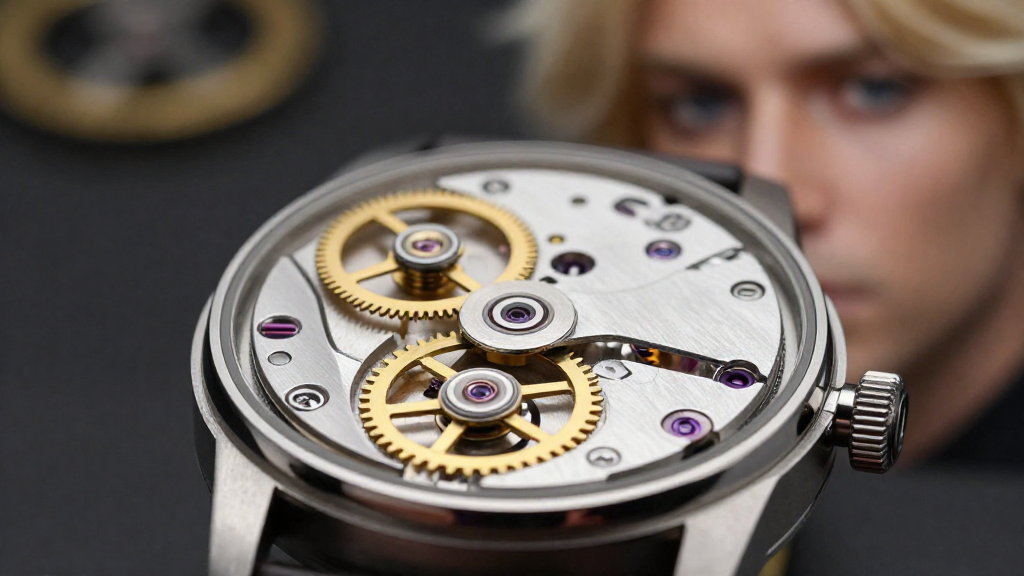
The gear function in watches is a pivotal mechanism that plays a crucial role in timekeeping.
Understanding how these gears operate allows us to appreciate the craftsmanship behind horology.
What Is a Watch Gear System?
A watch’s gear system is constructed from several interlocking gears that work efficiently to transmit energy through the movement.
These gears control various functions of the watch, including:
- Timekeeping: Determining the hours, minutes, and seconds.
- Complications: Functionality beyond standard timekeeping, such as chronographs or moon phases.
- Winding Mechanism: In mechanical watches, gears can also help in winding the mainspring.
The gears communicate mechanically to ensure the watch keeps accurate time.
How Does the Gear Function Work in Watches?
The gear function in watches converts the energy from a mainspring or battery into precise movements.
This process can be divided into several key components:
-
Mainspring:
– In mechanical watches, the mainspring stores energy when wound.
– In quartz watches, the battery generates electrical energy. -
Escapement:
– This component regulates the release of energy from the mainspring through a series of gears.
– It ensures the watch ticks at a consistent rate. -
Gear Train:
– A series of gears of different sizes amplify the rate of movement.
– The gear train helps in translating the minute rotation of the mainspring into the hours, minutes, and seconds displayed on the watch face.
Why Are Gears Important in Watches?
Gears are critical for the gear function in watches for several reasons.
They affect:
- Accuracy: Precision in the design and alignment of gears influences the accuracy of timekeeping.
- Durability: Gears made from high-quality materials enhance the longevity of the watch.
- Complications: Additional gears are required to operate complications, allowing for more features in a watch.
The interconnected nature of gears means that a single gear malfunction can disrupt the entire mechanism.
What Types of Gears Are Used in Watches?
Several different types of gears are employed in watches, each serving a specific purpose.
Here’s a rundown of some common types:
- Driving Gear: Provides the initial force from the mainspring.
- Satellite Gear: Engages with other gears to determine the speed of the movement.
- Crown Gear: Utilized for winding the mainspring and setting the time.
- Gear Train: Contains a series of gears that help reduce the speed of the mainspring’s release of energy.
Each type of gear in the gear function in watches works in concert with the others to create a harmonious system that measures time accurately.
How Do Different Watch Types Use Gear Functions?
Different types of watches utilize the gear function in watches uniquely, depending on their design and purpose.
-
Mechanical Watches
– Feature a complex array of gears powered by a wound mainspring.
– The energy stored is released gradually via the escapement and gear train. -
Automatic Watches
– Use the motion of the wearer’s wrist to wind the mainspring.
– The gear function remains largely mechanical, with additional gears included to maximize energy transfer. -
Quartz Watches
– Utilize a battery and a quartz crystal for more precise timekeeping.
– Gears primarily transport energy from the battery to the time display, presenting a simpler mechanism than mechanical counterparts.
How Do Watchmakers Optimize Gear Function?
The gear function in watches is refined through meticulous craftsmanship and advanced technology.
Watchmakers optimize this function by:
- Employing High-Quality Materials:
-
Using metals such as stainless steel, brass, or even advanced ceramics enhances durability and performance.
-
Precision Engineering:
-
Designing gears with exact measurements improves their fit and function.
-
Utilizing Advanced Technology:
- Innovations such as CNC (Computer Numerical Control) machining allow for unparalleled precision in manufacturing.
What is Gear Ratio, and Why Is It Important?
In the context of the gear function in watches, gear ratio refers to the relationship between the number of teeth on two gears in mesh.
It’s essential for:
- Determining Speed: A higher gear ratio means that the movement appears faster on the dial.
- Controlling Power Transfer: The correct ratio ensures that energy is effectively transmitted without loss.
Precision gear ratios are vital for maintaining accuracy in watches.
Can Gears Affect the Beauty of a Watch?
Absolutely! The gear function in watches does not solely serve practical purposes; they contribute significantly to the aesthetic appeal as well.
Many luxury watches showcase their intricate gear mechanisms through:
- Transparent Case Backs: Allowing wearers to appreciate the movement inside.
- Skeletonized Designs: Minimally structured watches highlighting the beauty of the gear arrangements.
Watch enthusiasts often seek out timepieces that balance functionality with stunning craftsmanship.
How Do Watch Enthusiasts Appreciate Gear Function?
Watch enthusiasts celebrate the gear function in watches by:
- Collecting Timepieces: Many collectors focus on watch brands that highlight superior gear craftsmanship.
- Engaging in Discussions: Communities form around understanding and appreciating the intricacies of watch gear systems.
- Participating in Watchmaking Workshops: Hands-on experiences help enthusiasts grasp the intricacies of watch mechanics.
Conclusion
The gear function in watches is an essential element for both functionality and artistry.
From the mechanical intricacies of traditional watches to the streamlined efficiency of quartz movements, understanding this function deepens our appreciation for timekeeping.
By recognizing how gears work together to keep time, we not only understand the mechanics but also the beauty of horology.
Whether you’re an avid collector or just trying to learn more about watches, understanding the gear function can elevate your watch appreciation to a new level.