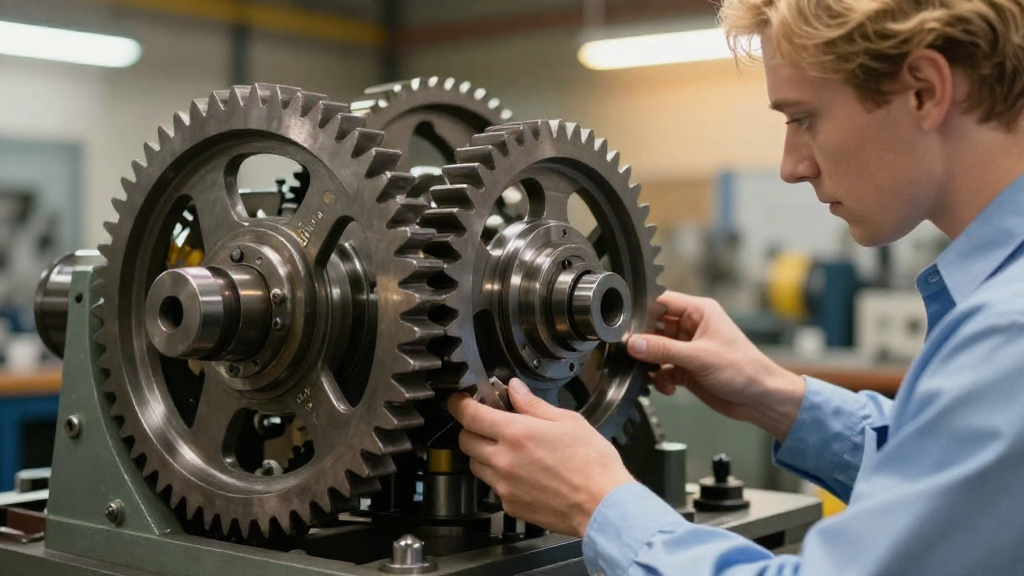
Gear train applications play a crucial role in various mechanical systems around us.
From simple devices to complex machinery, gear trains are integral to the mechanics of motion and force.
Understanding gear train applications not only helps in comprehending how these systems work but also highlights their significance in daily life.
What are Gear Trains and How do They Work?
A gear train consists of a series of gears arranged to transmit torque and rotational motion.
These gears can change the speed and direction of motion, making them essential in numerous applications.
Key Components of Gear Trains:
- Gears: Interlocking wheels with teeth.
- Drive Gear: The gear that is powered.
- Driven Gear: The gear that receives motion.
- Intermediate Gears: Gears that transmit motion between the drive and driven gears.
The arrangement and size of these gears in a gear train determine the mechanical advantage and functionality of the entire system.
Where Are Gear Train Applications Found?
1. In Automobiles: How do they Function?
One of the most prominent gear train applications is found in automobiles.
- Transmission Systems: Gear trains in a vehicle’s transmission help to alter the gear ratio, allowing the vehicle to accelerate and maintain speed efficiently.
- Differentials: This gear train application enables wheels to rotate at different speeds, especially when turning corners, improving traction and handling.
2. In Clocks and Watches: How do They Keep Time?
Another everyday application of gear trains is in clocks and watches.
The complex arrangement of gears works to:
- Regulate the passing of time.
- Convert the energy from a wound spring into precise timekeeping movements.
In this case, precise gear trains ensure that time measurement remains accurate.
3. In Industrial Machinery: What Role Do They Play?
Industrial machines often utilize gear trains for various purposes:
- Conveyors: Gear trains are employed to move materials efficiently through assembly lines.
- Cranes: These applications allow heavy objects to be lifted and moved precisely.
The reliability and efficiency of gear train applications are vital for smooth operations in manufacturing processes.
4. In Robotics: How Do Gear Trains Enhance Mobility?
Robotics is another field significantly benefiting from gear train applications.
Gear trains contribute to robotic systems by:
- Allowing for precise movements and control.
- Transmitting power while reducing speed appropriately.
This enhances the performance of robotic arms or automated machinery, making them more efficient and versatile.
5. In Bicycles: How Do Gear Trains Improve Performance?
Bicycles utilize gear train applications to enhance functionality and performance.
The gear systems in bicycles facilitate:
- Shifting Gears: Allowing riders to adjust to varying terrains, improving efficiency.
- Pedal Power: Converting the energy exerted by the rider into movement.
This showcases how mechanical advantages from gear train applications can impact physical performance.
How Do Gear Train Applications Benefit Us?
1. Increased Efficiency: Why is That Important?
Gear train applications enhance mechanical systems by increasing efficiency.
These systems are optimized to ensure maximum power transmission while minimizing energy loss.
This leads to:
- Lower Energy Costs: Helps reduce electricity bills in industrial applications.
- Extended Equipment Life: Efficient operation minimizes wear and tear.
2. Enhanced Precision: How Does it Impact Performance?
Applications in clocks, watches, and robotics demonstrate significant precision resulting from gear train mechanisms.
- Accuracy in Timing: Essential in navigation and technology.
- Exact Movements: Critical in robotics for task execution.
The precision offered by gear trains improves overall performance in various fields.
3. Versatility: Where is this Displayed?
From vehicles to machinery, gear train applications are versatile enough to fit diverse industries.
Their adaptability allows for:
- Customization: Gear sizes and arrangements can be tailored to specific needs.
- Integration: Gear trains can easily integrate into existing systems across different fields.
4. Reliability: Why Should We Trust Them?
Gear trains have a proven track record in the mechanical world, providing reliability in their function.
- Durability: Often made from sturdy materials, designed to withstand stress and strain.
- Low Maintenance: Generally require less frequent maintenance, saving both time and costs.
These qualities reaffirm the dependable nature of gear train applications in real life.
5. Accessibility: How Is It Beneficial?
With various manufacturers and ready availability, gear trains are accessible to many industries.
This widespread accessibility means:
- Cost-Effective Solutions: Companies can find the right gear trains for their needs without exorbitant costs.
- Rapid Innovation: The constant development in materials and technology results in improved gear designs, ensuring they remain effective and relevant.
Conclusion: Why are Gear Train Applications Integral to Modern Life?
In summary, gear train applications are fundamental to the performance and efficiency of numerous devices we rely on daily.
From vehicles to industrial machinery, gear trains help us achieve:
- Efficient Movement
- Precision Timing
- Robust Power Transmission
By comprehensively understanding gear train applications, we recognize their critical role in various fields, driving innovation and making our lives easier.
As technology continues to evolve, the significance of gear train applications will undoubtedly increase, paving the way for more advanced and efficient systems across industries.
Staying informed about these innovations offers individuals and businesses the opportunity to leverage gear trains for enhanced operational efficiency and effectiveness.