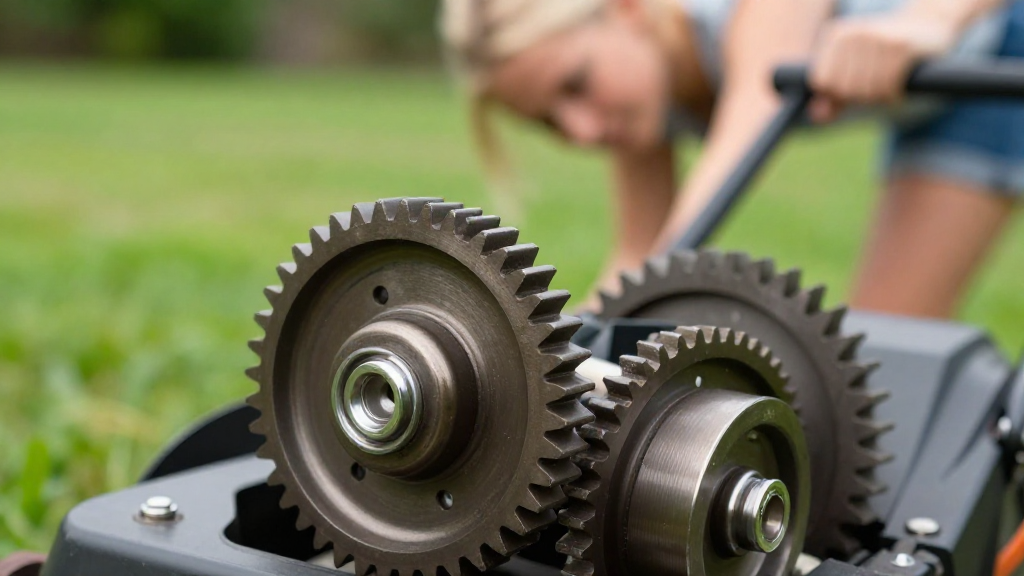
When it comes to understanding the gears in lawnmowers, knowing how they work and their specific function is essential for homeowners who want to maintain their equipment effectively.
What Are The Main Types of Gears in Lawnmowers?
Lawnmowers utilize various types of gears to control motion and enable the cutting mechanism. Here’s a breakdown of the most common gears in lawnmowers:
-
Spur Gears:
– Straight-toothed gears that transmit motion efficiently.
– Often found in gearboxes that drive the blades. -
Bevel Gears:
– Gears that allow the transfer of motion and power between perpendicular shafts.
– Common in mowers where the angle of the drive shaft needs to change. -
Chain Gears:
– Gears connected to a chain, helping to transmit power across longer distances.
– Ideal for high-torque applications like self-propelled mowers. -
Planetary Gears:
– A set of gears that rotate around a central gear, providing significant torque in a compact form.
– Often employed in advanced lawnmowers for enhanced power transfer.
These types of gears play a pivotal role in the overall performance and efficiency of the mower, and understanding them can help you diagnose issues and make informed repairs.
How Do Gears in Lawnmowers Function?
The gears in lawnmowers work together to relay power from the engine to the blades efficiently.
Here’s a simplified breakdown of their function:
- Power Transfer: The engine generates power, which is transmitted through the gears to the mower blades.
- Speed Control: Different gear ratios can be selected to control the speed of the blades and the mower’s forward motion.
- Torque Adjustment: Gears can increase torque, which is crucial for cutting through thick grass or tough terrain.
This seamless interplay ensures that the lawnmower operates effectively, and understanding it helps users to select the right settings for varying mowing conditions.
What Are the Benefits of High-Quality Gears in Lawnmowers?
Using high-quality gears in lawnmowers can greatly enhance performance and durability. Here are some benefits:
- Increased Efficiency: Higher-quality gears transfer energy more effectively, leading to better fuel efficiency.
- Longer Lifespan: Durable gears are less prone to wear and tear, extending the life of your mower.
- Reduced Maintenance Costs: Investing in quality gears can lower the frequency of repairs and replacements.
- Consistent Power Delivery: Quality gears maintain consistent power delivery, allowing for a smoother mowing experience.
Using reliable gears ensures that your lawnmower operates at its best, providing superior cut quality.
What Problems Can Faulty Gears Cause in Lawnmowers?
Just like any machinery, the gears in lawnmowers can develop issues. Here are some common problems you may encounter:
- Slipping or Freewheeling: This could indicate that gears are worn out or misaligned, resulting in loss of power.
- Unusual Noises: Grinding or whining sounds often signal gear damage, which could lead to operational failure.
- Reduced Power: If the mower struggles to cut grass or moves sluggishly, faulty gears might be the culprits.
- Vibration Issues: Excessive vibrations may point toward imbalanced or damaged gears that require immediate attention.
Identifying these issues early can save you from more extensive repairs down the line.
How Can You Maintain the Gears in Lawnmowers?
Proper maintenance of the gears in lawnmowers is essential for longevity and performance. Here are some practical tips:
-
Regular Inspections:
– Check gears periodically for wear or damage.
– Look for signs of rust or corrosion. -
Lubrication:
– Apply the appropriate lubricant to reduce friction and wear.
– Consult the mower’s manual for recommended lubricants. -
Cleanliness:
– Ensure gears are free of debris and grass clippings.
– Regularly clean the gearbox and surrounding areas. -
Adjustments:
– If you notice any misalignment, adjust the gears as necessary.
– Refer to your mower’s manual for alignment procedures. -
Professional Servicing:
– If you’re unsure about maintenance or face complex gear problems, consult a professional technician.
Regular maintenance not only increases the life of your gears but also enhances the overall performance of your lawnmower.
When Should You Replace the Gears in Lawnmowers?
Understanding when to replace the gears in lawnmowers can prevent unexpected failures and costly repairs. Here are some signs to watch for:
- Excessive Wear: When teeth are visibly worn or rounded.
- Rust and Corrosion: Extensive rust can compromise the integrity of metal gears.
- Unusual Noises: Indicative of serious damage or misalignment.
- Power Loss: If your mower is struggling, it may be time to replace gears.
Replacing gears at the right time can significantly affect the mower’s efficiency and ensure a high-quality cut every time.
Conclusion
In summary, the gears in lawnmowers play a crucial role in their operation, determining how effectively they cut grass and navigate various terrains.
Understanding the types, functions, benefits, and maintenance of these gears can help you maximize your mower’s performance.
Whether you’re a seasoned lawn care professional or a homeowner looking to maintain your mower, this knowledge will empower you to keep your equipment in top-notch condition.
By following the tips provided, you can ensure that your lawnmower operates smoothly for years to come. Choose quality parts, maintain your equipment regularly, and enjoy a beautifully manicured lawn with minimal hassle.