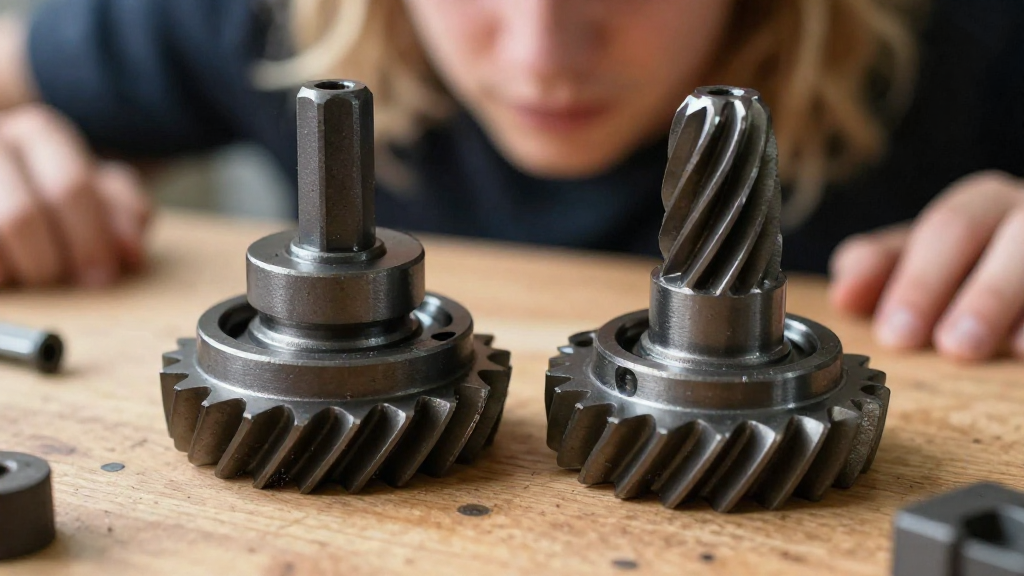
In the world of mechanical engineering, two common types of gear mounts are used for transmitting torque and motion: keyed vs splined gear mount. Each type of gear mount has its unique advantages and disadvantages, which can significantly impact design decisions. In this article, we will explore the keyed vs splined gear mount, highlighting the pros and cons of each to help you make an informed choice.
What are Keyed Gear Mounts?
Keyed gear mounts feature a keyway (a slot) machined into the shaft and a corresponding key that fits into it. This lock-and-key arrangement ensures that the gear and shaft rotate together without slipping.
Pros of Keyed Gear Mounts
-
Simplicity
Keyed mounts are relatively simple to manufacture and install. The design involves basic machining processes, making it cost-effective. -
High Load Capability
The key transfers torque effectively, allowing it to handle significant loads without failure. -
Alignment
Keyed designs provide excellent alignment of gears. Since the key fits snugly into the keyway, it prevents any misalignment. -
Easy Replacement
If a gear or shaft needs replacement, it can be done relatively easily without affecting other components.
Cons of Keyed Gear Mounts
-
Wear Over Time
The key and keyway can become worn, leading to slippage and reduced efficiency over time. -
Limited Tolerance
The fit must be precise. Loose fit can lead to excessive play, whereas a tight fit can cause difficulty in installation. -
Potential for Torque Limitation
There is a maximum torque level before the key may shear, limiting the performance in high-demand applications. -
Increased Maintenance Needs
Over time, the wear might necessitate more frequent inspections and maintenance.
What are Splined Gear Mounts?
Splined gear mounts use a series of ridges or teeth along the shaft and inside the gear to allow for a tight fit. Unlike keyed mounts, splined gears have multiple engagement points, allowing for smoother transmission of torque.
Pros of Splined Gear Mounts
-
Higher Torque Capacity
The multiple engagement points provide a more robust connection, allowing for greater torque transmission. -
Reduced Wear
With broader surface contact, the wear on the splines is typically less than that of keyed mounts, increasing durability. -
Flexibility in Design
The design of splines can be adapted to fit various applications, allowing for more versatility than keyed mounts. -
Improved Alignment
Properly designed splined connections can lead to better alignment, reducing the likelihood of vibration and wear on other components.
Cons of Splined Gear Mounts
-
Complex Manufacturing
The manufacturing process for splined shafts and gears is more complex than for keyed designs, potentially leading to higher costs. -
Installation Difficulty
Aligning and installing splined mounts can be more challenging due to their intricate geometry. -
Limited Reusability
In cases where splines become damaged, they may not be able to be reused, leading to higher replacement costs. -
Need for Precise Tolerances
Tight tolerance requirements can complicate manufacturing and increase costs in production.
When should you choose Keyed Gear Mounts?
Keyed gear mounts are ideal for applications where:
- Simplicity and cost-effectiveness are the priorities.
- The operating loads are within the acceptable torque limits of keyed designs.
- Frequent maintenance is feasible.
Examples include:
- Low-speed applications such as in lawnmowers.
- Basic machinery where precision is not a critical factor.
When should you choose Splined Gear Mounts?
Splined gear mounts are more suitable for applications that require:
- Higher torque transmission where load demands exceed that of keyed designs.
- Space limitations that necessitate compact designs.
- Enhanced durability and reduced maintenance.
Examples include:
- Automotive applications, especially in drivetrain systems.
- Industrial machinery that requires smooth engagement and disengagement of gears under high loads.
Which Gear Mount is Best for Your Needs?
When considering keyed vs splined gear mount, the decision should align with specific project requirements:
-
Project Budget
If costs are a major concern, keyed mounts may be the best choice. -
Load Requirements
Evaluate the torque requirements for your application. -
Maintenance Capabilities
Identify if your team will perform frequent maintenance or if long-term reliability is more critical. -
Precision Needs
Consider how critical alignment and engagement are for your application’s performance.
Conclusion: Keyed vs Splined Gear Mount – The Final Verdict
In summary, both keyed vs splined gear mount options present valuable benefits and limitations. Keyed mounts provide a straightforward, cost-effective solution for lower torque applications.
In contrast, splined mounts offer superior torque capacity and durability for high-performance scenarios.
By carefully assessing your application’s unique demands—considering factors such as budget, torque requirements, maintenance needs, and precision—you can make a more informed choice between keyed vs splined gear mount.
Deciding the appropriate option can make a significant difference in performance, efficiency, and longevity in your mechanical systems. Always consult with a mechanical engineer or a trusted manufacturer when selecting the most suitable gear mounting strategy for your project.