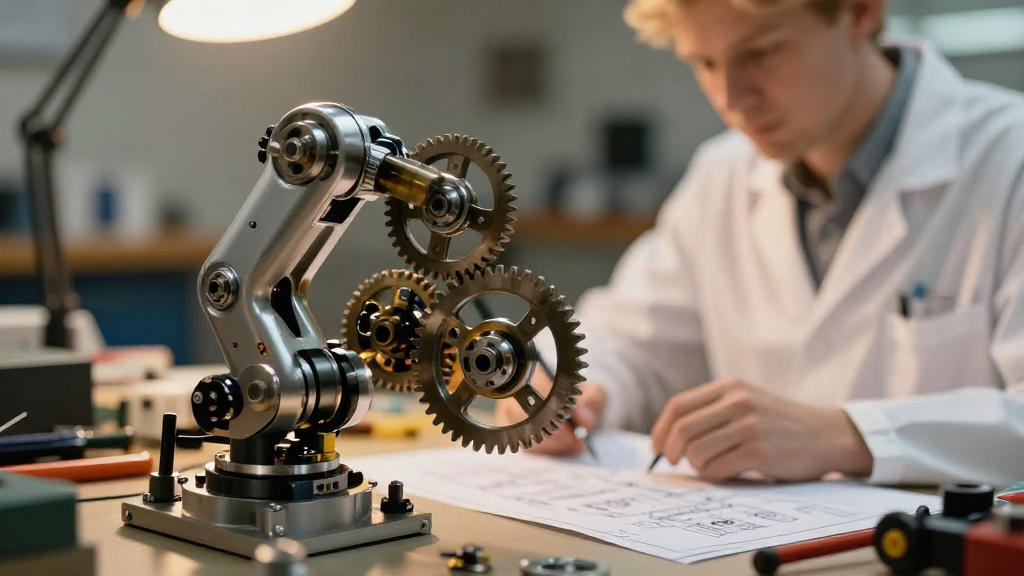
Understanding robotic gear design is crucial for creating efficient and reliable robotic systems.
Gears play an essential role in transferring motion and force within robots, allowing them to perform complex tasks with precision.
What Is Robotic Gear Design?
Robotic gear design encompasses the engineering principles and methodologies involved in creating gears specifically for robotics.
These gears facilitate various motions within robotic mechanisms, from driving wheels to operating robotic arms.
Why Are Gears Important in Robotics?
Gears are fundamental components in robotics for several reasons:
- Motion Control: Gears help manage speed and torque, enabling robots to move efficiently.
- Precision: Gears ensure that movements are accurate, which is vital for tasks requiring high precision.
- Power Transmission: Gears transfer power from motors to different parts of the robot.
- Load Handling: They allow robots to handle different loads effectively.
In essence, without proper robotic gear design, a robot’s performance can be severely compromised.
How Are Gears Designed for Robots?
What Factors Influence Robotic Gear Design?
Creating an effective gear involves considering multiple factors:
-
Material: The choice of material affects weight, strength, and durability. Common materials include:
– Steel
– Aluminum
– Plastic
– Composite materials -
Gear Ratio: The gear ratio determines how the output speed relates to the input speed and plays a critical role in controlling torque and velocity.
-
Size and Shape: The size and profile of the gears must fit within the constraints of the robotic design.
-
Type of Gear: Different types of gears, such as:
– Spur gears
– Bevel gears
– Worm gears
– Planetary gears
Each type serves a specific function based on the design requirements.
What Is the Gear Design Process?
The robotic gear design process can be summarized in several key steps:
-
Requirements Analysis: Defining the operational requirements and constraints of the robot.
-
Conceptual Design: Developing initial sketches and models of gear configurations.
-
Material Selection: Choosing appropriate materials based on weight, cost, and performance attributes.
-
Simulation and Testing: Using computer-aided design (CAD) software to simulate gear interactions and test the design under various conditions.
-
Prototyping: Creating physical prototypes to evaluate the functionality and performance of the gears.
-
Iteration and Optimization: Refining the design based on testing results, ensuring efficiency and reliability.
Which Technologies Are Used in Robotic Gear Design?
Several modern technologies are employed in robotic gear design:
- Computer-Aided Design (CAD): Helps in creating detailed models and visualizations.
- Finite Element Analysis (FEA): Aids in assessing how gears will behave under stress and strain.
- Additive Manufacturing: Also known as 3D printing, it allows for rapid prototyping and even the production of complex gear shapes that would be difficult to create using traditional methods.
What Are the Applications of Gears in Robotics?
How Do Gears Enhance Robotic Functionality?
Gears are integral to many robotic applications:
- Industrial Robotics: Used in manufacturing settings, gears help robots perform repetitive tasks such as assembly and welding.
- Medical Robotics: In surgical robots, gears provide precision and control for delicate procedures.
- Service Robots: For robots designed for tasks like cleaning or delivery, gears help in navigation and mobility.
- Research and Development: Gears are essential in robotic prototypes being developed for new technologies.
What Challenges Do Designers Face?
Despite advancements in technology, several challenges persist in robotic gear design:
- Efficiency: Designing gears that minimize energy loss due to friction and heat.
- Compactness: Creating smaller gears that fit within tight spaces while maintaining high performance.
- Durability: Ensuring that gears can withstand significant wear and tear without failure.
- Cost-Effectiveness: Balancing quality and performance with production costs.
How to Ensure Effective Robotic Gear Design?
What Best Practices Should Designers Follow?
To ensure optimal robotic gear design, consider these best practices:
-
Start with Clear Requirements: Understanding the specific application helps tailor the gear design accordingly.
-
Collaborate with Multidisciplinary Teams: Combining expertise from mechanical, electrical, and software engineers leads to better integrated solutions.
-
Test Early and Often: Executing tests during the design phase can prevent costly mistakes later on.
-
Utilize Advanced Tools: Leverage CAD and simulation software to refine designs before prototyping.
-
Stay Updated on Trends: Keeping abreast of technological advances in material science, manufacturing, and design methodologies can enhance gear performance.
Why Is Future Proofing Important in Gear Design?
As robotics continues to evolve, so do the demands placed on robotic gear design.
To stay ahead of the curve:
- Adopt Modular Designs: This allows for easier upgrades and modifications in response to new technologies.
- Implement Smart Features: Integrate sensors and controls into gear systems to enhance performance monitoring and diagnostics.
Conclusion: The Future of Robotic Gear Design
In conclusion, robotic gear design is a multi-faceted field that requires keen attention to detail and an understanding of various engineering principles.
With the right design, gears significantly elevate a robot’s performance and capability.
As technology advances and the demands for more sophisticated robotic systems grow, the importance of innovative gear design will only increase.
By embracing best practices and keeping up with technological trends, designers can pave the way for a new era of robotics, ensuring that robots are not just functional but also efficient and reliable.