If you want more than a beginner setup, the right astronomy gear can make a dramatic difference in tracking accuracy, image quality, and observing efficiency. This roundup focuses on advanced options built for demanding visual use, smart-assisted observing, and astrophotography.
From portable smart telescopes to large-aperture computerized rigs, these picks are aimed at experienced users who want better optics, smarter control, and more capable performance under the night sky.
Best 10 Astronomy Gear for Advanced Astronomers Picks for 2026
Portable Smart Astrophotography Pick
Dwarf 3 Smart Telescope for Travel Imaging

- 3 lb portable smart telescope
- 4K auto-tracking and app control
- Dual-lens day and night imaging
Best For: Travel-friendly astrophotography and quick automated imaging
Home Observatory Flagship
Celestron Origin Mark II Intelligent Observatory

- 152 mm aperture for light gathering
- RASA design for flat-field imaging
- Live sharing and smart-device control
Best For: Fixed-site deep-sky imaging and shared observing
Compact Smart Imaging Choice
ZWO Seestar S30 Pro App-Controlled Telescope
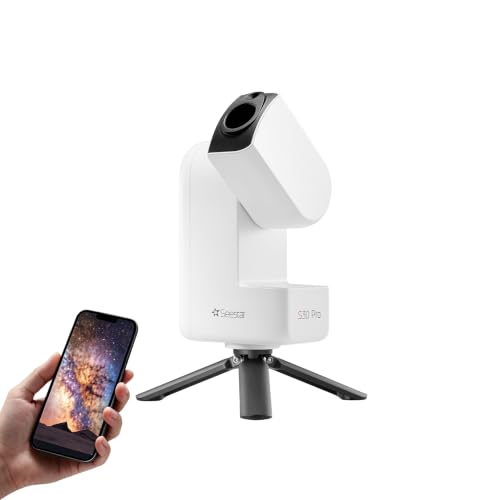
- Dual cameras for deep-sky and wide-field
- One-tap Milky Way and star-trail modes
- Compact smart setup with anti-dew protection
Best For: Compact automated astrophotography and wide-field imaging
Complete Observatory Kit
Celestron Origin Mark II with Nebulae Filter

- Bundle includes camera, filter, and tripod
- 152 mm astrograph with StarBright XLT coatings
- AI processing with dew prevention and cooling
Best For: All-in-one observatory buyers who want a full imaging kit
Smart All-in-One Observatory
UNISTELLAR Odyssey PRO Smart Telescope

- Automatic alignment and autofocus speed up setup.
- RAW/FITS export supports advanced processing.
- Includes eyepiece, app control, storage, and tripod.
Best For: Advanced observers who want a compact smart telescope with imaging exports.
Precision Imaging Workhorse
Celestron Advanced VX 8" EdgeHD

- EdgeHD optics correct coma and field curvature.
- Equatorial mount includes PPEC, guider port, and alignment tools.
- Supports native f/10, f/7, and f/2 imaging options.
Best For: Astrophotographers and experienced observers wanting a compact equatorial platform.
Portable Smart Deep-Sky Starter

- 1.85 lb body is easy to pack for travel.
- App control and built-in sky atlas simplify setup.
- EQ mode, 90-second exposures, and filters support imaging.
Best For: Traveling observers who want a compact smart telescope for guided imaging
Large-Aperture GoTo Classic
NexStar 8SE Computerized Telescope

- 8-inch SCT optics provide strong light gathering.
- GoTo mount accesses 40,000+ objects and tracks automatically.
- SkyAlign speeds up setup for fast observing sessions.
Best For: Experienced observers wanting a big-aperture computerized scope
Smartphone-Guided Newtonian Pick
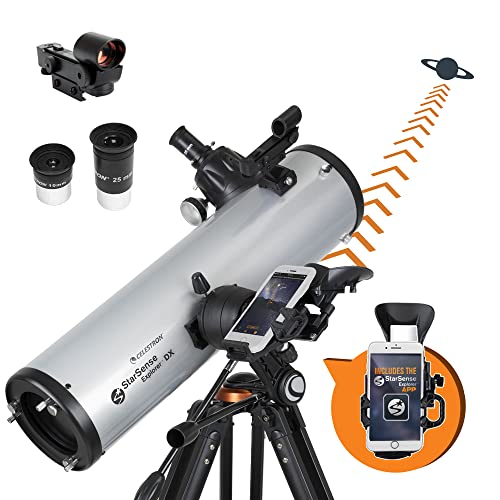
- StarSense app guides you to targets with sky recognition.
- 130 mm reflector suits Moon, planets, and bright DSOs.
- Dual-axis slow-motion controls improve manual tracking.
Best For: Backyard observers who want app-guided finding with a manual scope
Portable Smart Astrophotography Pick – Dwarf 3 Smart Telescope for Travel Imaging
For astronomy gear for advanced astronomers who want a highly portable imaging setup, the Dwarf 3 Smart Telescope emphasizes app control, auto-tracking, and dual-purpose optics. Its 3 lb design makes it easy to pack for travel, while the built-in processing and 4K capture workflow reduce the need for a laptop-heavy field rig.
Best For: Observers who want a backpack-friendly smart telescope for quick astrophotography sessions, travel, and mixed day/night imaging.
Pros:
- Only 3 lb, with a backpack-friendly carry design for travel
- 4K auto-tracking with app control and built-in processing
- Dual-lens system supports deep-sky, Milky Way, wildlife, and landscape imaging
- AZ/EQ modes add flexibility for different observing setups
Cons:
- 35 mm objective lens is compact compared with larger observatory-class systems
- Designed around automated imaging rather than traditional eyepiece observing
- Cloud-powered processing may not appeal to users who prefer fully manual workflows
Overall, the Dwarf 3 is a strong choice if portability and automation matter more than aperture size. It suits advanced users who want a capable grab-and-go smart telescope for fast field results.
Home Observatory Flagship – Celestron Origin Mark II Intelligent Observatory
If you are building astronomy gear for advanced astronomers and want a serious home imaging platform, the Celestron Origin Mark II delivers a large-aperture, all-in-one observatory setup. Its Rowe-Ackermann Schmidt Astrograph design, 152 mm aperture, and integrated smart control are aimed at deep-sky imaging and shared live viewing.
Best For: Dedicated users who want a large, intelligent home observatory for deep-sky astrophotography and live sessions.
Pros:
- 152 mm aperture gathers substantial light for faint targets
- Rowe-Ackermann Schmidt Astrograph design supports a flat field for imaging
- Integrated astrophotography workflow with smart-device control
- Multiple users can view live feed, cast to TV, and save/share images
Cons:
- At 59 pounds, it is not a lightweight portable option
- Manual focus is listed, so it is less automated than the most app-driven systems
- Best suited to a fixed or semi-fixed observing location
This is a premium observatory-style system for observers who prioritize optical performance and an integrated imaging experience. It makes the most sense when you want serious aperture without assembling a separate rig piece by piece.
Compact Smart Imaging Choice – ZWO Seestar S30 Pro App-Controlled Telescope
The ZWO Seestar S30 Pro is a compact option for astronomy gear for advanced astronomers who want automated imaging in a small package. With app control, auto tracking, dual cameras, and one-tap processing modes, it is built for fast setup and wide-field astrophotography without a complicated equipment chain.
Best For: Users who want a compact, easy-to-use smart telescope for Milky Way, star trail, and deep-sky imaging.
Pros:
- 4K dual-camera system covers deep-sky and wide-field scenes
- One-tap imaging modes include Milky Way and star trails
- Precision 4-element apochromatic lens reduces chromatic aberration
- Built-in filters, 128GB storage, and anti-dew protection support long sessions
Cons:
- 30 mm aperture is smaller than large observatory-class systems
- Smartphone or tablet control may not suit users who want traditional manual operation
- Best results depend on the automated imaging workflow rather than eyepiece viewing
For observers who value portability and guided imaging, the Seestar S30 Pro is an efficient all-in-one solution. It is especially appealing if you want fast results from a compact system that still offers advanced imaging modes.
Complete Observatory Kit – Celestron Origin Mark II with Nebulae Filter
This Celestron Origin Mark II kit is aimed at astronomy gear for advanced astronomers who want a more complete, ready-to-run observatory package. It combines the 152 mm Rowe-Ackermann Schmidt Astrograph platform with the Origin 678C camera, Nebulae Filter, GoTo mount, and supporting hardware for a more unified imaging workflow.
Best For: Buyers who want an integrated observatory kit with camera, filter, mount, and accessories included.
Pros:
- Includes camera, Nebulae Filter, tripod, mount, cables, and power adapter
- 152 mm aperture with StarBright XLT coatings supports strong light gathering
- Built-in AI processing, automated dew prevention, and cooling fans improve usability
- App control plus multi-user live streaming support a shared observing setup
Cons:
- At 41.6 lbs, it is still a substantial system to move and set up
- More complex and specialized than a simple grab-and-go telescope
- Intended for users comfortable with a full observatory-style imaging workflow
As a bundled solution, this kit reduces the need to source major components separately. It is best for observers who want a deeper, more complete smart observatory package from the start.
Smart All-in-One Observatory – UNISTELLAR Odyssey PRO Smart Telescope
If you want astronomy gear for advanced astronomers that still moves quickly in the field, the UNISTELLAR Odyssey PRO is built around speed, automation, and data capture. It powers up, aligns automatically, and uses a motorized Alt-Az mount with autofocus, so you can spend less time setting up and more time observing or imaging.
Best For: Advanced observers who want a compact smart telescope with RAW/FITS export, app control, and citizen-science features.
Pros:
- Automatic alignment, GoTo, and autofocus simplify setup in under 2 minutes.
- RAW/FITS export supports deeper post-processing workflows.
- Integrated eyepiece gives an immersive visual viewing option alongside phone/tablet control.
- Includes 64GB storage, tripod, and up to 5 hours of battery life.
Cons:
- 85mm aperture is compact compared with larger advanced imaging telescopes.
- Motorized Alt-Az design is not the same as a traditional equatorial setup.
The Odyssey PRO makes sense if you value portability and workflow efficiency over maximum aperture. Its biggest advantage is how much observing and imaging capability it packages into one system, especially for users who want a smart telescope that still offers advanced file export and science-oriented use.
High-Power Low-Light Binoculars – 18×70 Professional Astronomy Binoculars
For astronomy gear for advanced astronomers who want a powerful handheld or tripod-based option, these 18×70 binoculars emphasize aperture, low-light performance, and stability. The 18x magnification and 70mm objective lenses are designed to gather plenty of light, while the BAK-4 prisms and fully multi-coated lenses aim for brighter, sharper views in dim conditions.
Best For: Observers who want high-magnification astronomy binoculars for tripod-supported stargazing and digiscoping.
Pros:
- 18x magnification with 70mm objectives offers strong light-gathering ability.
- BAK-4 prisms and FMC lenses are built for low-light contrast and sharpness.
- IPX7 waterproof and fogproof construction supports outdoor use.
- Includes tripod adapter and smartphone adapter for steadier viewing and digiscoping.
Cons:
- High magnification makes tripod use strongly recommended.
- Heavier metal construction is less convenient for extended handheld viewing.
This is a practical choice if you want more reach than standard binoculars without moving to a telescope. The included accessories make it easier to stabilize the view and capture images, but the design clearly favors mounted observing sessions over casual handheld scanning.
Precision Imaging Workhorse – Celestron Advanced VX 8" EdgeHD
If your astronomy gear for advanced astronomers needs to support serious imaging and precise tracking, the Celestron Advanced VX 8″ EdgeHD is set up for that job. Its EdgeHD optics are designed to correct coma and field curvature for a flat field, while the Advanced VX equatorial mount adds tracking, alignment, and control features aimed at longer-exposure work.
Best For: Astrophotographers and experienced visual observers who want a compact German equatorial setup with EdgeHD optics.
Pros:
- EdgeHD optics deliver a flat field with reduced coma and field curvature.
- Supports multiple imaging focal ratios, including native f/10, f/7, and f/2 with optional accessories.
- Advanced mount features include PPEC, autoguider port, meridian imaging, and All-Star Polar Alignment.
- Compact equatorial mount is designed for payloads under 30 lb.
Cons:
- At 84.9 lb, the system is not lightweight.
- Manual focus and equatorial operation add setup complexity versus smart telescope alternatives.
This is the most specialized option in the group for imaging-focused users who want a traditional telescope platform. It offers the optical correction and mount features advanced observers usually look for, but it rewards users who are comfortable with a more involved setup.
Portable Smart Deep-Sky Starter – Dwarf Mini Smart Telescope
If you want astronomy gear for advanced astronomers that still travels easily, the DWARF Mini is built around portability and app-driven observing. Its 360° pivot, Auto GOTO, EQ mode, and 90-second exposures make it a strong option for capturing faint targets without hauling a full-size rig to dark-sky sites.
Best For: Travelers and image-minded observers who want a pocketable smart telescope for guided deep-sky sessions.
Pros:
- Weighs just 1.85 lb and fits easily in a backpack or large pocket.
- App control with built-in sky atlas can get you from unboxing to first shot quickly.
- Auto GOTO and EQ mode support more advanced deep-space imaging.
- Built-in light pollution filter and cloud processing help refine results.
Cons:
- 30 mm objective is compact, so it is not a replacement for a larger aperture scope.
- Best suited to digital capture and guided observing rather than classic visual astronomy.
The DWARF Mini makes sense when mobility and convenience matter as much as target acquisition. It is not the most powerful light bucket here, but for advanced users who want a compact smart setup for nebulae, clusters, and travel-friendly imaging, it offers a very practical feature set.
Large-Aperture GoTo Classic – NexStar 8SE Computerized Telescope
For astronomy gear for advanced astronomers who want more reach, the NexStar 8SE brings an 8-inch Schmidt-Cassegrain optical tube together with a fully automated GoTo mount. It is designed to balance serious light gathering with a compact footprint, making it a strong step-up choice for deep-sky observing and planetary detail.
Best For: Experienced observers who want a large-aperture computerized telescope for visual use and astroimaging readiness.
Pros:
- 8-inch SCT optics gather enough light for galaxies, globular clusters, Jupiter, and lunar detail.
- Fully automated GoTo mount can slew and track from a 40,000+ object database.
- SkyAlign helps get the scope aligned quickly, even if you do not know star names.
- Accessory compatibility leaves room to expand automation and control as skills grow.
Cons:
- Heavier and bulkier than compact smart scopes or entry-level manual setups.
- Uses manual focus, so it is not fully automated in every step.
The 8SE is the most traditional serious telescope in this group, and that is its strength. If you want a proven large-aperture platform with computerized object finding and room to grow, it is a compelling option for advanced backyard astronomy.
Smartphone-Guided Newtonian Pick – StarSense Explorer DX 130AZ
The StarSense Explorer DX 130AZ is a practical choice for astronomy gear for advanced astronomers who want smartphone-assisted navigation without giving up a simple manual mount. Its app uses sky recognition to help you find targets, while the 130 mm Newtonian reflector keeps the optics straightforward for backyard use.
Best For: Backyard observers who want app-guided target finding with a manual reflector telescope.
Pros:
- StarSense app analyzes star patterns and guides you with on-screen arrows.
- Curated target lists are tailored to your time and location.
- 130 mm reflector and coated mirrors are suited to the Moon, planets, and bright deep-sky objects.
- Dual-axis slow-motion controls help with manual tracking once you are on target.
Cons:
- Manual altazimuth mount means you still do the aiming and tracking by hand.
- Less automated than GoTo or smart telescope options.
This is a good middle ground if you want smarter object location without committing to a fully computerized telescope. It keeps the observing experience hands-on while reducing the frustration of finding targets in the sky.
How We Picked the Best Astronomy Gear for Advanced Astronomers
We prioritized gear that offers meaningful performance gains for experienced observers: stronger optics, reliable tracking, larger apertures, better mount control, and practical imaging features. For Astronomy Gear for Advanced Astronomers, small upgrades matter less than a system’s ability to deliver consistent results over time.
We also looked for a mix of use cases, including serious visual observing, smart-telescope convenience, and astrophotography-friendly systems. Portability, setup complexity, and ecosystem support were considered so the list covers both home observatories and grab-and-go options.
Quick Comparison: Which Type Fits Your Observing Style?
Smart telescopes are best if you want automated alignment, app control, and fast capture with minimal setup. Traditional computerized SCTs and GEM systems are stronger choices if you want deeper manual control, long-term expandability, and more flexibility with accessories.
Binoculars and entry-to-mid level guided scopes can still be useful for advanced observers as secondary instruments, travel options, or quick-look tools. The best choice depends on whether you value portability, precision imaging, or a highly refined visual experience.
Key Buying Factors for Astronomy Gear for Advanced Astronomers
Optical Performance
Look for aperture, optical design, and edge-to-edge sharpness. Larger apertures gather more light, while well-corrected optics improve contrast and detail on planets, nebulae, and galaxies.
Tracking and Mount Stability
Advanced observing depends on accurate tracking. Equatorial mounts, refined alt-az systems, and reliable GoTo behavior help keep targets centered and improve long-exposure imaging potential.
Imaging Workflow
If astrophotography matters, prioritize built-in stacking, app-based capture, sensor quality, and compatibility with external accessories. Fast workflow can save time and reduce frustration in the field.
Portability and Setup Time
Serious gear does not have to be cumbersome. If you observe often, balance performance with weight, power needs, and how quickly you can get the system running.
Upgrade Path and Ecosystem
The best Astronomy Gear for Advanced Astronomers often supports future upgrades such as better eyepieces, filters, cameras, counterweights, or software tools. A strong ecosystem extends the life of your investment.
Who Should Buy Which Astronomy Gear for Advanced Astronomers?
Choose a smart telescope if you want convenience, automation, and strong results with minimal manual tuning. Choose a computerized Schmidt-Cassegrain or EdgeHD system if you want a more traditional high-performance platform with serious visual and imaging potential.
If you primarily want wide-field scanning or a secondary observing tool, binoculars or a guided Newtonian can make sense. For experienced users building a long-term setup, a precision mount and larger optical tube usually offer the most room to grow.