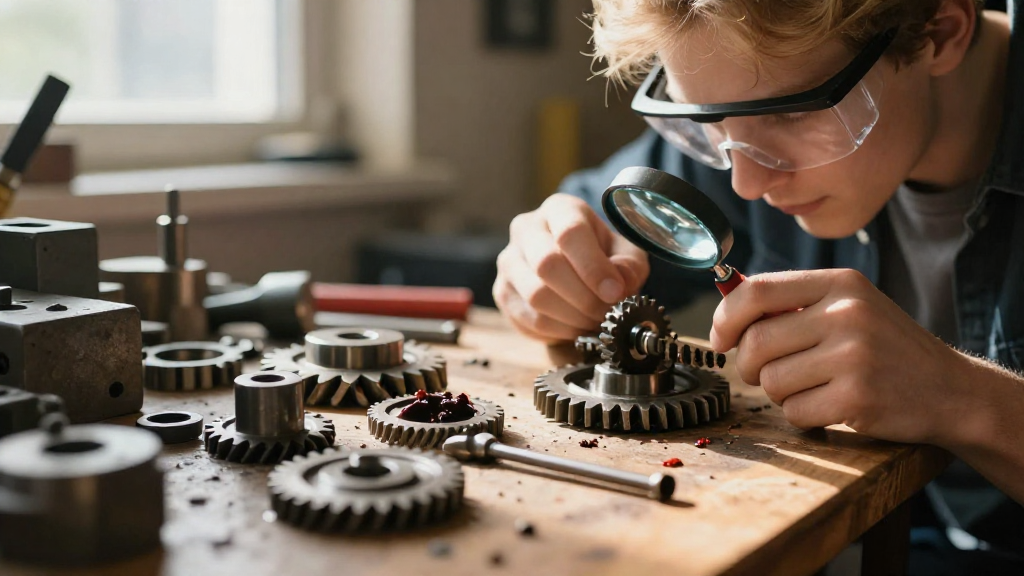
Are you looking for effective ways to learn how to repair gears?
Understanding the process of repairing gears will not only save you money but also enhance your mechanical skills.
What Are Gears and Why Do They Need Repair?
Gears are crucial components in a variety of machines and vehicles, playing a key role in transmitting power and motion.
Unfortunately, due to regular wear and tear, gears can become damaged or degraded over time.
Issues may arise such as:
- Worn-out teeth: This can cause slipping or misalignment.
- Cracks: Can lead to total gear failure.
- Rust and corrosion: Often caused by moisture or poor maintenance.
- Improper lubrication: Leading to overheating and accelerated wear.
Recognizing when gears need repair is essential for maintaining machinery safely and efficiently.
How to Diagnose Gear Problems?
Learning how to repair gears starts with effective diagnosis.
- Inspect Gear Teeth: Look for visible damage such as chipping or excessive wear.
- Examine Alignment: Ensure that the gears are properly aligned; misalignment can cause premature wear.
- Check for Noise: Listen for unusual sounds, which may indicate worn or damaged gears.
- Look for Rust: Inspect for any signs of rust or corrosion, which can weaken gears.
- Assess Lubrication: Verify that gears are receiving adequate lubrication.
By conducting a thorough diagnosis, you can determine the appropriate steps to repair the gears rather than replace them entirely.
What Tools Do You Need for Gear Repair?
When considering how to repair gears, having the right tools is crucial. Here’s a list of tools you may need:
- Wrenches and screwdrivers: For unscrewing and disassembling parts.
- Gear puller: Helps safely remove gears from shafts.
- Calipers: To measure gear dimensions accurately.
- Files or sandpaper: For smoothing out rough edges or surfaces.
- Lubrication grease: Essential for ensuring smooth operation.
- Safety goggles: Protect your eyes during the repair process.
Invest in quality tools that can help streamline your repair tasks.
How to Repair Gears: Step by Step Guide
Now that you are equipped with tools and knowledge, let’s delve into the steps required for how to repair gears.
Step 1: Disassembly
- Turn Off All Power: Safety first! Ensure machines are powered down.
- Remove the Enclosure: Take off any covering that protects the gears.
- Take Photos: Document the original setup using pictures to aid reassembly.
- Remove Gears: Use the gear puller to carefully extract gears from the shaft.
Step 2: Inspection
- Visual Check: Look for cracks, chips, or excessive wear.
- Measure Gears: Use calipers to ensure they meet specifications.
- Assess Teeth: In particular, check the condition of each tooth for uniformity.
Step 3: Cleaning
- Use a Degreaser: Apply a suitable cleaning agent to remove any grease and dirt.
- Wipe Down: Use lint-free cloths to clean the surfaces thoroughly.
- Rust Treatment: For rusted gears, use rust remover or sandpaper to treat affected areas.
Step 4: Repairing Gear Teeth
- Fill in Teeth: If there are minor chips, use metal epoxy to fill in gaps.
- Grinding: Smooth out jagged edges with files or grinding tools.
- Replace Teeth: In severely damaged cases, you may need to replace the entire gear.
Step 5: Reassembly
- Lubricate: Apply a suitable grease to the gear teeth and contact surfaces.
- Align Gears: Carefully position the gears back onto the shaft as per your original photos.
- Secure with Screws: Reattach screws and fasteners to hold gears in place.
Step 6: Testing
- Check Motion: Manually turn the gears to ensure smooth motion without resistance.
- Power Up: Once satisfied, turn on the machine or device to test in a controlled manner.
- Listen for Noise: Monitor for any unusual sounds during operation.
Step 7: Regular Maintenance
- Lubricate Regularly: Create a maintenance schedule for lubrication.
- Visual Inspections: Frequently check the gears for signs of wear.
- Timing: Replace oil filters and keep the lubrication system functional.
Implementing these steps will allow you to confidently understand how to repair gears. Regular maintenance is key to prolonging the life of gears and ensuring optimal performance.
When Should You Replace Gears Instead of Repairing?
There are instances when repairing gears might not be the best solution. Here are some scenarios when replacement is a better option:
- Severe Damage: Extensive wear or cracking that could compromise safety.
- Incompatibility: Newer gear designs that don’t work efficiently with old assemblies.
- Cost-Effectiveness: Sometimes, purchasing new gears can be more economical than spending time and effort on repairs.
Conclusion
Understanding how to repair gears can be a valuable skill for anyone interested in machinery and mechanical systems.
With the right tools, a systematic approach, and regular maintenance, you will enhance the longevity and performance of your gears.
Remember, while some repairs can be straightforward, don’t hesitate to seek professional help for complex issues.
Invest in learning, and you’ll find that repairing gears becomes not only feasible but also rewarding.