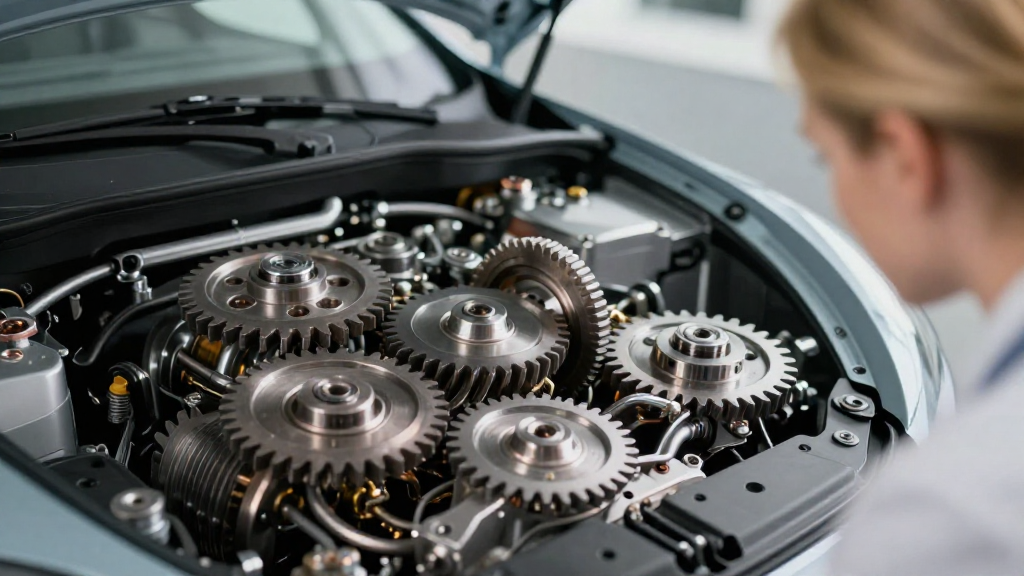
Gears in electric vehicles play a crucial role in enhancing performance and efficiency.
As the automotive industry shifts towards electric vehicles (EVs), understanding the role of gears in electric vehicles has become increasingly important.
In this article, we will explore:
- What are the types of gears in electric vehicles?
- How do gears contribute to efficiency and performance?
- What are the benefits of using gears in electric vehicles?
- What are the advancements in gear technology?
- What does the future hold for gears in electric vehicles?
What are the types of gears in electric vehicles?
Electric vehicles typically use different types of gears to optimize their performance.
The most common types include:
-
Planetary Gears
– These are compact and often used in EVs for their ability to provide high torque and efficient power transfer.
– Planetary gear systems distribute loads evenly, minimizing wear and extending longevity. -
Hypoid Gears
– These offer a higher level of torque translation while maintaining a smooth operation.
– Hinting at their design, hypoid gears can operate at higher angular positions, providing better performance under load. -
Spur Gears
– Simple in design, spur gears are effective for low-speed or low-torque applications.
– They are also easier to manufacture and maintain compared to more complex gear systems. -
Bevel Gears
– Bevel gears are used to change the direction of power transfer.
– They work well in situations where the drive unit is aligned at an angle to the wheels, allowing for versatility in design.
Understanding the different types of gears in electric vehicles is essential for grasping how they contribute to the overall design and functionality of EVs.
How do gears contribute to efficiency and performance?
Gears play a significant role in both the efficiency and performance of electric vehicles.
Efficiency
- Power Management: Gears regulate the speed and torque provided by the electric motor.
- For example, in city driving, lower gears can maximize torque, improving acceleration from stops.
-
In contrast, higher gears are beneficial for highway cruising, optimizing energy use by reducing motor RPMs.
-
Energy Recovery: In situations such as regenerative braking, gears help in converting kinetic energy back into electrical energy, which can then be stored in the vehicle’s battery.
Performance
- Acceleration: The right gear ratios ensure that electric vehicles can accelerate quickly while maintaining control.
- Speed Control: Gears can enhance the vehicle’s top speed capabilities by allowing for a range of operating speeds.
The different characteristics of gears in electric vehicles enable them to outperform traditional vehicles in many areas by providing power where it’s needed most.
What are the benefits of using gears in electric vehicles?
The inclusion of gears in electric vehicles offers several key benefits:
-
Enhanced Torque Distribution:
– Gears help in distributing torque effectively, leading to better handling and ride comfort. -
Improved Energy Efficiency:
– With the correct gear configuration, EVs achieve higher energy efficiency, which translates into longer range per charge. -
Smooth Operation:
– The ability to manage power levels and provide smooth transitions between different speeds improves the overall driving experience. -
Reduced Wear and Tear:
– Gears in electric vehicles can lead to less stress on the electric motor, resulting in reduced wear and maintenance needs. -
Customization:
– Gear systems can be tailored to the specific drive style and usage patterns of the vehicle, allowing for a personalized driving experience.
Incorporating gears can significantly enhance the engineering of electric vehicles, making them more attractive options in the automotive market.
What are the advancements in gear technology?
Advancements in technology have led to innovative designs and improved materials for gears in electric vehicles. Some notable developments include:
-
Lightweight Materials:
– The use of advanced materials like carbon fiber and aluminum alloys is making gears lighter without sacrificing strength.
– This reduction in weight contributes to overall vehicle efficiency. -
Increased Precision:
– Computer-aided design (CAD) tools and manufacturing techniques are enhancing precision in gear production.
– Higher precision leads to better meshing and reduced friction, yielding better performance. -
Noise Reduction Technologies:
– Innovations are also focusing on reducing the noise produced by gears during operation.
– Lower noise levels improve the driving experience, especially in the typically quieter environment of an electric vehicle. -
Smart Gearing Systems:
– With the integration of advanced electronics, some modern vehicles are employing smart gearing systems that adjust based on driving conditions.
– This can further optimize performance and efficiency based on the vehicle’s requirements at any given moment.
These advancements indicate that the role of gears in electric vehicles is evolving, opening the door for new possibilities in vehicle design and functionality.
What does the future hold for gears in electric vehicles?
As the market for electric vehicles continues to grow, the role of gears is expected to evolve further.
Looking forward, we can anticipate:
-
More Electric-Only Vehicles:
– As electric vehicles become the norm, the demand for innovative gear systems that can deliver optimal performance and matching characteristics will increase. -
Integration with Autonomous Technology:
– With the progression towards autonomous vehicles, gears may need to become even more adaptive and responsive to a wider range of driving conditions. -
Further Innovation:
– Continuous research into new materials and designs will likely yield even more efficient and reliable gear systems.
– Innovations like automated gear shifting and drive-by-wire systems may change the way gears are used in EVs, enhancing performance. -
Focus on Sustainability:
– As electric vehicles move towards sustainability, future gear designs may also take into consideration eco-friendly materials and manufacturing processes.
In conclusion, gears in electric vehicles play an integral role in ensuring optimal performance, energy efficiency, and reliability.
With ongoing advancements and a focus on innovation, gears are set to become even more crucial as the automotive landscape evolves towards electric mobility.
By understanding the complexities and advantages of gears in electric vehicles, consumers and engineers alike can better appreciate their importance in this rapidly changing industry.