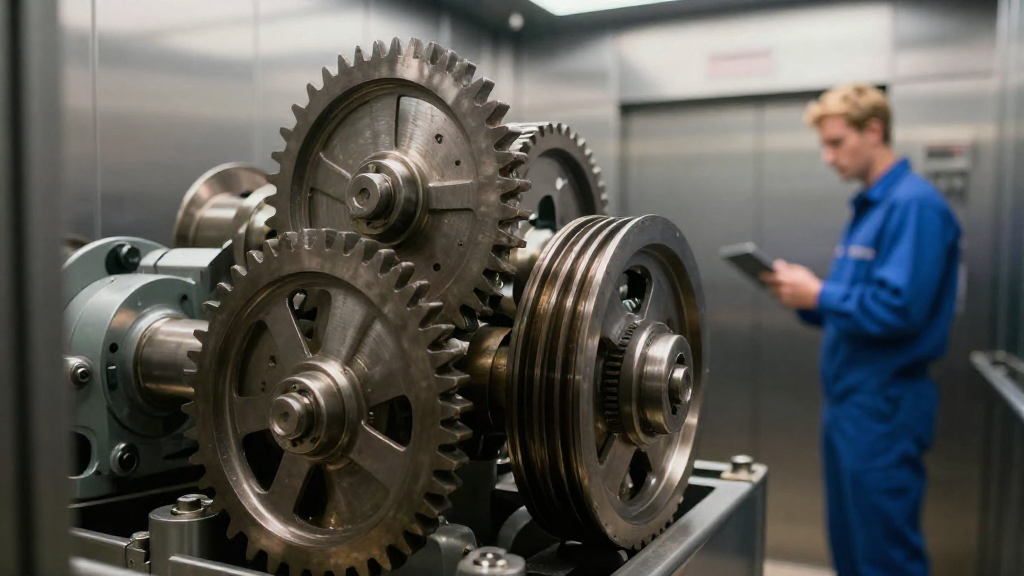
Elevators are an essential component of modern architecture, facilitating seamless vertical transport.
But have you ever wondered about the role of gears in elevators?
In this article, we will explore how these crucial components operate within elevator systems.
How Do Gears in Elevators Work?
Gears in elevators are integral to their operation.
They are mechanical devices that transmit force and motion from one part of the system to another.
A common type of elevator system—known as a traction elevator—uses gears to lift and lower the elevator car.
Here’s a closer look at how this process works:
-
Motor Activation: When a user requests an elevator, the system activates an electric motor.
-
Gear Engagement: The motor connects to a series of gears. These gears are responsible for amplifying the motor’s speed and torque.
-
Movement of the Sheave: The gears turn a sheave, which is a large wheel that the elevator cables wrap around.
-
Lifting the Car: As the sheave rotates, the attached cables are pulled, and this action lifts the elevator car.
-
Descending Process: When descending, the braking system ensures the car moves safely and controlled while the gears manage the speed of the descent.
What Types of Gears Are Used in Elevators?
Different types of gears in elevators serve various functions and purposes.
Here are some common types:
-
Spur Gears: These are used in many elevator systems for straightforward rotational motion transfer.
-
Helical Gears: These gears offer smoother engagement compared to spur gears, making them suitable for high-speed elevators.
-
Bevel Gears: Useful in systems where the motor must be at an angle, bevel gears allow for the change of axis in motion.
-
Planetary Gears: Known for their compact design, they provide high torque while maintaining a smaller size, making them ideal for modern elevators.
Why Are Gears Important in Elevator Systems?
The importance of gears in elevators cannot be overstated.
Here are some primary reasons why gears are essential components in elevator systems:
-
Efficiency: Gears optimize motor power, ensuring greater energy efficiency.
-
Control: They allow for precise control of the elevator car’s speed and direction, ensuring safety.
-
Durability: High-quality gears help reduce wear and tear, leading to enhanced longevity for elevator systems.
-
Safety Features: Gears are also involved in the braking process, crucial for ensuring passengers’ safety.
What Are the Main Components Associated with Elevator Gears?
To gain a comprehensive understanding of gears in elevators, it’s important to familiarize ourselves with their surrounding components:
-
Hoistway: This is the vertical shaft where the elevator car moves up and down.
-
Car and Counterweight: The elevator car carries passengers while the counterweight balances the system, reducing the load on the motor and gears.
-
Motor: The motor drives the gears and is essential for lifting and lowering the elevator car.
-
Sheave: The sheave is critical as it interacts with the cables, transferring motion from the motor through the gears.
-
Braking System: Integrated with gears, the braking system ensures safe stops without jerks or sudden movements.
How Do Maintenance Practices Affect Elevator Gears?
Proper maintenance of gears in elevators can significantly impact their performance and longevity.
Here are some essential maintenance practices to keep in mind:
-
Regular Inspections: Scheduled evaluations of the gear system can identify potential problems before they escalate.
-
Lubrication: Keeping gears well-lubricated minimizes friction, reducing wear and improving efficiency.
-
Alignment Checks: Ensuring that gears and related components are correctly aligned prevents excessive stress and damage.
-
Replacement of Worn Parts: Timely replacement of any worn gears increases overall system reliability.
Are There New Innovations in Elevator Gear Technology?
The elevator industry continuously seeks innovative solutions to improve efficiency and performance.
Recent advancements involving gears in elevators include:
-
Smart Gears: Some manufacturers are developing smart gears equipped with sensors that monitor wear and performance in real-time.
-
Magnetic Gear Technology: This technology offers a frictionless experience, improving energy efficiency and reducing maintenance costs.
-
Hybrid Systems: Combining traditional gear-based systems with modern technologies to enhance energy savings and operational speeds.
How Do Gears Affect the Safety of Elevator Systems?
The safety of passengers is paramount when it comes to elevator design.
How gears affect this safety is crucial to understand:
-
Brake Reliability: Gears work in tandem with braking systems. Failures in gear performance could compromise braking efficiency.
-
Overspeed Governors: Gears are integral to systems that detect excessive speeds, activating safety brakes when necessary.
-
Load Management: Gears help manage the load of the elevator car, preventing overload situations from becoming hazardous.
Summary: The Indispensable Role of Gears in Elevators
In conclusion, gears in elevators play a multifaceted role in ensuring operational efficiency, safety, and longevity.
From their dynamic interaction with other mechanical components to their ability to maintain precise control over movement, understanding gears is vital for anyone involved in the elevator industry.
Thus, investing in quality gear systems and adhering to maintenance best practices is essential for optimal elevator performance.
Final Thoughts
Understanding the importance of gears in elevators is fundamental to grasping how modern elevator systems function.
Through innovation and continuous improvement, the elevator industry will likely see even more advancements in gear technology, further enhancing safety and efficiency for years to come.
Ensuring that you stay informed about these developments will not only aid in better elevator experience—it will contribute to safer and more efficient transportation in our vertical cities.